

Kid Questions #1: Does Writing A Novel Ever Get Boring?

My mom works as an English as a Second Language aide. One day, an author visited her school. One of my mom’s students asked my mom, “Doesn’t it get boring writing a long book?” My mom asked how I would answer this question. So here’s the answer, for my mom’s student and for anyone else who ever wondered the same thing.

Writing a book is a long process. I feel many different emotions during the writing of a book. So let’s start at the beginning, and see how it goes.

When I first get a new idea, I’m excited and happy. I’m so excited that ALL I want to do is work on the book. I don’t want to go out, I don’t want to eat, I don’t want to talk to anyone. I just want to live in my brand new story idea.

Some writers create detailed plots and character sketches and do massive amounts of research prior to actually writing the story (those writers are called plotters), and some only have the sketchiest idea of plot and character and do their research as they go along or after they finish the first draft (these are called pantsers). Me? I’m a bit in between, but closer to a pantser. I do a rough outline. At this stage, the idea is still shiny and new, and I am still excited and eager to get to the writing.

Once I start writing the first draft, the first part usually goes smoothly. The excitement of a new adventure, a new world, a new group of characters, is still heady, and it carries me along.

Somewhere in the first draft, though, things change. The excitement fades and the words don’t come as easily. Sometimes I struggle with scenes that just aren’t coming out right. Sometimes my characters start to go flat. Sometimes it’s hard to know where to take the story next (this is where plotters probably have the advantage). At this stage, I feel frustrated, because I have this great idea in my imagination, and I can’t get it right in words on the page.

When I am frustrated, that would be a really easy time to just give up. And a lot of writers do give up, which is why so few people who START writing a book actually FINISH one. If you want to be a real writer, you have to finish, period. There is no shortcut. You have to put in the work and struggle through the hard parts. So another thing I feel at the same time I get frustrated is stubbornness. I’m stubborn. I will not give up on an idea I think is worthwhile. You need that sort of stubborn perseverance if you’re going to succeed in writing—or in anything else, really.

Usually, as the end of the first draft approaches, the excitement comes back, because I know where the story is going, I know the characters, I can see the end in sight, and I want to make it an awesome ending. And when I finally reach the end, it’s a mix of feelings. Happiness, because finishing is a big achievement. Pride, because it was hard to finish. Relief, because I made it through the tough part. Sadness, because I’m done writing this story. Except that I’m not really done yet!

You’ll note I didn’t ever say that writing was boring. And there’s a good reason for that: if I am bored writing a scene, a reader will be bored reading the scene. So if I find myself bored with what I’m writing, that’s a BAD sign.

Finishing the first draft is not the end of the process. Then comes the editing and revising. I revise everything AT LEAST five times. Usually more.

I actually enjoy revising—a lot of writers don’t. But when I am reworking the story, I rearrange parts of it, delete scenes, write new scenes. I figure out my theme and find symbols that worked their way into the story. I find deeper meanings to the story than I had plotted. All of these things make me surprised and happy and excited.

But there are boring parts of editing, too. Finding all the passive verbs (like “was,” “were,” and “had been”) and making them into stronger active verbs (like “throw,” “ripped,” or “lectured”). Taking out the words ending in -ly or -ing (they tend to make your sentences weak). Formatting checks like having only one space after a period or making sure all your dashes are em-dashes. Spellcheck (always, always Spellcheck!). Those are not creative, and can be boring, but they are absolutely necessary to creating a good book.

So that’s my answer in a nutshell. During the process of writing a book, I feel many emotions—but boring is not usually a top one. And getting to the boring part is actually a good sign, because it means I’m REALLY close to having a publishing-ready manuscript!

How about my fellow authors out there? Do you ever find writing a long book boring?
GoosesQuill FB

The Origin of DYING BREATH

DYING BREATH is a contemporary YA short story. It’s my second short story published–the first, TO LIGHT AND GUARD, was published last year. My goal for last year was to simply place a short story, which I did. My goal this year was to place in a paid market, which I did!

DYING BREATH, like TO LIGHT AND GUARD, grew out of a prompt from Jonathan Maberry‘s Advanced Novel Writing course. He wanted us to practice combining two semi-random things into a story premise on the spot. His two prompts were “organ transplant” and “Afghanistan.”

Well, I floundered in class (I’m not fast with stuff like that; I’m a “percolator”), but the idea took hold and DYING BREATH was born. After 3 intense rounds of edits with my critique partners, I sent it out into the world.

I am so pleased and excited to be in this month’s Youth Imagination online magazine! Please read the other great stories in this issue, and browse around to old issues if you like what you see.

GoosesQuill FB


The 7 Stages of Revision

I recently got editing notes back from my publisher, Evil Jester Press. To my surprise, I found that there is an emotional process to editing, and it has stages. The 7 stages of the revision process are slowly revealing themselves to me:

1. Anxious Anticipation

This is the first stage, often overlooked because it takes place before a single editing note is given. This stage occurs in the time when your book has been accepted by a publisher, but before you get your notes from your editor. How long this stage lasts depends on how long it takes the editor to get your notes to you.

2. Freaked-out Excitement

When your notes hit your in-box, excitement surges through your body. Suddenly, the fact of your book’s publication feels REAL. The forward movement brings a giddy smile. Then you open the notes, read them, and the freak-out begins. I can’t do this! It’s too much! It’s overwhelming! My book stinks so much, I can’t believe the publisher ever accepted it!

3. Accepting Reality

Slowly, the overwhelmed stress leaches away, and reality sets in. The notes are fair, and you can see how they will improve the book. You know it will not be a fast process, but that you CAN do it. You accept the challenge to take your book to the next level.

4. Organized Chaos

The notes you receive may or may not be highly organized. Even if they are, the notes may not be organized in the best way for your brain. Every writer’s editing process is unique, just as each writer’s writing process is unique. For me, I took my notes and divided them into “Technical Notes” and “Creative Notes.” The Technical Notes range from the formatting of the titles to raking through the manuscript to edit out as many passive verbs as possible. They are the fixes that, although often time-consuming, are not creatively taxing. The Creative Notes are the ones that will require rewriting or new writing, such as fleshing out the world or tweaking the voice.

5. Diving In

Once you’ve gotten the notes organized, it’s time to dive in! Take the notes in whatever order suits your process. I tend to do the easiest fixes first, then work up to the hardest. Other writers prefer to get the harder fixes out of the way and end with the easy stuff. It’s a personal choice.

6. Fear of Failure

This is where I am currently. Oddly enough, even as I am making progress in many notes, I still worry that I will not be able to deal with the harder, often subtler issues, such as voice and world-deepening. That somehow my creativity will fail me at a crucial moment, and I will end up with a book almost perfect in the nuts and bolts while lacking in soul. I push the fear aside, trying to tackle one thing at a time. I have to trust that my Muse will come when I need her, as she always has.

7. Success

This is the final stage! If you work hard, focus, and keep chipping away, you will get there. You will finish, and your book will be better for all the extra work. I’m estimating that I will arrive at this stage in several weeks—perhaps a month if my Muse takes a vacation at an inopportune time or life events get in the way.

So there you have the 7 Stage of Revision! Where do you get mired? What stage are you in right now? Do you have any tips to get through the process more efficiently?

GoosesQuill FB


The Writing Process Blog Tour

Writing friend Donna Galanti asked if I would join The Writing Process Blog Tour, and since I can’t ever have too many things to do, I said yes!

Donna GalantiThe awesome Donna Galanti writes suspense, young adult, and middle grade fiction and is represented by Bill Contardi of Brandt & Hochman Literary Agents, Inc. She is an International Thriller Writers Debut Author of the paranormal suspense novel A HUMAN ELEMENT (Echelon Press). Watch for her suspense novel A HIDDEN ELEMENT, the sequel to A HUMAN ELEMENT, coming summer 2014 by Imajin Books. Her middle grade series, JOSHUA AND THE LIGHTNING ROAD, debuts in 2015 by Month9Books. Check out Donna’s Writing Process post, and follow her on Twitter or Facebook or Goodreads—or all of them.

Without further ado, here’s what passes for my writing process:

What am I working on?

On Friday, I got my editing notes for my middle grade novel OZCILLATION (coming in 2015 from Evil Jester Press), so I am getting ready to dive into those. Currently, I am wavering between freaking out and excited. I’m a writer who enjoys revision, though, so I am eager for this challenge!

Because I like to have several projects going at once (it helps me block writer’s block), I also am editing two short stories that I hope will find homes this year; finishing up the formatting for my genealogy book, THE WARREN FAMILY OF PHILADELPHIA, PENNSYLVANIA, AND THEIR ANCESTORS, which should be available soon via POD; querying my YA novel THE ORACLE OF DELPHI, KANSAS; writing a first draft of my current Work-In-Progress, a YA sci-fi titled VERITAS; and looking forward to the Philadelphia Writer’s Conference in June.

Add my Mom duties to all that, and, yeah, I’m busy!

How does my work differ from others of its genre?

Well, that’s a question that every author should know the answer to, but most of us struggle with! I write middle grade and YA—which are categories rather than genres, but I write different genres within each category. Some of my kids are ordinary, some have paranormal powers. They all get into adventures they didn’t seek. So far, none of that is very different from most work in my genre.

My focus, however, is on a kid or teen’s ability to change the world. Kids often feel helpless when facing the problems out in the world. They don’t think they can do anything to change things. I know they can. All my characters, ordinary or paranormal, find their own unique gifts and use them to solve the problems they face—and in doing so, they change their worlds. Kids need to know that being who they truly are is powerful, and that their power can change the world. I know this is true because I have seen it happen.

Why do I write what I do?

These are the types of books I have always liked to read. Both as a child and an adult, I have been drawn to books that range from sci-fi/fantasy to those with just a touch of paranormal. I love to touch the magic that we cannot see. In short, I like books where the world is so much more than it seems, and where the characters discover that they themselves are so much more than they ever imagined. Books that show kids that one person can change the world–and that they are never too young to be that person.

How does my writing process work?

It’s rather a miracle it works at all, because I feel like I spend all my time putting out fires and jotting down words that may or may not be coherent when I look back later!

When an idea comes to me, I write a down-and-dirty outline. And by outline I mean summary of what I think might happen. I usually have a beginning and an end, and a large blank spot in the middle. One friend dubbed it the “miracle-happens-here” approach to outlining. I have been trying to think things through a little more in my pre-writing stage lately, to keep me from floundering too much when writing. I will never be one of those authors who outlines every scene before they even start writing (how do they do that?), but having a better handle on structure and character arc before I start will allow me to take better advantage of the snatches of time I have to write in.

Once I know where I’m headed, I start to write. I usually write chronologically, but I will skip around if a scene comes to me strongly. Because I have a 4-year-old who is at home most of the time, my writing time tends to be highly segmented and divided into short periods. So some days I manage many words, some days not so much. But I generally strive to write a complete chapter per day when I am in full writing mode (my chapters tend to be short).

I like feedback early in the writing process. When I first started writing seriously, I wrote with a writing partner—we were practically symbiotic in our relationship. Unfortunately, she passed away about 11 years ago, and I had to figure out a whole new writing process that involves less early feedback from others. I have found a great critique group, and I have some wonderful beta readers who are willing to give me honest feedback, whether it’s on a first draft or a final draft.

Revision is where my book starts to feel solid. Usually it’s not until the 5th draft that I feel like things are getting close to “The End.” I start with a big-picture storyboard edit to track the plot structure and arcs, then slowly whittle down to sentence-level edits such as destroying every “was” I can find. Once it’s as polished as I can make it, I get a professional edit, and then it’s ready for sending to agents!

That’s my process in a nutshell! I’m pleased to hand off to two amazing people for next week:

Jami GoldWriting maven Jami Gold writes beach reads with bite, delighting in paranormal romance and urban fantasy. The queen of beat sheets, Jami shares her wealth of writing knowledge with her blog readers and workshop attendees. Jami will post her Writing Process Blog on Thursday, May 22nd.


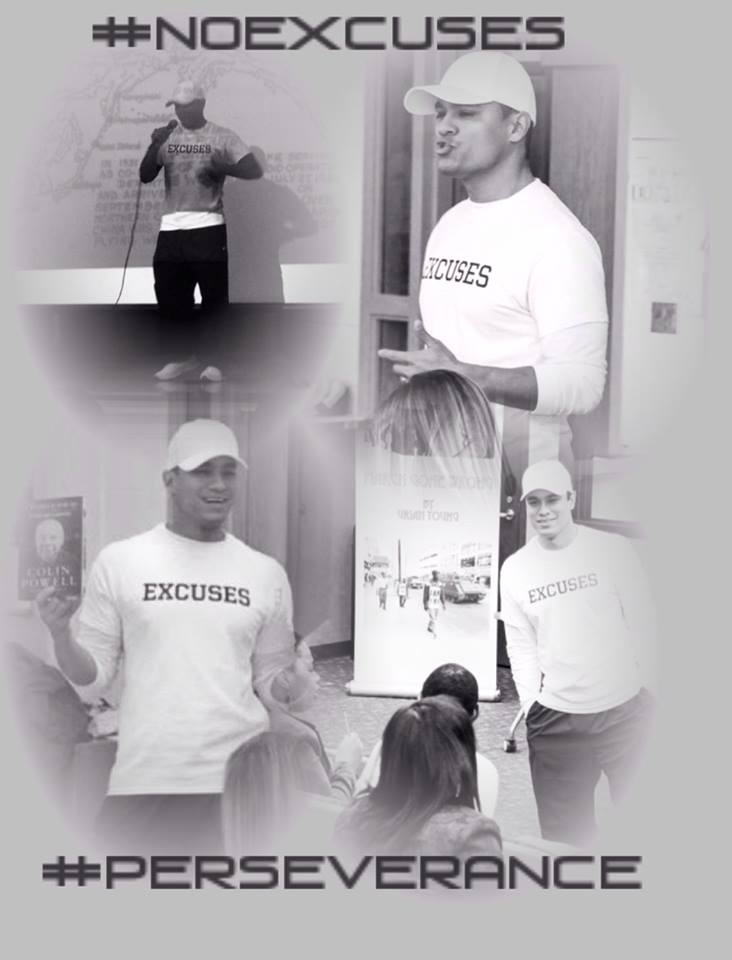
Very busy man Uriah Young is an author, motivational speaker, and publicist. He strives to find out what makes people successful, and motivate high school and college students to find their passion. Writer, speaker, and podcaster, he often seems to be everywhere at once! Uriah will post his Writing Process Blog on Monday, May 19th.

Good News: My Career Grows

Last year saw my first short story, TO LIGHT AND GUARD, published in Bewildering Stories magazine. That was a big milestone for me: my first official publication.

This year is shaping up even better! I had a poem, THE TOWERS STOOD, published in the World Healing, World Peace 2014 Poetry Anthology, and my short story DYING BREATH sold to Youth Imagination magazine!

In even more exciting news, my middle grade sci-fi retelling of the Wizard of Oz, OZCILLATION, was picked up by Evil Jester Press, and will be released in 2015! I am so excited to work with this group of enthusiastic and creative people, and to be one of their first middle grade novels as they expand.

Right now, my novel is with the editor, so I am waiting on pins and needles to get the feedback from her. I know there will be some hard work ahead to make OZCILLATION all shiny, but I am ready to tackle it. I will be approaching the novel with fresh eyes, as I have not read the book since I started querying agents waaaay back in December of 2012. I have come a long way as a writer since then and will probably see things in the book I want to change as well.

So what am I doing while waiting for my editing notes? I am editing two short stories that I hope will find homes this year. I am doing final preparation on my genealogy book for upload to the self-publishing Print-On-Demand (POD) site, likely by the end of this week. Then I will figure out how to format the genealogy book for ebook, and upload that. I’m sending querying to agents for my YA contemporary fantasy THE ORACLE OF DELPHI, KANSAS. I am also beginning to work on my marketing strategy, as well as optimizing my website and blog and other social media. Oh, and I’m working on another novel.

So, I’m busy.

The list, of course, does not include weekly repetitive tasks like blog posts, watching the 2 TV shows I allow myself to watch, reading, taking care of the business of life, and running around after my most important Work-In-Progress, my preschooler!

As much work as the coming year will be, I am looking forward to the challenge! How about all of you? What new bragging rights do you have? Share!

GoosesQuill FB

Why Writing Communities are Important

The stereotype of the solitary writer is firmly ingrained in our culture. And, in truth, we are all alone when we write, even if we meet up with other writers to write in a group. However, being a writer with no writing community is a certain path to fast burnout, and can lead to depression and isolation.

Having other writers around to understand the pain of rejections, to help walk you through the minefield of publishing, to simply understand the joy of finding the right title for your book, is undeniable. But there is another asset to being part of a writing community: creativity.

Simply being in a group of other writers can charge my batteries. Start throwing ideas around, and the buzz is almost a roar. Synergy does exist, and sometimes a passing comment from another writer can spark an idea or a solution to a creative problem.

I now have 4 publishing credits to my name, and none of them would have come about without my writing community. At first glance, my short story, TO LIGHT AND GUARD (adult psychological horror), my novel, OZCILLATION (a middle grade sci-fi retelling of the Wizard of Oz), and my short story, DYING BREATH (YA contemporary) have little in common, other than my byline. However, every one of them was sparked by a writing prompt exercise in classes with Jonathan Maberry. (In case you are wondering, the prompts were: “Write what scares you most,” “Rewrite when Dorothy meets the Scarecrow in a different genre,” and “Combine these two ideas: organ transplant and Afghanistan.”)

My fourth publishing credit is a poem, THE TOWERS STOOD, and it is an example of how a writing community can expand your knowledge base. I rarely write poetry, but wrote this and felt it was strong. A friend in the writing community, Diane Sismour, pointed me to a poetry anthology that was a perfect fit (World Healing, World Peace 2014). And with my novel, OZCILLATION, Jonathan Maberry once again weighed in, suggesting I try Evil Jester Press, where it has now found a home. In both cases, I had no knowledge of either outlet, and so my writing community became my extended brain.

A writing community stirs the creative pot and helps us through the publishing maze, but most of all, a community gives us a safe place to experiment with our writing. They will catch us when we fall, and cheer us when we succeed.

I am very lucky to be a part of the vibrant writing community that has grown up from the seeds planted in Doylestown almost 10 years ago. Under the nurturing wings of The Liars Club members, this community has grown and flourished, bound together by the single ideal that we will get farther working together than we will alone—that a rising tide lifts all boats. From what I have witnessed over the years, that seems to be the case. Many success stories are rolling in from this community, and I’m sure there are many more to follow.

How about you? How has your writing community (or lack of one) impacted your career or writing life?

GoosesQuill FB

Working Vacation

I know that most people return from vacation to a crushing workload of backed up emails, housework, or other work they do. I, on the other hand, have returned from my recent week-long sojourn farther ahead than when I left.

I work from home, with a preschool-age child. So I find that tasks that require prolonged concentration are difficult for me to find time to do. I have the time after she is in bed, but by then my brain is tired and I am prone to stupid mistakes (although this is a good time for creative writing for me). But most business-related tasks require attention to fine detail and often a half an hour or more of blocked time to accomplish competently. For example, I submitted the same short story to 5 magazines recently—and I had to format the story in 3 different ways to follow their guidelines. This is not a complaint—I understand why this is so. This is just to show why I need time to really pay attention to these sorts of details.

As a result, I have had a list of business-related items that I kept saying, “If only I could have a week without distraction, I could get all this done!”

This vacation was that week.

With Preschooler being entertained by Grandma, aunts, cousins, and Daddy, I was able to grab some focused work time. In this week away, I accomplished:

  • Submitting 3 Critique manuscripts to the Philadelphia Writers Conference
  • Submitting 3 Contest manuscripts to the Philadelphia Writers Conference
  • Spending several hours on Duotrope making lists of markets for my various short stories
  • Sent 5 queries out for my short story Dying Breath
  • Sent 5 queries out for my novel The Oracle of Delphi, Kansas
  • Edited 1/3 of my short story Finale
  • Read 2 Newbery-Award-winning novels
  • Critiqued a friend’s short narrative non-fiction piece
  • Wrote a blog post for my personal blog, The Goose’s Quill
  • Wrote the Thursday blog post for our group blog, The Author Chronicles
  • Kept up with social media platforms
  • Slept

I also managed to have fun visiting with relatives and enjoying the beauty of the countryside!

Many people might not consider this much of a vacation, but for me it was ideal. I get so worn out with trying to keep up with everything, and so frustrated pushing things off to the back burner because of time constraints. Getting so much of this done was a great weight off my shoulders, which allowed me to relax.

Do you find yourself working on vacation, or do you really get away from it all?

GoosesQuill FB


Genealogy Book Phase One Complete

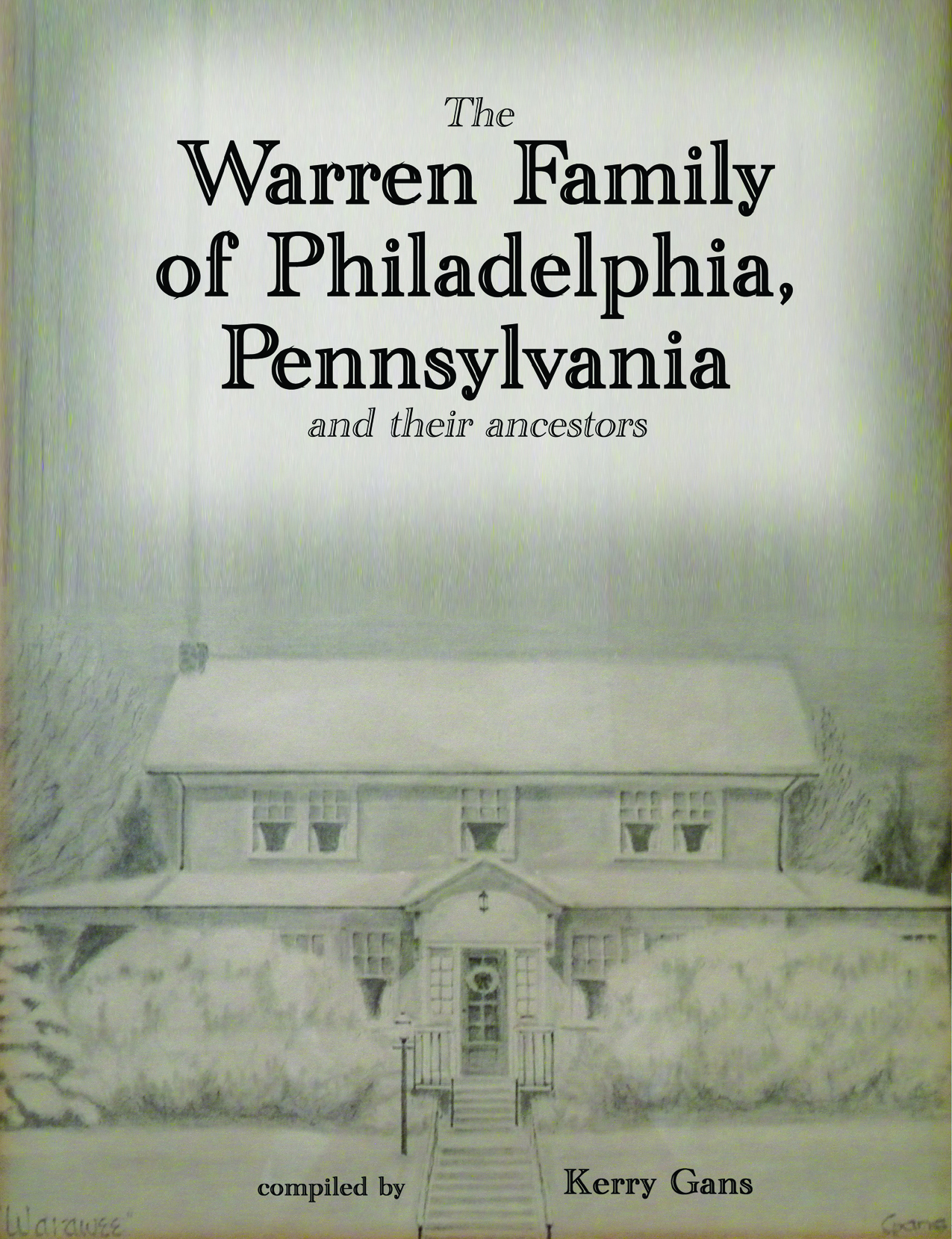
Anyone following my blog knows that I’ve been putting together a Print On Demand (POD) book of my genealogical research. The first book I put together was for my family—it contains info up to the present day generations.

I used Ingram Spark for my POD book. The quality is great and everyone has been pleased with the book. And I got a little giddy holding a book with MY name on it in my hands!

The cover is special to me for a number of reasons. First, it is the house that came to be called Warawee, where my great-grandparents lived and was the hub of the Warren family for 4 generations. Second, my father, Harold Warren Gans, drew the picture!

Warren Family front cover 2

Phase one, writing and distributing this version to my family, is complete. The next phase is making a public version to put out in the world for sale. I’m hoping that libraries, historical societies, and genealogical societies will be interested, as well as other amateur genealogists like myself who are researching those lines.

I am finishing my copy edits for this public version, and hope to have ebook, paperback, and hardback editions available no later than May.

This has been a long and involved process, but I have learned a great deal, and am very happy with the results so far!

Gavin’s Playground Project

I believe that even a kid can change the world. People think I am extremely naïve when I say this, especially because I am in most other ways a “show me” person who is a touch cynical. But I believe that one person can change the world, even if that person is a child. I believe this because I have seen it. The child who showed me this truth?

Gavin David Leong.

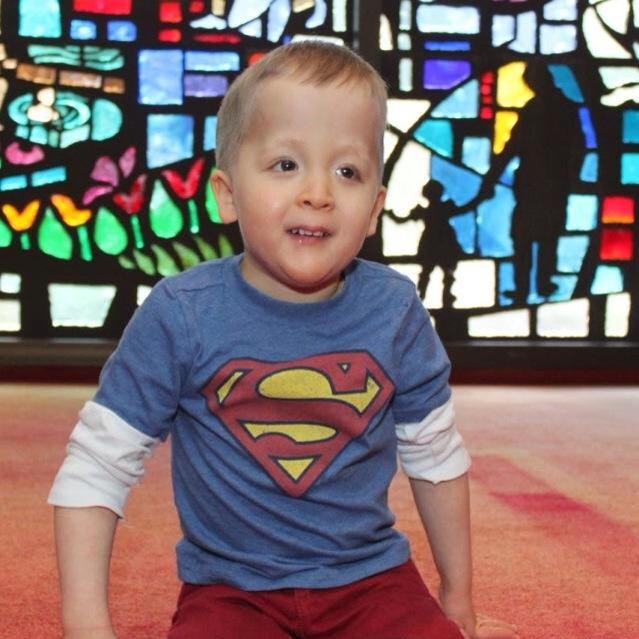
Gavin the Superhero

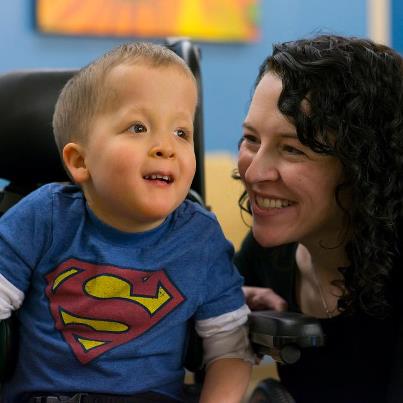
Gavin was a miracle every day of his life, but the true extent of his miraculous gifts only showed itself after his death at age five. The short version of the story is that he had a febrile seizure and died. On his mother’s birthday. In the midst of her grief, Gavin’s mother, Kate Leong, asked people to honor her son by doing acts of kindness.

And the community responded in an incredible way.

Later, Kate decided to further honor her son by founding Gavin’s Trust Project, to fund special needs preschools and the Chester County Intermediate Unit so they could help the kids in their care reach their full potential.

The Trust Project raised over $25,000 (and continues today).

But Gavin’s inspiration and influence didn’t stop there. This weekend I attended a fundraiser for an all-abilities playground at A.I. DuPont Hospital in Delaware. Why an all-abilities playground?

Because Kate still speaks for Gavin, and for those like him. When Gavin and his brother Brian were small, they were at DuPont for Gavin, and they stopped at the playground on the way out. Brian could play there—but there was not a single piece of equipment Gavin could safely use. This oversight was puzzling because DuPont is a children’s hospital dedicated to caring for kids with all sorts of disabilities and illnesses—and in every other area they more than excel in this regard. But on that day, Kate noticed a lack, one which would surely cause more pain to children who already struggle every day to fit in, to just be kids.

Gavin & Kate

So a few months ago, Kate broached the subject to DuPont, and they agreed to build an all-abilities playground as they renovate and expand the hospital. But they needed funds to do it. So Kate turned to the community that had grown around Gavin during his life and death.

Kate put together a fantastic (and FUN!) fundraiser, including incredible silent auctions. The Gavin community came together from all over the world. Donations directly to hospital poured in from those who couldn’t come to the function. Ticket sales climbed to over 400 people. A social experiment in micro-donating racked up more money in minutes. The overall total raised by this gargantuan fundraising effort has topped $63,000 and is still climbing. To donate directly to this project, go here, choose a Donation Level OR put in the amount you would like to donate under Select A Gift Frequency, and choose “Abilities Playground” in the Donation Designation drop-down.

It has been a year since Gavin was inexplicably taken from us, but his legacy lives on. He has changed so many lives for the better. Kate continues to find ways to honor her son by helping others, and the Gavin community continues to be inspired by the spirit of this little boy who has changed the world without ever uttering a word.

A superhero sleeps here

World Healing, World Peace 2014 Poetry Anthology

I don’t normally write poetry.

One day, however, I was taking my daily walk when phrases started coming to me. They repeated themselves and grew. By the time I had finished my walk, a whole poem was in my head. As soon as I could, I wrote it down. I revised a little. I stared at it. I wondered, “Now what do I do with it?”

Honestly, I wasn’t even sure it was a poem. And even if it was, I had no idea if it was any good. My practical brain wanted to just put it away somewhere to gather dust because “You don’t write poetry, Ker.”

But it wouldn’t leave me alone. I felt like it was something, you know?

So I sent it to a friend, Diane Sismour, who is poet. I asked her if it was even a poem, and what she thought. She thought not only was it a poem, but it had a powerful message. And she said, “I know an anthology this would be perfect for.”

Really? An anthology? For this poem that just fell out of my head fully formed and demanding attention? Okay. No harm in sending it in.

Enter the World Healing, World Peace 2014 poetry anthology (available now). This is a 2-volume work with many poets in it (including Diane), and the focus is on world peace, world unity, and human rights. The publisher’s goal is to get 2 copies into the hands of the United Nations delegates, and one copy to every member of the US Congress. The publisher wants the voices of the poets to be heard, because we have something to say.

It is a worthy cause, and I am proud to be a part of it. This is not an opportunity I looked for, but rather a case of the right poem meeting the right person at the right time. This experience is the reason I encourage all writers to write in different formats, as the spirit moves them. Experiment. Spread your wings.

You never know what will fly.

If you are interested in the World Healing, World Peace initiative and want to see how you can help and be involved, check out the website.

Have you ever written something outside your zone that had success that surprised you?

GoosesQuill FB

WP-Backgrounds Lite by InoPlugs Web Design and Juwelier Schönmann 1010 Wien