




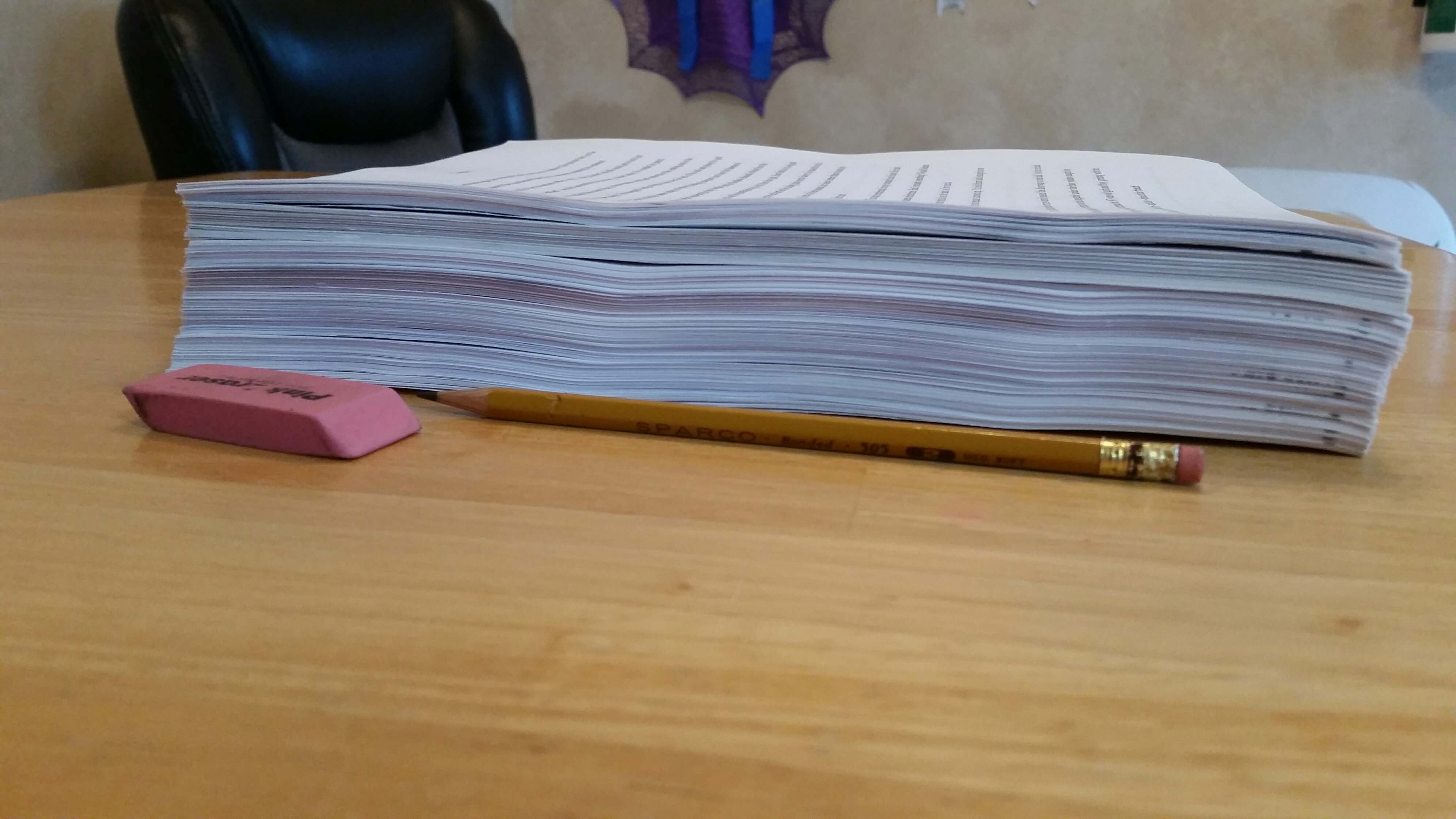
Veritas, before editing
An interregnum is the space between regimes. I am currently in an interlibrum—the period between books. An interlibrum occurs when one book project is completed, but another has not yet taken its place. It is a rather unmoored time (as I imagine an interregnum is as well).
I finally finished my work-in-progress, Veritas. I pared it down from 101,000+ words to 90,000, and by the time I had completed that (my fifth revision), I was done with the book. Does that mean the book is finished? No. It just means I had reached the point where my brain could no longer tell if further changes would help the book or hurt it. My objectivity was shot.
When I get to that point, it’s ready for my wonderful editor, Kathryn Craft. So now I have sent it off for bloodletting…er, editing. And suddenly, I have no book to work on.
Now, this does not mean I literally have no book projects. What I mean is that there is no project I am currently actively working on. One that is taking up the head space Veritas did. When I was younger, and had more energy, more time, and no child, I often juggled two projects at once, so I rarely experienced interlibrum.
With the increased demands on my time and energy now, I find I can only focus on one book project at a time if I hope to make meaningful progress on it in a reasonable amount of time. So interlibrums are a new part of my writing landscape.
The good news is that I have at least 5 book projects to choose from:
1) The Oracle of Delphi, Kansas: a YA contemporary fantasy that got some interest from agents but ultimately a “well written but not quite there” response. A return with new eyes and new craft tips may allow me to finally get it “there”.
2) The English Expedition: a first draft of book 2 in my middle grade historical adventure series that is currently making the query rounds.
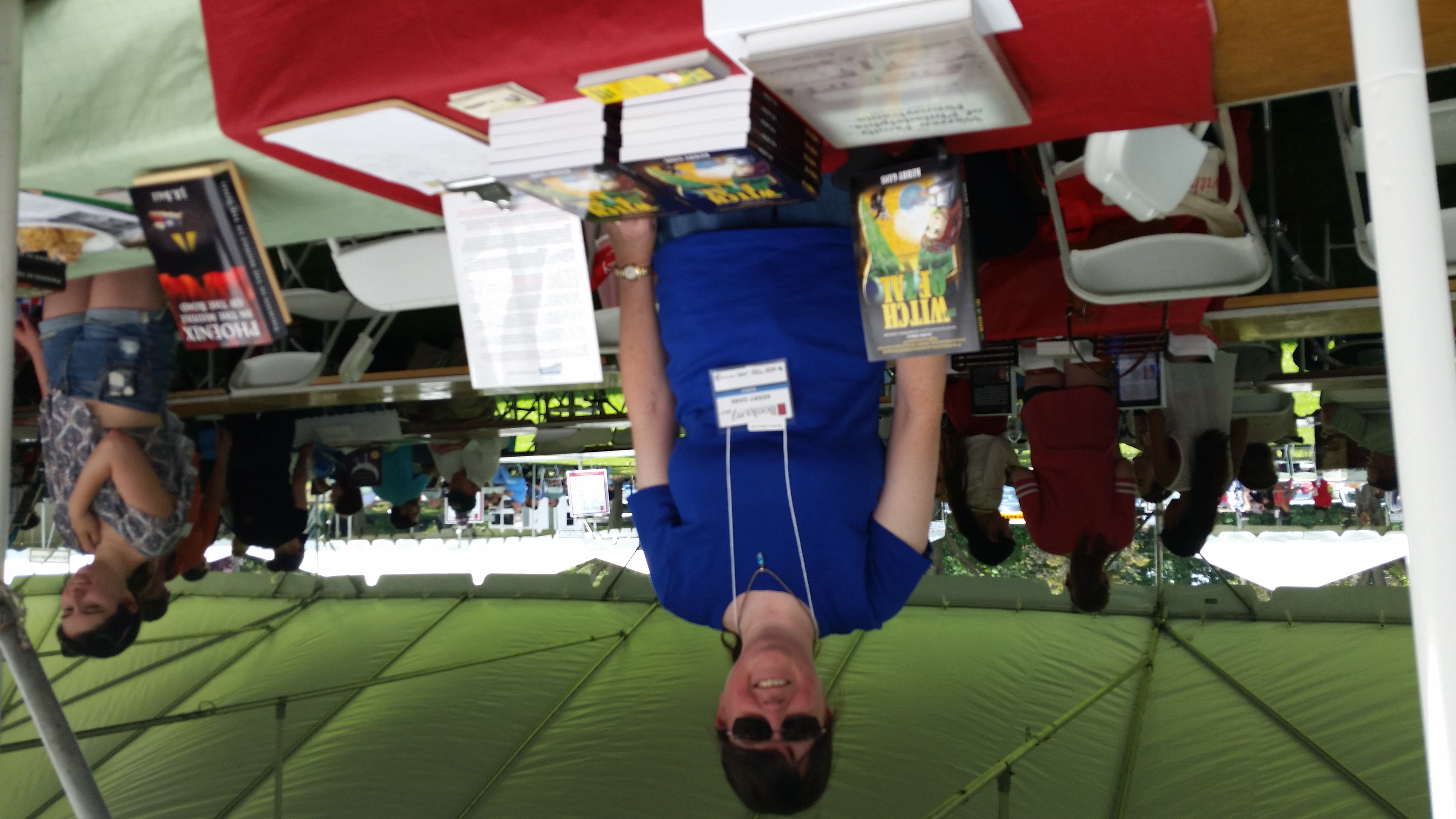
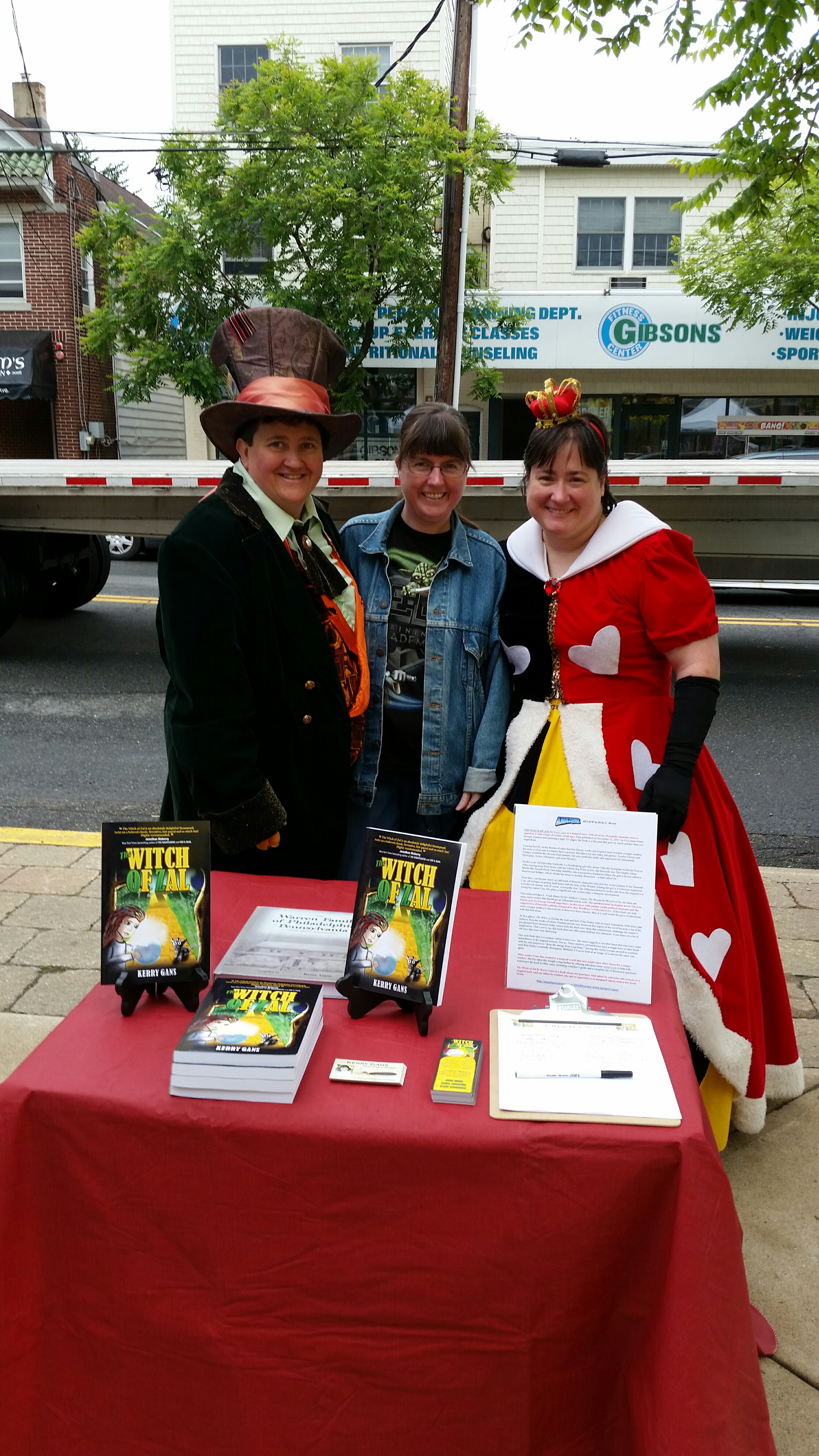
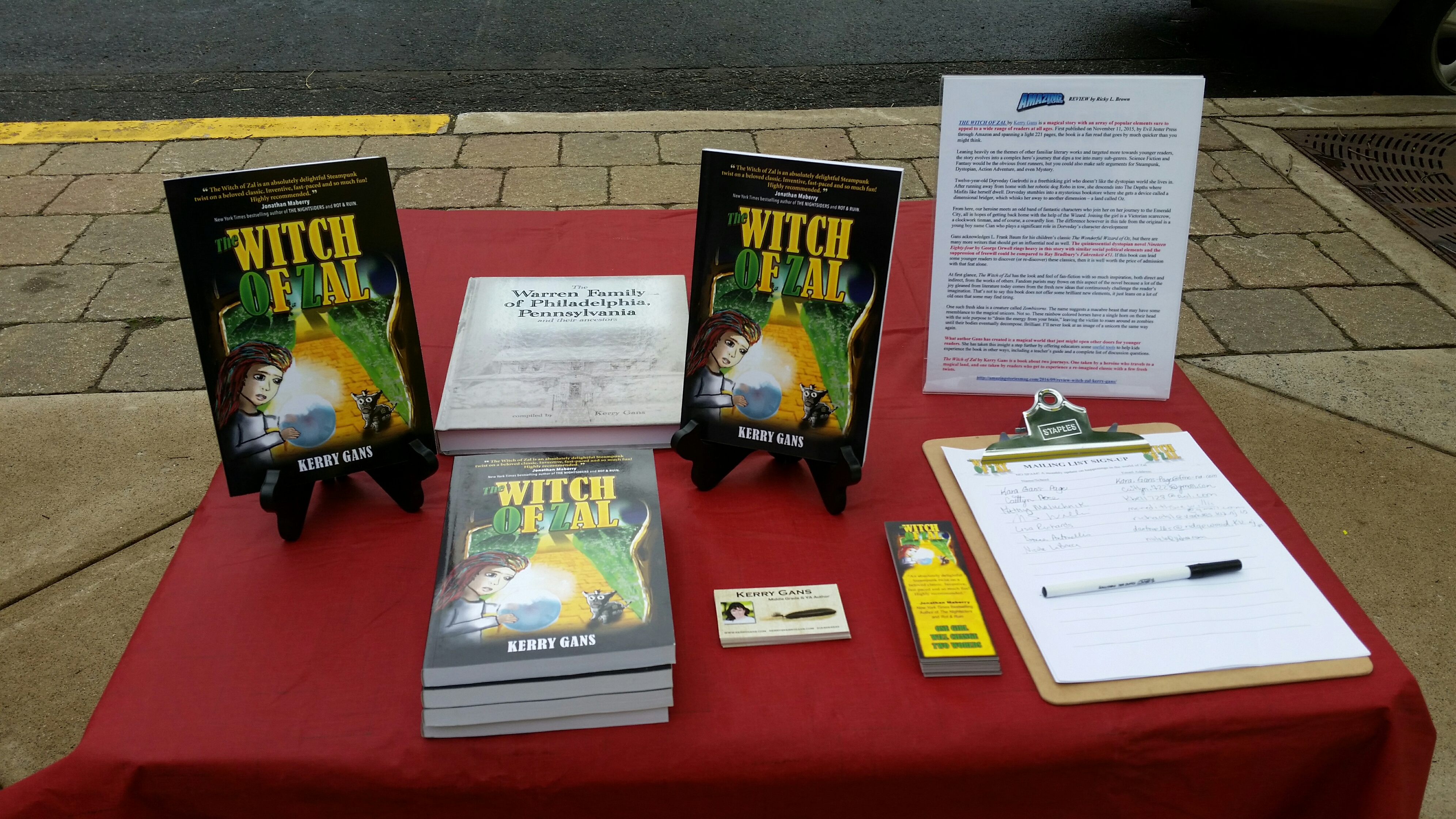
3) The Enemy of Zal: a from-scratch book 2 of my published book, The Witch of Zal.
4) Amoris: a from-scratch 2nd book in the series of the YA scifi I just finished.
5) The Forgotten Planet: a from-scratch new scifi that will likely also be a series.
They all have their appeal. Oracle has the advantage of being nearest completion, in the interest of getting more books out more quickly. The English Expedition has a completed first draft, but will need a good amount of revision before it’s ready. The Enemy of Zal has a brief outline, but it appeals because it follows an already published book. Amoris follows the one I just finished, so my brain is still immersed in those characters and that world. And The Forgotten Planet intrigues because it is shiny and new. I am leaning toward Oracle at the moment.
Have you ever experienced an interlibrum? How did you deal with the adrift feeling that comes when you are floating between books? Do you revel in the feeling of endless possibility, or do you grab on to a new work quickly to anchor yourself?

How Writing is Like Swimming
Technique & Form
Technique is important for swimming. The way your hands enter the water, the precision of your kicks, how you position your head, all combine to power you smoothly through the water.
Technique is equally important in writing. The choice of words, precision of punctuation, flow of elements such as dialogue and metaphor, all combine to bring your voice to life and give the readers a smooth experience.
Technique can also be called “form”. Writing has different forms as well, from poetry to novels. Writers need to master the structure and expectations of their form and genre.
Stamina & Muscle Memory
Incessant laps in the pools increase a swimmer’s stamina. Hours of repetitive practice ingrain the techniques in muscle memory, enabling swimmers to swim faster without having to concentrate so hard in their movements.
Writers who practice their craft also build up stamina, so they can plow through the tough times to get to the end of a novel. Careful study and repetitive practice of techniques store them in a writer’s subconscious so they come easily, allowing the writing process to flow faster and the writer to seamlessly weave the elements together.
Breathing
Swimmers who don’t master breathing will run out of oxygen before the end of a race. Similarly, writers who don’t step away once in a while and recharge risk burning out on longer projects.
Like swimming, mastering writing takes hours of practice to build up those creative muscles, coaches to help you perfect technique, and a cheering section to get you through the hard times.
So pick up your pen, stroke out boldly, and don’t forget to breathe.
Save