




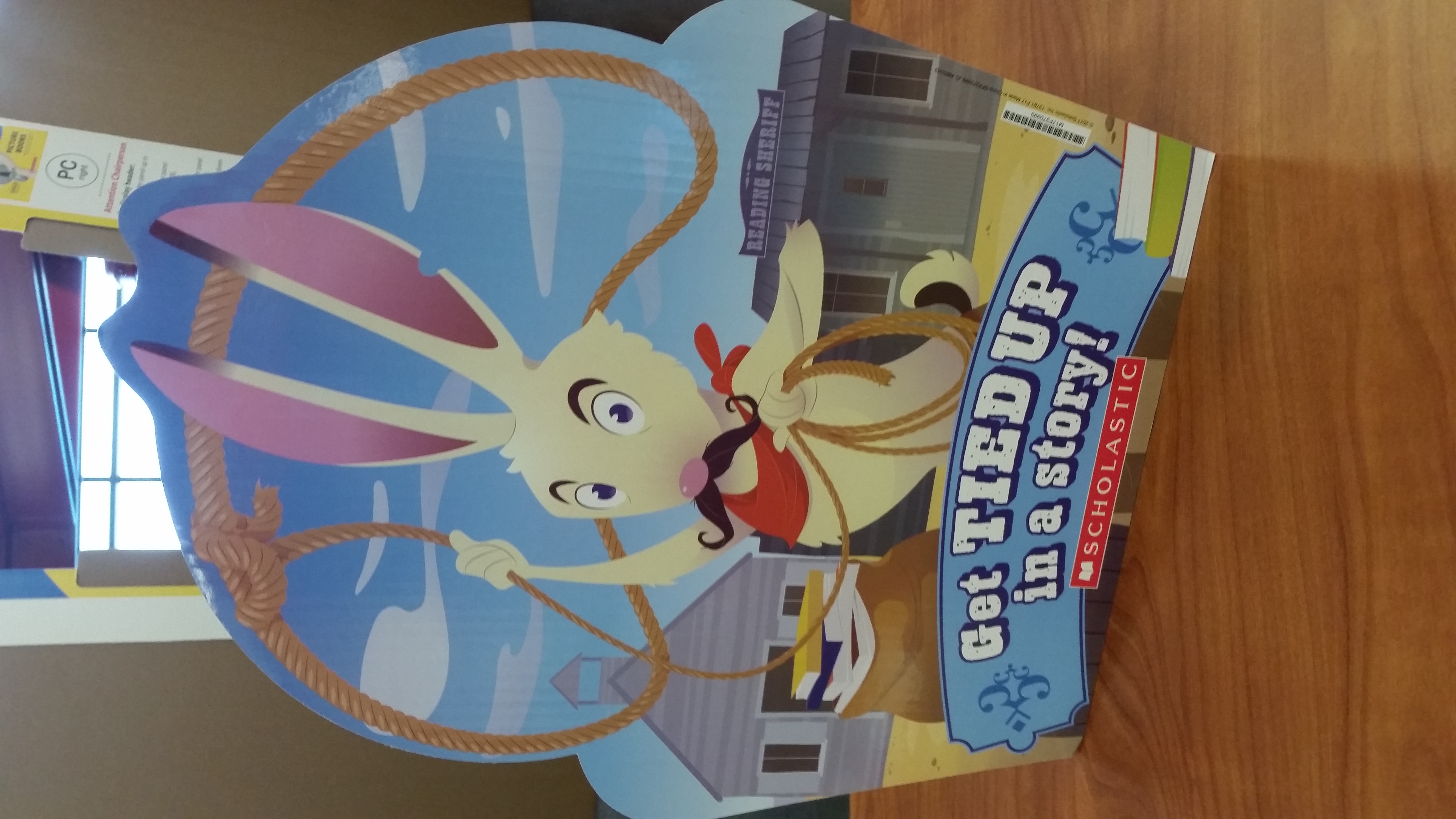
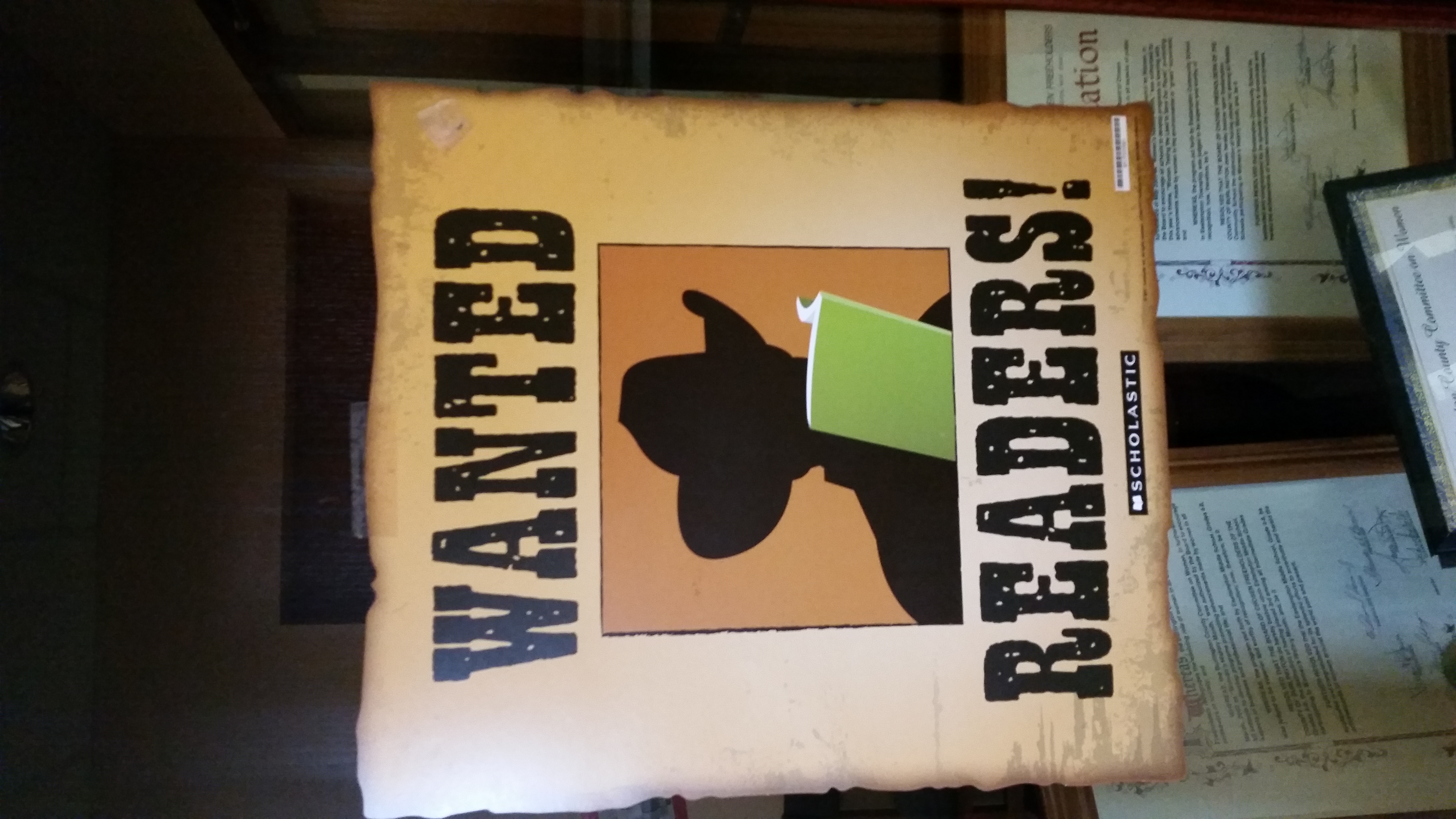
 Yee Haw! It’s my favorite time of year again—BOOK FAIR! This year’s theme for the Fall Book Fair is the Wild West. So here we are trying to rope in young readers.
The kids love the Book Fair. Even the older kids who pretend they are too cool to care will sneak their peeks and then come back later to buy books. The little kids are the best, though. They stare in awe at the shelves of books that must seem as tall as skyscrapers to them. Some kids will run around like crazy, grabbing armfuls of books to put on their wish lists. Others reverently and silently move from shelf to shelf, gently taking down one book at a time to add to their lists.
We had a good selection this year, with a lot of diversity in the titles. Something for everyone, really, from fantasy to gemstones. I worked mainly with the younger kids, and there’s always one title that catches fire. This year’s hot title was Thelma the Unicorn.
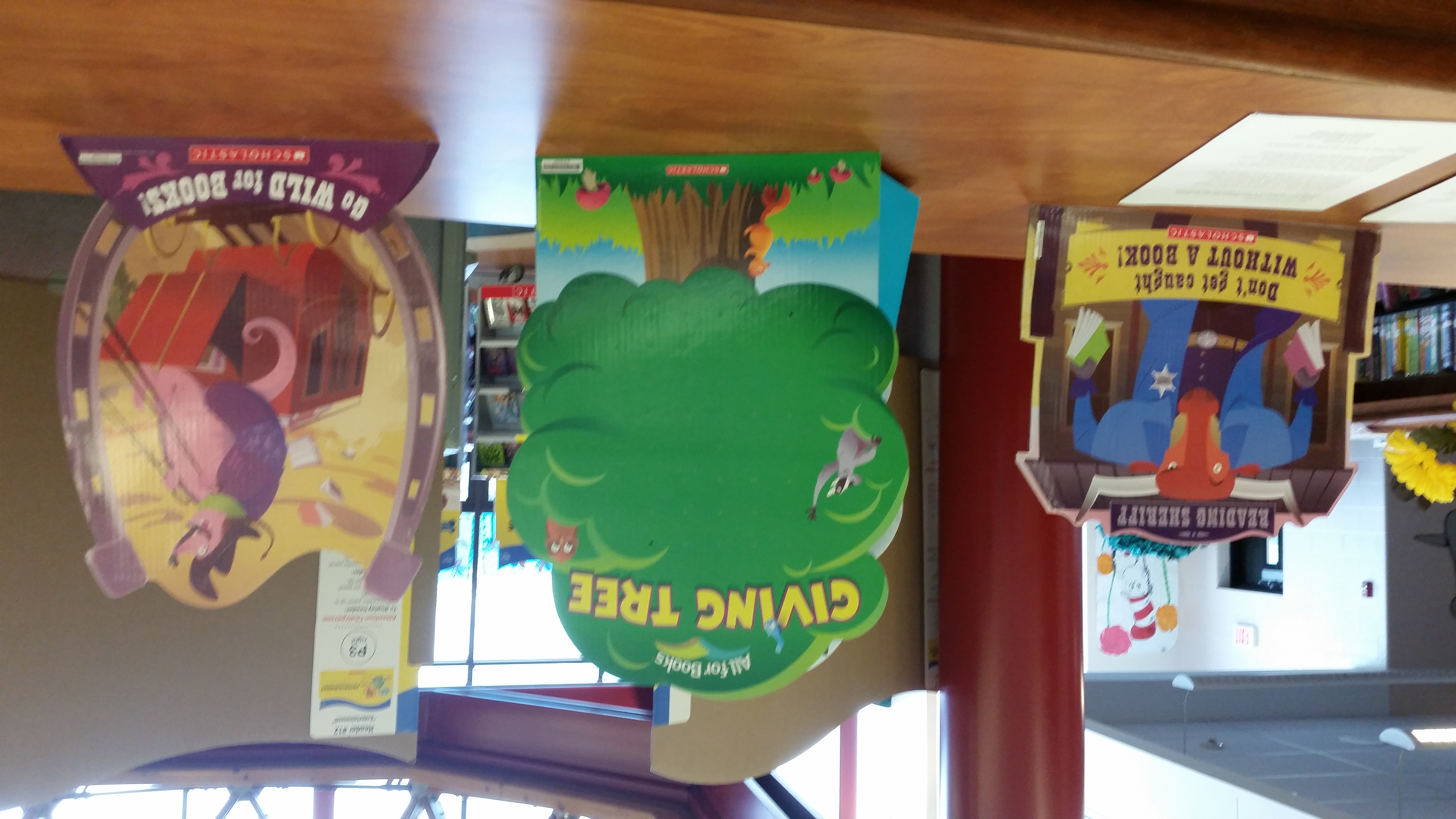
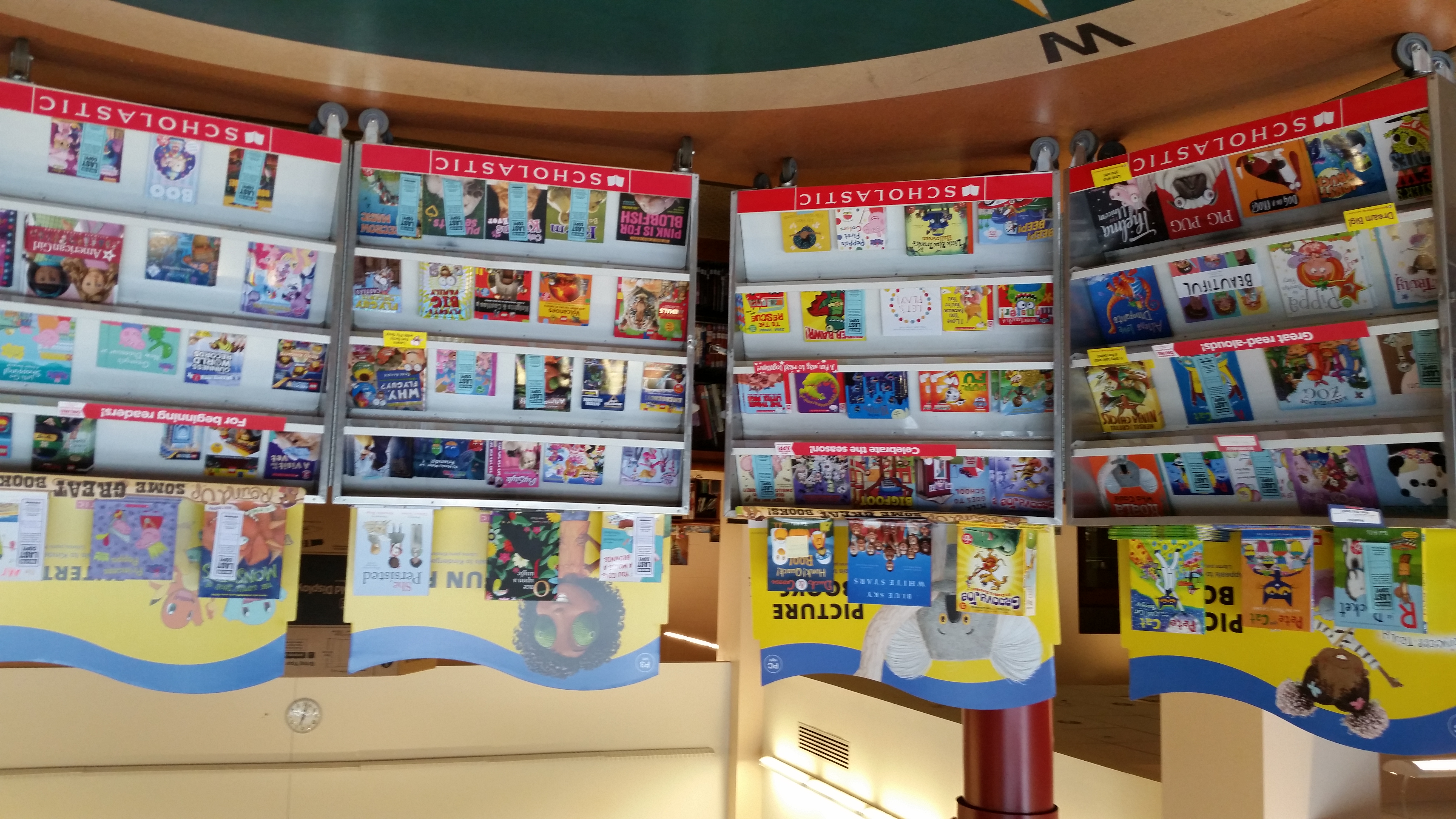
Our fantastic volunteers make this possible, and we had a large bunch of dedicated parents this year. We helped the younger kids write wish lists, and then when they came back a few days later with money, we helped them buy their books. The little kids don’t fully understand the value of a dollar, so trying to explain why you can’t buy a $10 book with a $1 bill even though they both start with the number 1 can be hard. But our volunteers are great and all the kids went home happy.
As I say every time I write about the Book Fair, the proceeds from this constitute ALL of the budget for buying books and supplies for the library. Our school pays nothing toward curating the collection. So having success at the Book Fair is vital to our school. This may be the case at your school, too, so please support your Book Fair even if you can only afford one book.
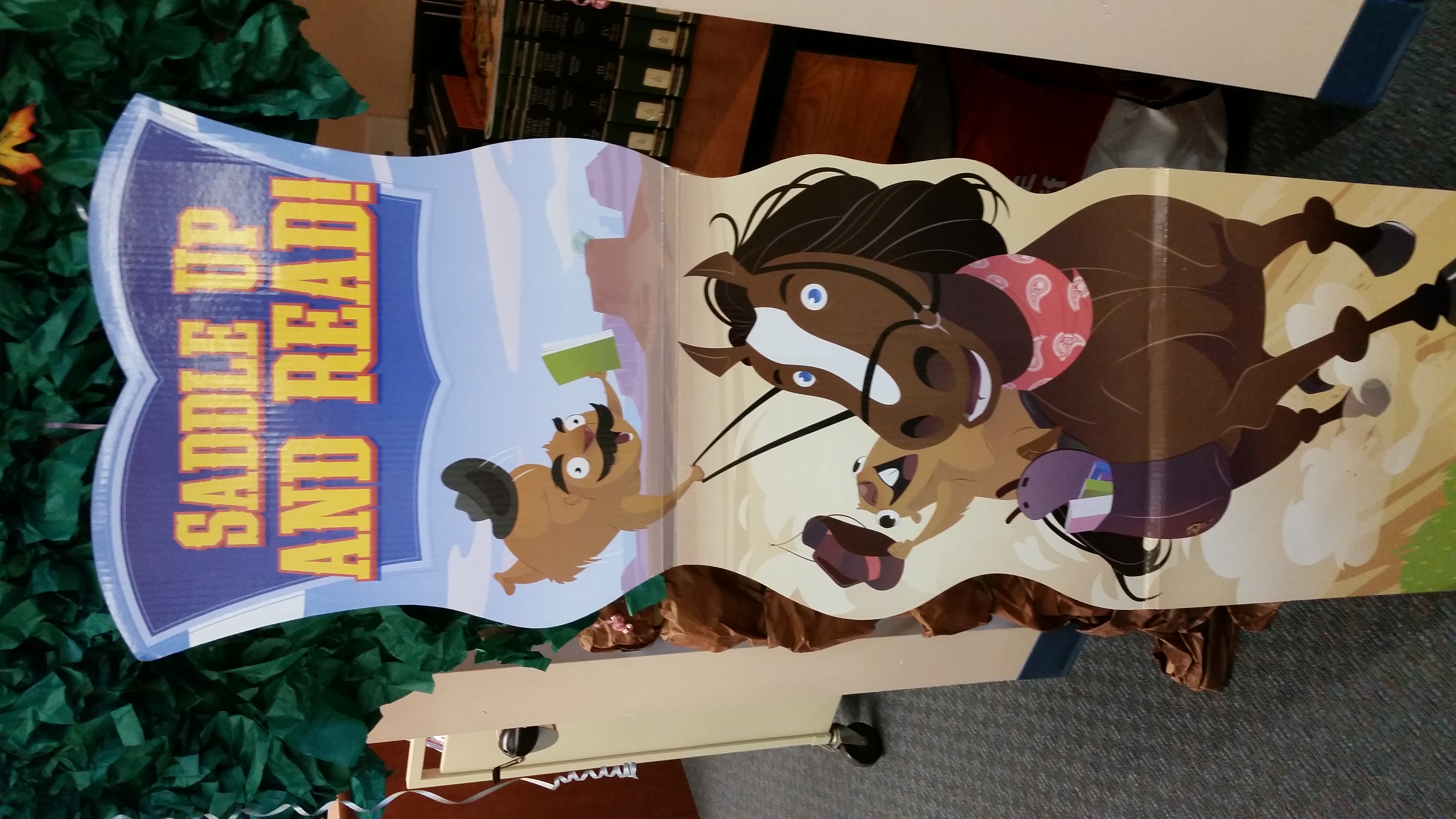
 But the Book Fair is not all about us. Last year we collected donations for a school in Louisiana that had lost their library in the Mississippi River floods, and this year we are collecting for a school in Houston, Texas. We turn it into a competition, with each grade getting a jar to put their money in. Much to our surprise last year, the older grades got very competitive last year, with the 5th grade coming out on top. Their prize? Our Principal sat in a dunk tank at the local fair and let the kids dunk him. He was an awesome sport, since he was sick and it was a chilly day. This year, whichever class wins gets to duct tape the Vice Principal to a wall. I wonder if the now-sixth graders will cough up enough dough to win 2 years in a row?
This Fall Book Fair was a success on many levels, but mostly because we roped in some young readers. Seeing their eyes light up as they hug their books is the biggest triumph of all.

5 Ways Writing is Like Physical Therapy
I’ve been getting physical therapy for frozen shoulder since summer, and I’ve come to realize that physical therapy and writing have some commonalities.
1. No pain, no gain
Physical therapy is rarely painless. In my case, therapy involves a great deal of aggressive stretching to break up the joint encapsulation. The pain at the beginning was intense, shooting down to my fingers and taking my breath away. Now it is more of an ache or a tightness.
Writing is similar. In order to continue to improve, we must stretch beyond our comfort zone. Such stretching can be painful both emotionally and mentally. But improvement depends on pushing through the discomfort.
2. Get help from experts
Now, many times frozen shoulder will resolve over time on its own. But that can take years, and the condition is painful to live with. In addition to the pain, the inability to use your shoulder makes many daily tasks very difficult. So I sought out doctors and then therapists who could hasten my healing.
Seeking out expert guidance in writing can also speed up your writing skills. Having a mentor or group of fellow writers who can help you correct your mistakes—or even better, keep you from making them in the first place—can lead to faster improvement in your craft.
3. Structured process sees results
In physical therapy, I could do random shoulder exercises and probably make some progress. However, having a well-thought-out, structured process ensures the pieces all build upon each other with no wasted effort, and makes my work more productive.
Having a structured writing process can help make your writing more productive. If you have a process that flows, your word count will increase, and your revisions will take less time. Every writer’s process will be different, but if all the pieces build upon each other, the writing will come easier.
4. Details make a difference
Physical therapy is a science of nuances. Many of the exercises must be done exactly right, or they will not strengthen the muscles needed—and may cause additional damage. Exercises target specific muscles or joints, and the amount of weight or resistance used in the exercise must be carefully controlled to avoid strains and setbacks.
Attention to the details of a story is necessary, as well. Everything from proper punctuation to choosing the precise word makes a difference in the experience of the reader. The myriad craft skills needed are also detailed, and you can carefully target skills you are weak in to increase your overall strength and flexibility.
5. Persistence pays off
Even with the most diligent exercise program, frozen shoulder takes a long time to thaw. Most people are 80% or better by 6 months, but it can take up to 2 years. So persistence is key.
Persistence is rewarded in writing as well. Continue honing your craft. Don’t give up when you try to publish and rejections piles up. Push through any problems or setbacks, and eventually you will reach your goal.
Keep exercising, trust the process, and your work will improve!