

Evolution of a Speaker: From Wreck to Relaxed

I am not a natural public speaker. As an introvert with an anxiety disorder, being the center of attention is something of a nightmare for me. Yet, I chose the life of an author, and that means public appearances, whether speaking, doing workshops, or hosting book events.

Two weeks ago I spoke to a group of writers in Philadelphia. I am still a new enough author to be a bit bewildered that anyone wants to hear “my journey.” Classic Imposter Syndrome.

However, this group DID want to hear my story. And since I chaperoned a bunch of 6-year-olds at the Please Touch Museum the day before, I didn’t have too much time to over-think things and make myself a nervous wreck (I was much more nervous that I would lose a child at the museum than about the speech). Besides, the topic was my journey as a writer—I’m the expert on that, right?

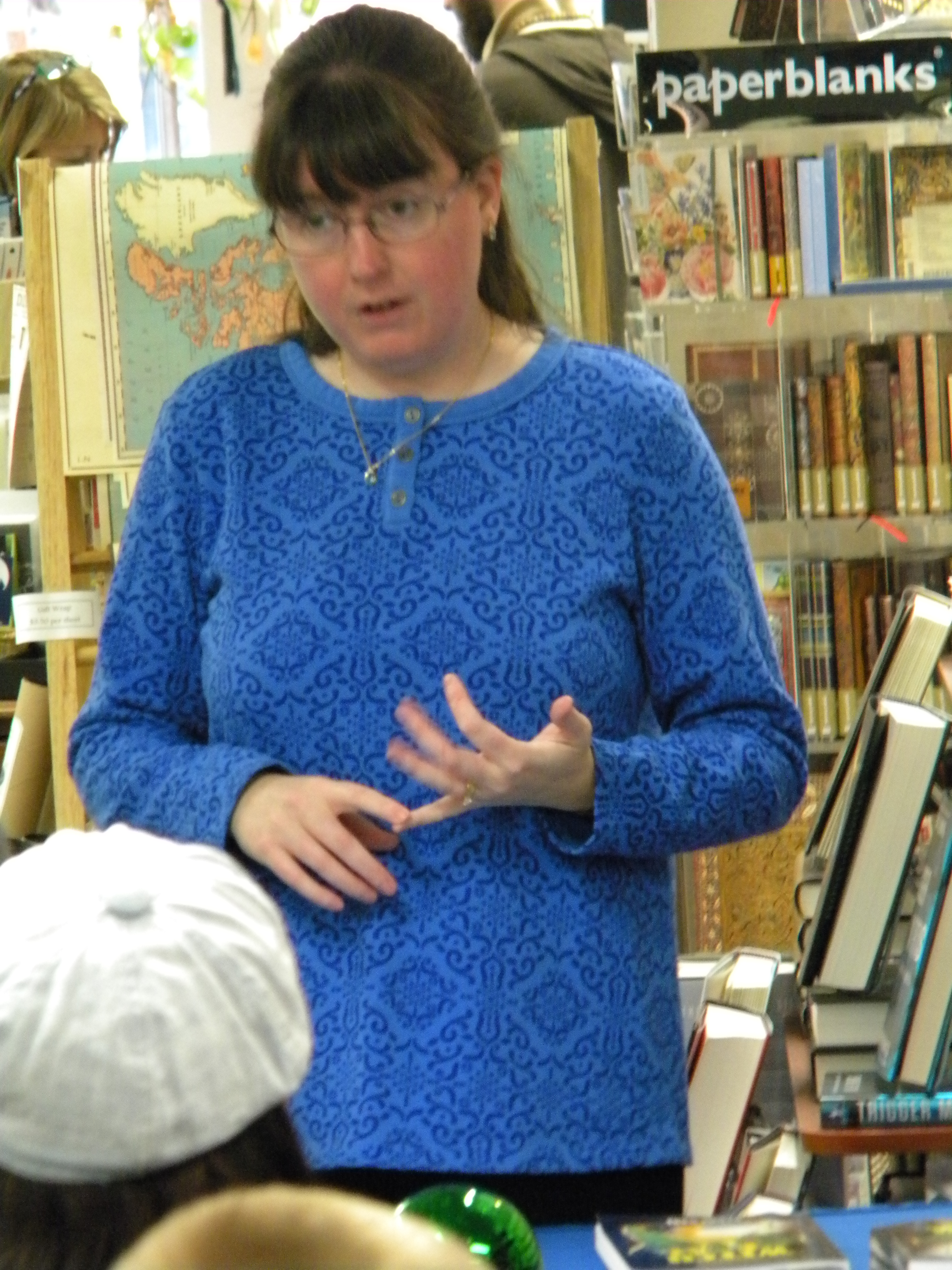
Author Kerry Gans visitng a Philly Writers Group as a guest speakerSo I gave my speech and it went well. I didn’t turn bright red or faint or forget my name or any of the things I worry about. The audience was attentive and knowledgeable. After my prepared speech, I took questions. And a strange thing happened. I relaxed.

Me, the person who needs to feel in control all the time, relaxed at the very part of the event where I had the least control.

I had mentioned in my speech how nervous I was about public speaking, and afterwards one of the writers said to me, “Don’t worry about being nervous. You did very well, and you were excellent during the question and answer.”

Excellent during the Q&A. Huh. How odd.

I came to realize that at some point in my life, a paradigm shift as a speaker had occurred. Gone were the days where I typed out every word of my speech and memorized it, then scurried offstage as fast as possible after giving it. I now excelled at the very part that used to give me nightmares. An evolution in progress.

I think I have come to enjoy the extemporaneous parts of event work because to me it feels more like one-on-one chatting. Never mind that I am still up in front of a group, I am talking to a single person. That makes a difference in my attitude. And it’s not “a speech.” It’s just talking. My friends and family will tell you that I can talk the ear off corn, so I guess I’m playing to my strength. 🙂

This newfound relaxation with extemporaneous speaking made my next engagement, the Pennsylvania School Librarians Association, a much easier affair. I didn’t dread the chit-chat and the unscripted nature of Author’s Alley. In fact, I had a wonderful time, partly because I enjoyed interacting with the conferees, and partly because I got to hang out with writer friends Donna Galanti and Janice Gable Bashman. We, along with Dianne Salerni, made a formidable team, urging conferees we talked with to see what the others had on offer.


So what does this evolutionary shift as a speaker mean for me? Don’t get me wrong: I will not be running out to do speeches without any notes anytime soon; I will never be truly comfortable in front of an audience; and I will always be anxiety-ridden prior to a presentation. The biggest gift this evolution as a speaker has given me, however, is a sense of freedom. The truth is, I have been dreading–and avoiding–school visits because of their interactive, unscripted, unpredictable nature.

Now I am not.

Oh, I’m sure I will have my share of embarrassing moments, or questions I can’t answer, or answers that get me in hot water. But I feel much more confident that I can meet the challenges of extemporaneous moments with enthusiasm and maybe even grace.

I’m so confident, in fact, that I’ve pitched a workshop for my daughter’s summer camp. Building a story with kids K-8th during a summer camp? Doesn’t get much more free-for-all than that!

How about you? Do you prefer a controlled speech, or an extemporaneous event? Have you experienced evolution as a speaker?

PSLA - Donna Galanti - Lee Harper - Dianne Salerni - Janice Gable Bashman - Jodi Moore - Kerry Gans authors

Top L to R: Donna Galanti, Lee Harper, Dianne Salerni Bottom L to R: Janice Gable Bashman, Jodi Moore, Kerry Gans


A Modern Author’s Marketing Load: More or Simply Heavier?

Kerry Gans speaks to writers as part of the author's marketing loadAt a speech to a writer’s group on Saturday, I got asked the million-dollar question: since today’s authors are expected to shoulder most of the marketing load, wouldn’t self-publishing make the most sense? I answered that it was a matter of personal preference, but the question got me thinking: Are modern authors really expected to shoulder MORE of the marketing load than in the past, or is the burden simply HEAVIER today?

I know we all like to wax nostalgic about the good old days when the publisher would do ALL the marketing and the author would just churn out more books. It’s a wonderful dream, but I’m not sure that was ever the reality, unless you were a top-flight author. Most mid-list and lower authors had to do a lot of the hustling themselves.

So I’m not sure that we’re being asked to do MORE (percentage-wise) of the marketing for our books. I think the real problem is that the percentage of marketing we do is HEAVIER than it was back in the halcyon years.
Visiting libraries is part of the author's marketing loadBack before the internet, marketing took a very specific shape—in-person events, usually at bookstores or libraries or conferences. Sometimes schools if you wrote children’s books. The occasional interview, if you were lucky. These events could be intense, and while they occurred they consumed the entirety of your time. But they were finite. Even a multi-day conference had a defined beginning and end. A writer could look at their calendar and carve out precisely when she would be marketing, and when she could forget about marketing and just write. In other words, there was plenty of “down time” in the marketing schedule.

Now, there is no down time. Not only do we have in-person events, but we are expected to be online—Facebook, Twitter, Pinterest, LinkedIn, Goodreads, Google+, YouTube, Instagram, SnapChat, Tumblr… The list seems endless. And we’re asked to blog and maintain a website, too. In other words, we can never put down the marketing load. We are available 24/7 to our readers.

Social Media is part of the modern author's marketing load

So that’s why I think perhaps authors today don’t actually bear MORE of the marketing load—the majority of marketing was always squarely on the author’s shoulders. Today, we have so many more channels to use for marketing that the load has become exponentially HEAVIER than it was. There is no stepping away from it. We are “on” all the time. We weave marketing into our daily lives. There are no long stretches of concentrated writing time where we can put marketing from our minds.

Admittedly, I got published well after social media and the internet became fixtures of our ever-connected society. For those of you who got published back in “the good old days,” what do you think? Are we being asked to lift more of the marketing load—or is there simply more load to lift?
The Art of Second-Guessing

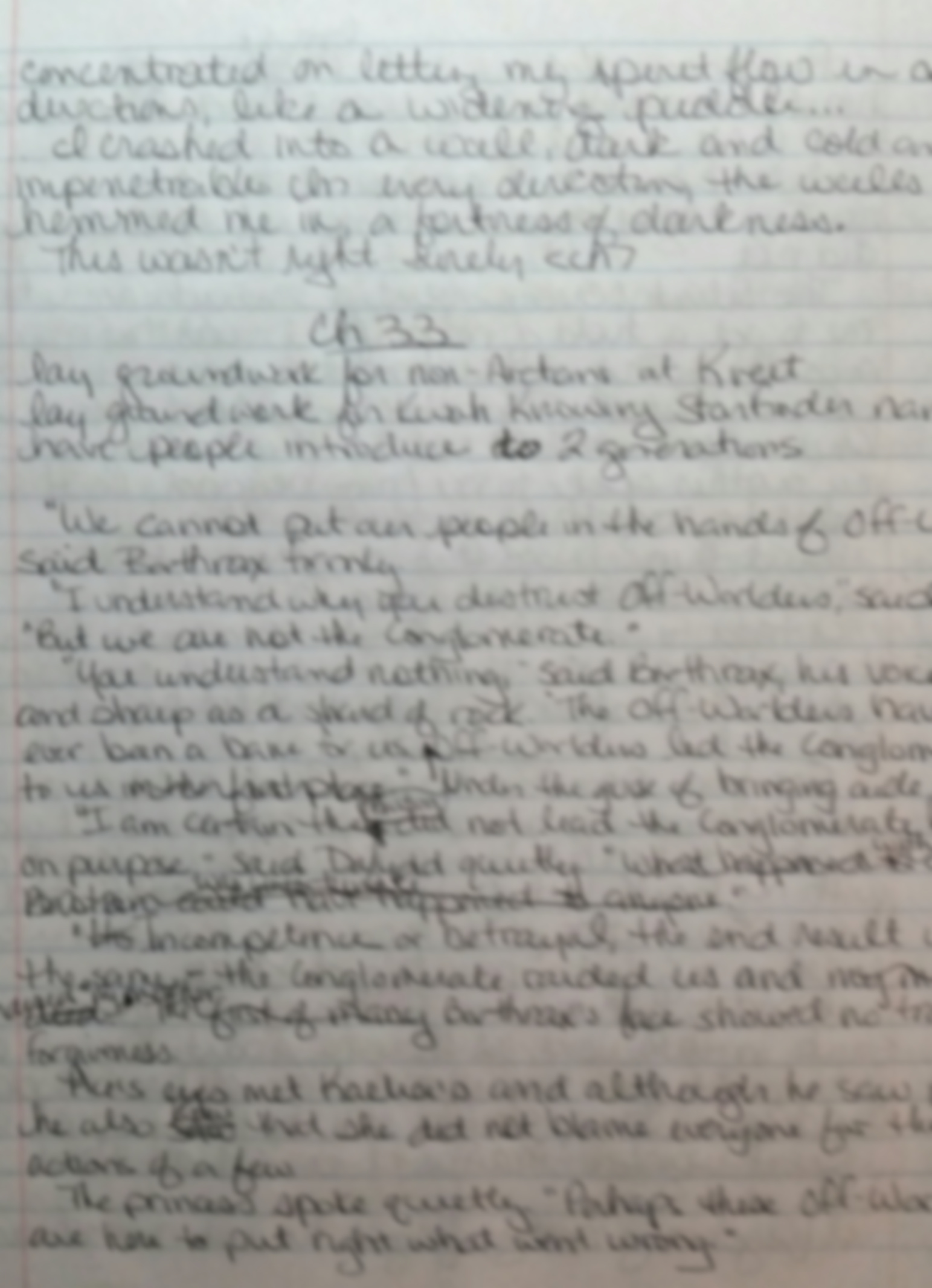
Handwritten page showing second-guessing with crossoutsMy massive revision of Veritas (a YA sci-fi) is moving apace. Some chapters fight me hard—I have so much to revise and add that I virtually (and sometimes literally) rewrite them. But some chapters I tweak. Perhaps add a sentence or a few phrase. Those chapters provide a break for me, but when I get several “tweak” chapters in a row, I start second-guessing myself.

After struggling with a chapter that knocks me down, talks back to me, and generally kicks me around, when I get a tweak chapter I feel like I must be missing something. I mean, it can’t be that easy. Not when the last chapter was so hard. There must be some glaring mistake I am not seeing.

So I scrutinize and I poke and I prod, but I end up back where I started. I think this chapter is all right. But am I right? Second-guessing.

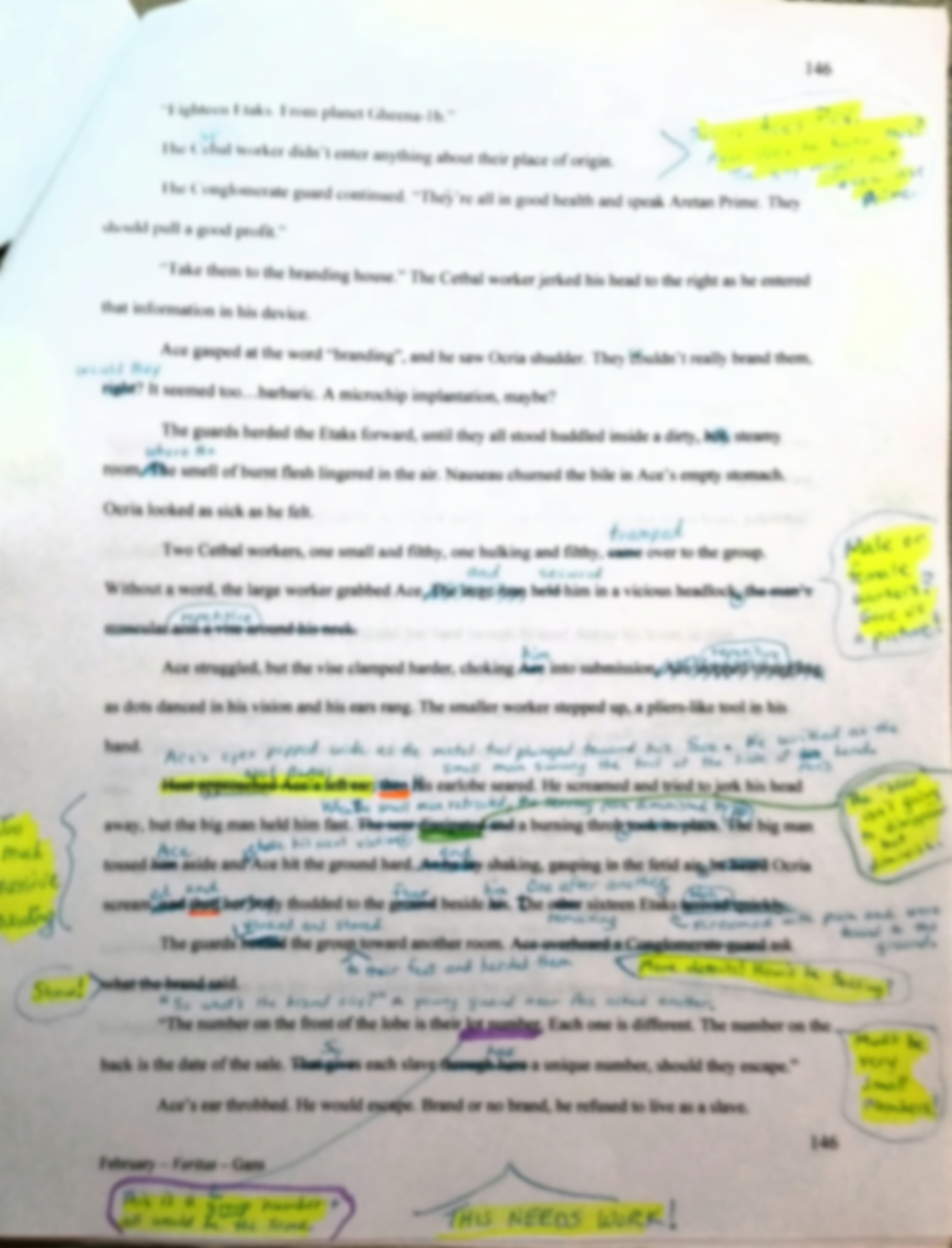
Marked-up manuscript--no more second-guessing!Luckily, this is where critique partners come in. They will look at my chapters, the fighters and the tweaks, and tell me if I’ve missed something. If weaknesses hide beneath the polished surface. They will tell me what doesn’t ring true, what doesn’t feel real, and what knocks them out of the story. Hopefully, this revision will have fixed most of those things.

Once I get their feedback, I will no longer second guess myself. Until then, I will continue to plod through the revision. I’ve just finished chapter 36…of 83. So there is plenty of second-guessing ahead for me!

What about you? Do you find yourself wondering what you’ve missed when revisions seem “too easy”?

Research and Citations: Save Time, Get It Right From the Start

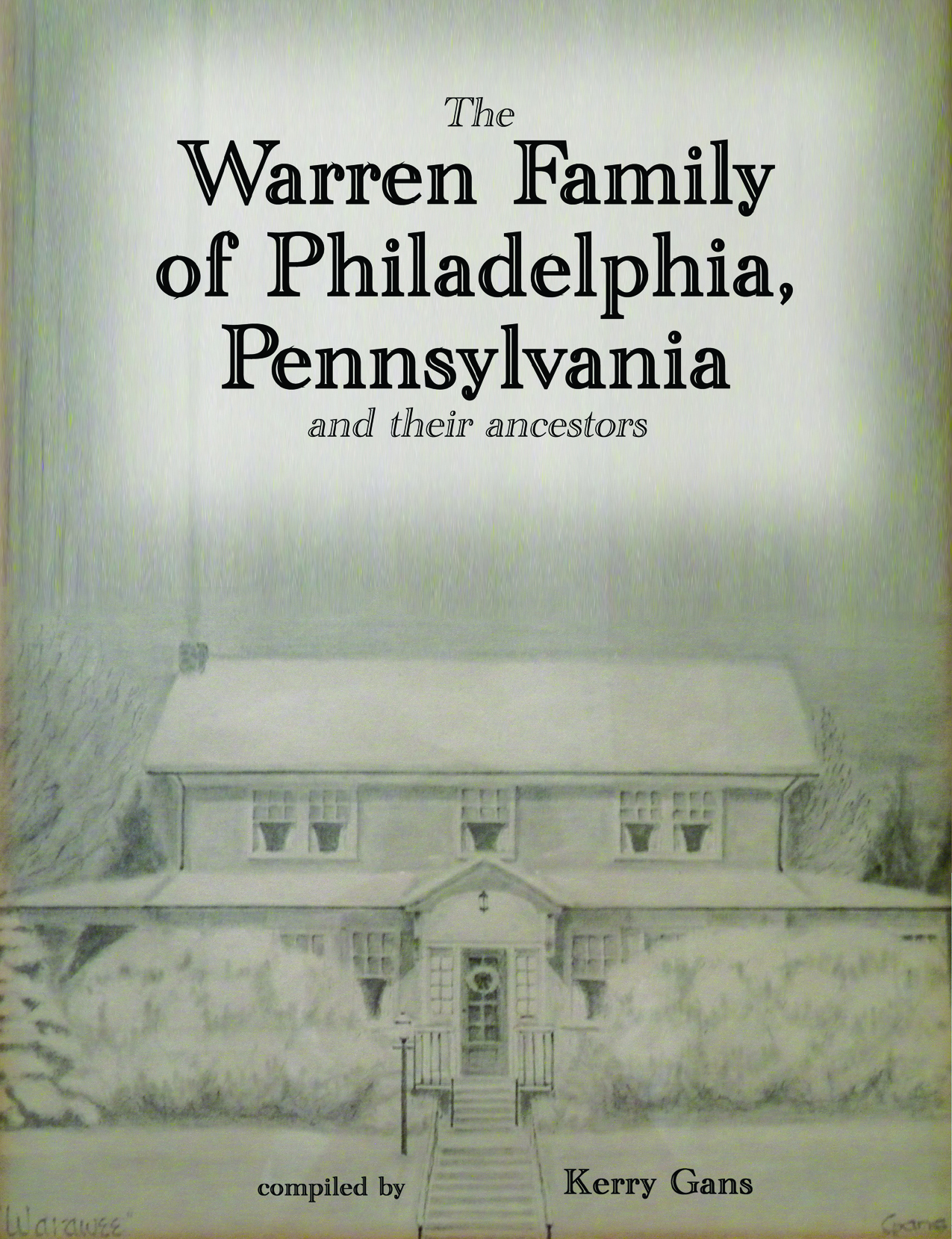
Cover of Kerry Gans' The Warren Family of Philadelphia, Pennsylvania, and their Ancestors, a genealogy research bookI’ve written a family history book for my father’s side of the family, and I am now at work on one for my mother’s side. The book for my father’s side took forever, but not because of the writing—because of the research.

Obviously, genealogy takes a lot of research. Over 20 years I have documented evidence from everything from tombstones to letters to photographs to legal documents for birth, death, and marriage. I have a genealogy program where I enter all the data, and cite my sources for each data point.

The problem? My citation entry proved insufficient.

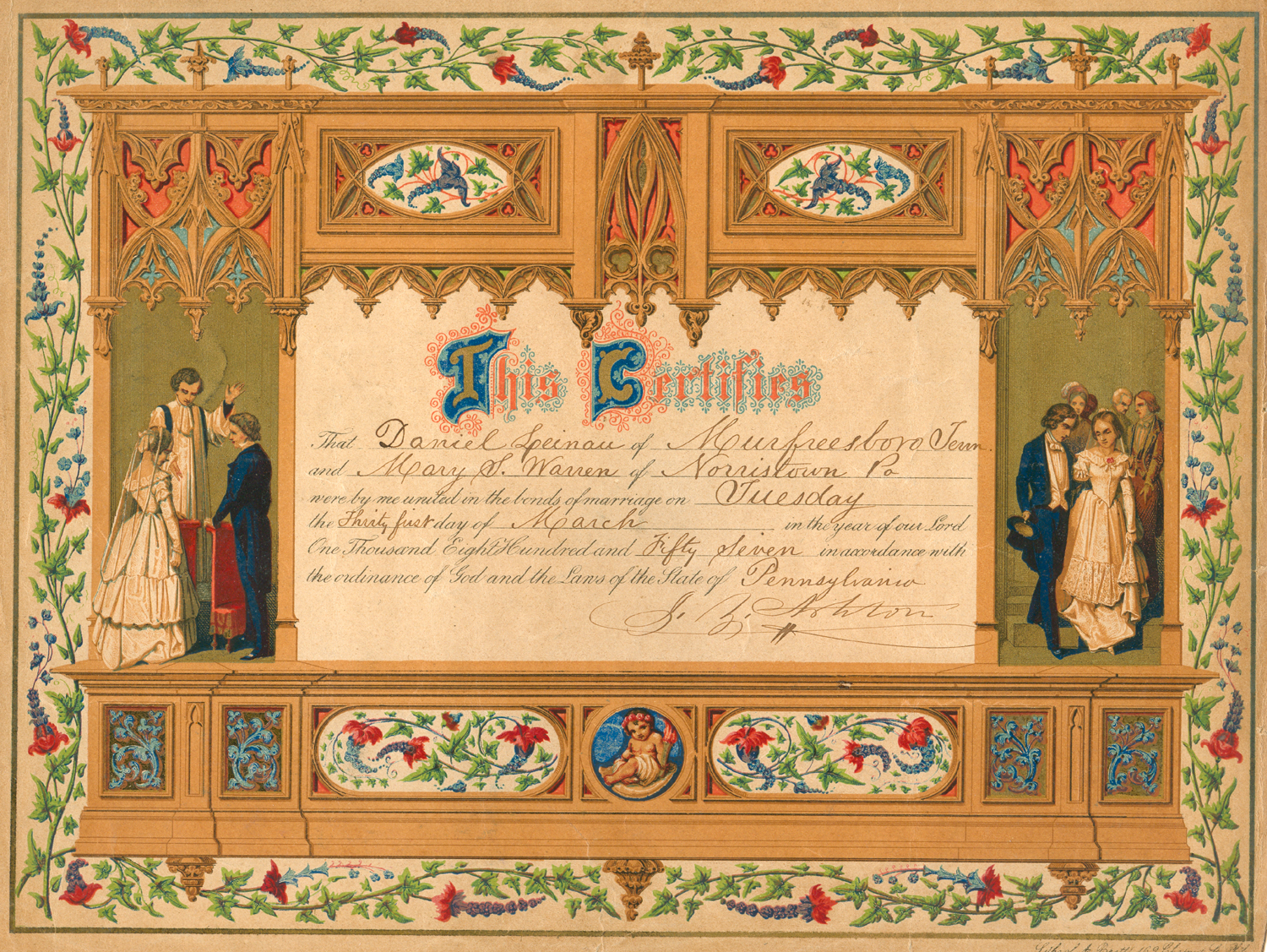
Marriage Certificate of Mary Hobson Warren and Daniel LeinauAs I wrote my father’s book, putting the data into readable prose fell smack into my wheelhouse. But I wanted other researchers of those lines to have a fully sourced genealogy at their disposal. When a genealogist finds a source (such as this book) where you don’t have to reinvent the wheel, that provides a paper trail, and has sources so you can judge for yourself the reliability of the data, it’s like striking gold. I wanted to give this information to people gift-wrapped, as a way of paying forward all the help I had gotten from those who researched before me.

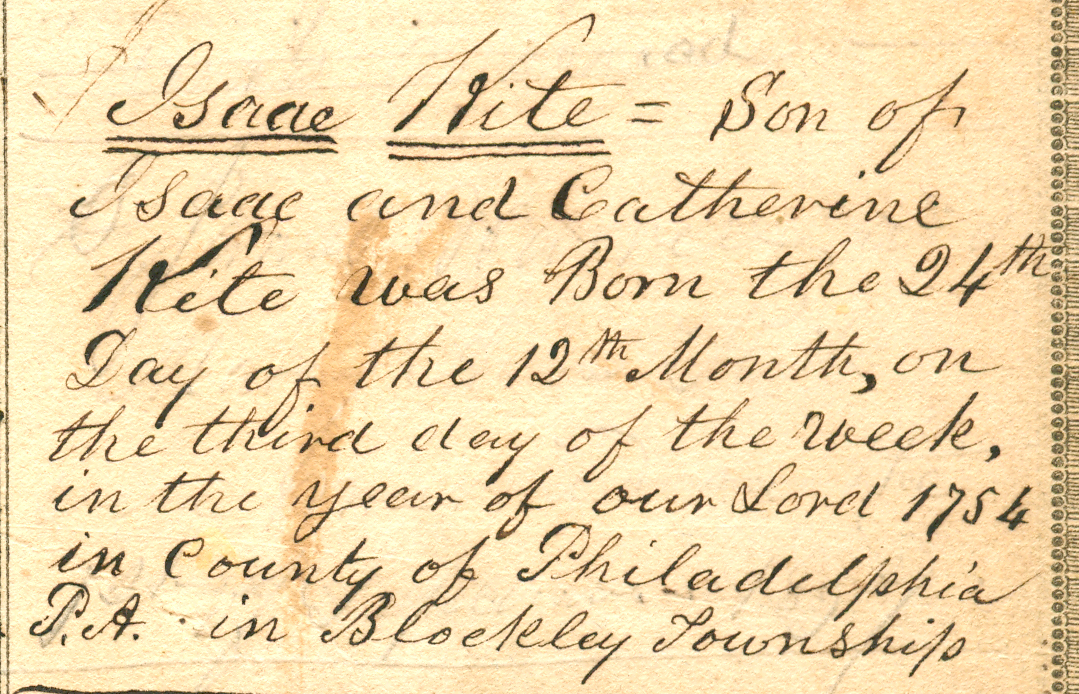
Family Bible birth entry for Isaac Kite, 1754Since citation-supported research was a main goal of the book, I needed to have clear citations for every piece of data. I found in going back into the data that I had often been lax in my citations. While more prevalent in the early days when I often didn’t know better, I also found other places where I had taken shortcuts.

  • I had vague citations: “Tombstone.” Well great, except I didn’t say what cemetery. “Marriage License.” Whose? Issued where?
  • I found incorrect citations: “Scotland Birth Registry.” No such entity exists. I either meant the Scotland Old Parish Records, or the Scotland Statutory Records Index (depending on the date).
  • I had no citation at all. This baffled me the most because I clearly did not make up the information. I got it from somewhere. Often it required me to dig through the information I had to finally find the source.

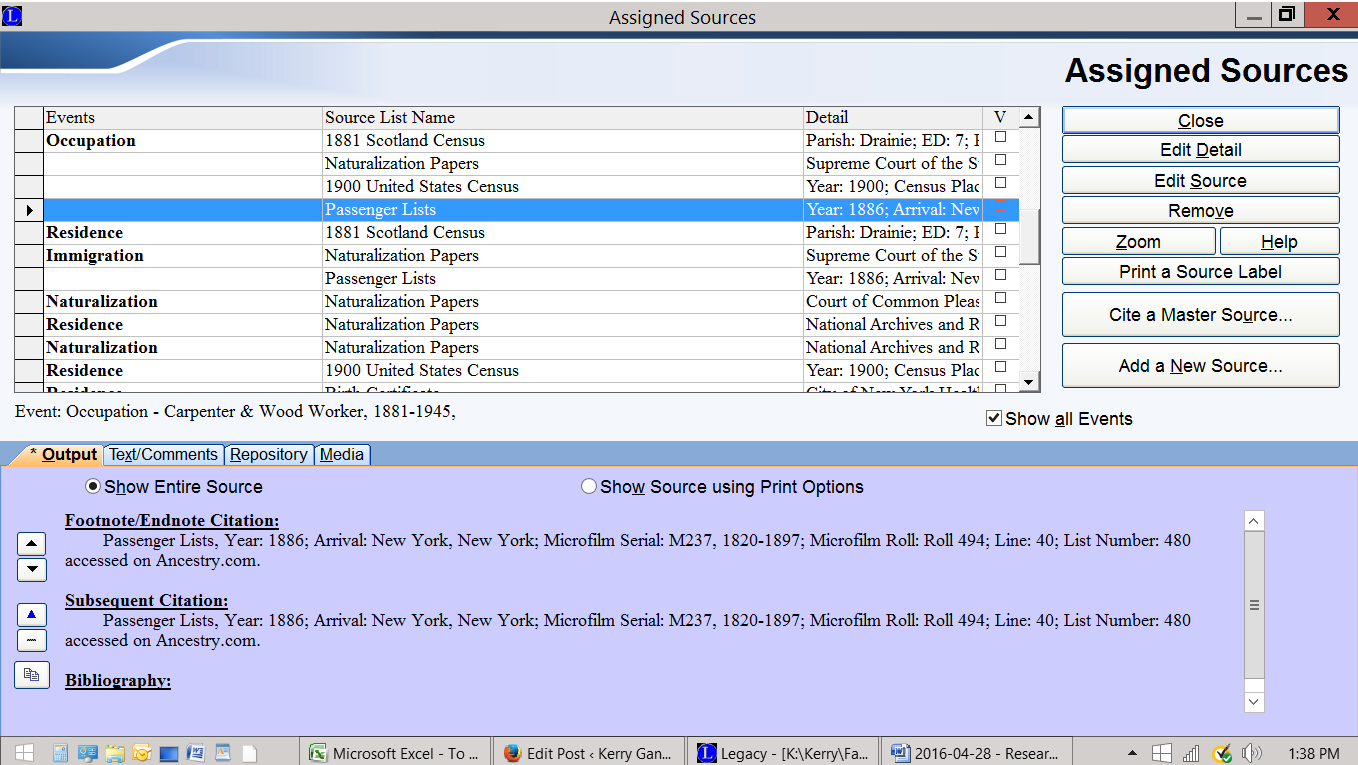
Screenshot of genealogy database program for organizing researchSo the biggest time-suck writing my genealogy books is the source citations. I often have to stop and track down the original source so I can properly source it. Then I have to fix it in the genealogy program before I add it to the book. The upside, of course, is that when I am finished the books my genealogy database will also be in tip-top shape.

What does this mean for your writing research?

I know most of you are not writing genealogy books. But that doesn’t mean you can’t learn from my mistakes.

  • If you write historical novels, have a database where you list every historical detail you use and where you found it. That way you can defend that detail if needed, and it gives you a go-to list for more in-depth research if needed.
  • If you write contemporary novels and people helped you out with details of setting, character, or culture, write it down. In the many years it can take from first draft to publishing, you may forget who told you what, and when it comes time for the acknowledgements, you don’t want to forget someone.
  • If you write fantasy or science fiction, track every bit of real science or history you used to inform your world. Not only will you be able to discuss and defend your points, you can then go back to those sources later to see if there are updates to the science or cultural history that you can use in future books set in the same world.
  • If you write thrillers, mysteries, or police procedurals, you’ll need insider knowledge of the justice system and perhaps technical knowledge for things such as planes, submarines, and weapons.
  • Another advantage to all these research notes is that you can use that information to support blog posts and presentations, non-fiction works about the same subjects, and as resources to refer readers to if they want more information.

We writers pull information from everywhere, and we collect data on a wide variety of subjects. We need to know where all that research comes from. Don’t waste time later having to go back and retrace your steps to double-check a detail. Get it right from the start.

Do you keep track of your research? How do you organize the data and sources?

Abington Library Local Author Expo: There’s No Place Like Home

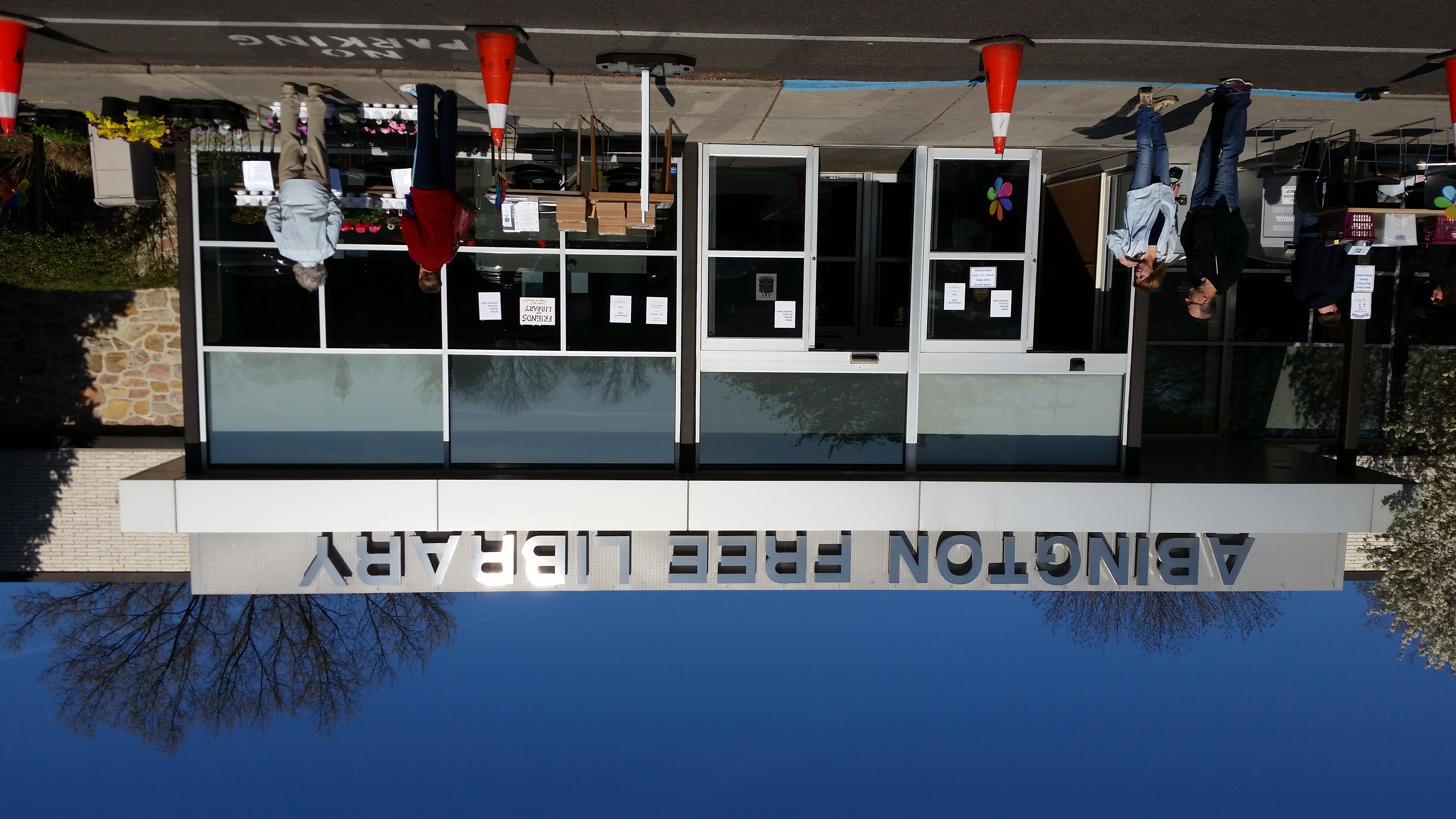
Abington Township Free Public LibraryI lived in Abington Township for 32 years, so the Abington Township Free Public Library is my “home” library. I spent a great deal of time there in the pre-computer age, doing research for papers and reading for pleasure.

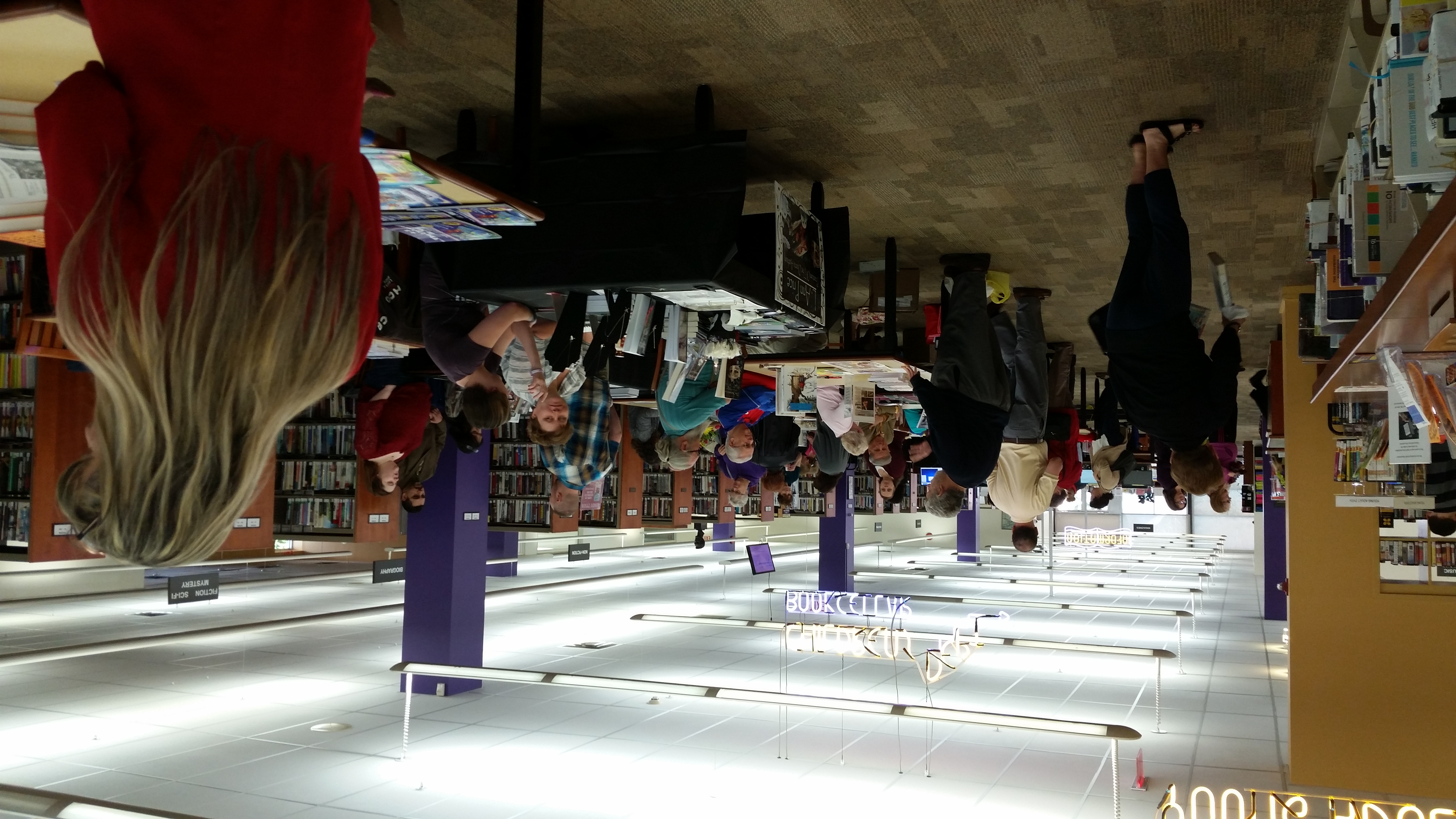
So attending Abington Library’s Local Author Expo on April 16th was like coming home. If felt so comfortable, even though the library has been renovated since my youth. The staff was welcoming, and made sure to come around to all the author tables to see what we had on offer. Librarians and authors are natural partners, after all!

Author Kerry Gans at Abington Library's Local Author Expo

The morning was busy, with customers wandering in from the outdoor vendors of the plant and book sales. I spoke for half an hour with one pre-published writer who had come to the library to buy debris bags for his garden! Everything went smoothly, except…

Technology is wonderful—except when it’s not. Last week my GPS sent me in a literal circle. This week, my credit card reader failed me for the first (and only) credit card sale of the day. Thankfully, the lady also had checks with her. Just to tease me, the credit card reader worked perfectly when I tested it after she had departed.

Authors at the Abington Library Local Author ExpoThe morning session was packed with authors of all genres. Chrissy Fanslau, Captain Morey, Ted Taylor, Charlene Crawford, Judith Rubenstein, Carol B. Polis, Tom Sims, Robert Walton, Jose Russo, Kevin J. McNamara, Wendy Tyson, Cheryl Rice, Chad M. Weiss, L. Ann Price, Peter W. Dawes, Javad Mohsenian, N.M. Lombardi, Toni McCloe, Leah Devlin, and Susan J. Reinhardt attended.

I arrived very close to opening time, so I ended up in the far back corner of the setup. That spot turned out to be a good one, as I got a table all to myself and it allowed space for customers to move easily around the table. It also allowed me to see out the wall of windows into the beautiful day.

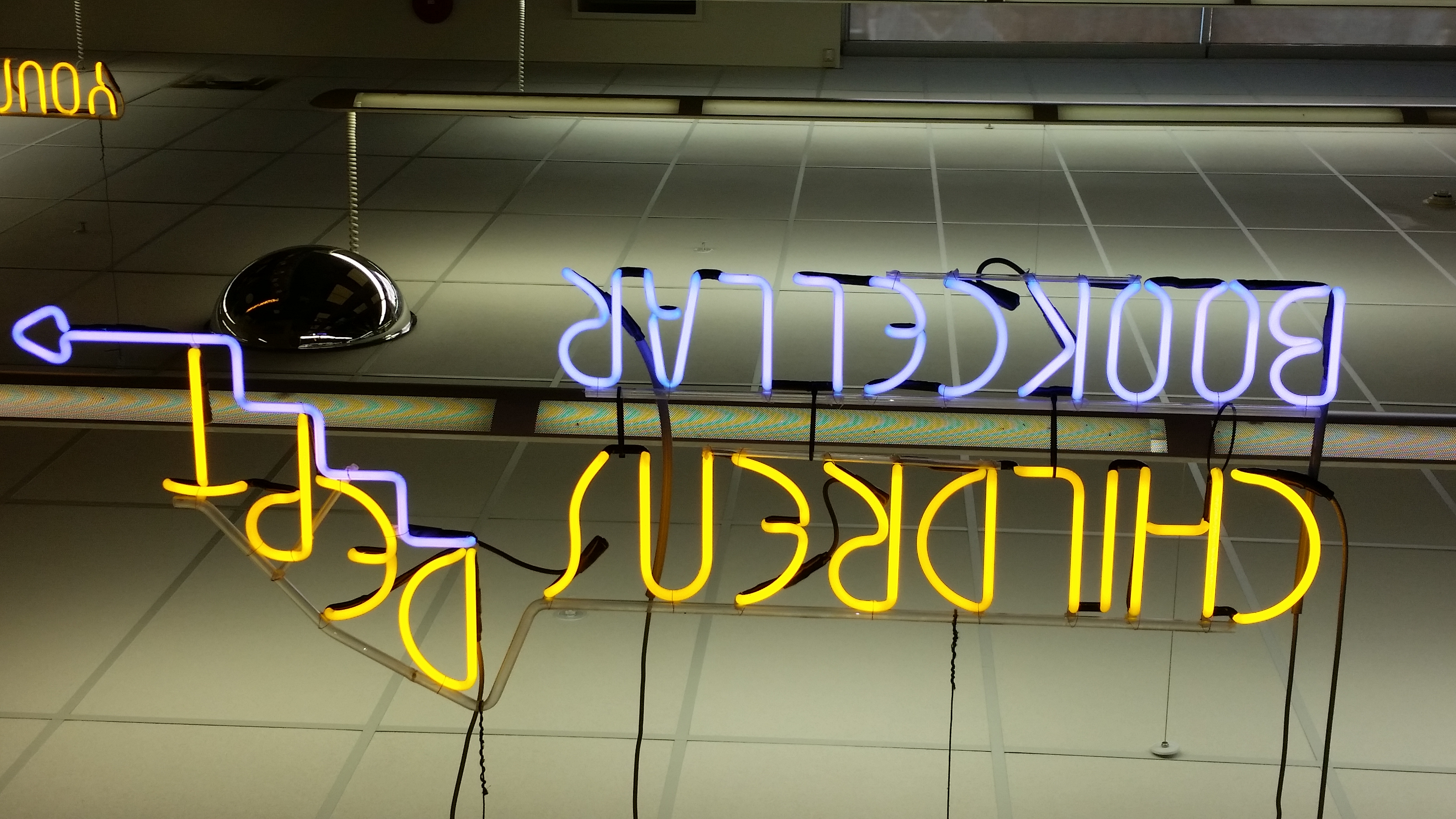
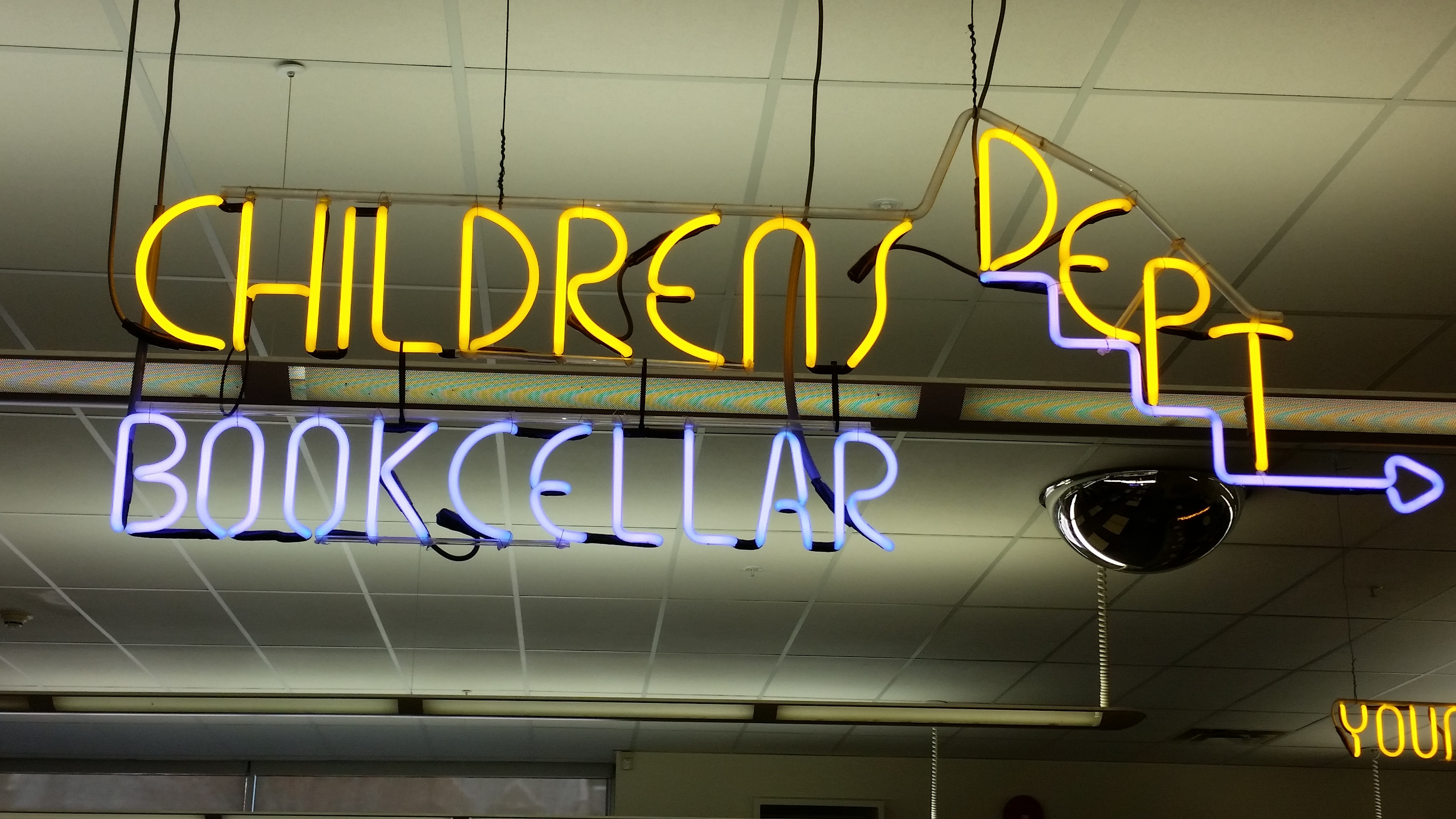
The authors did half-day sessions, but I had managed to get slots for both morning and afternoon. When the morning crew went home, I moved my table to a strategic one in the front, directly at the top of the stairs leading to the children’s section. I remember those stairs well from my childhood—clattering down them was like going through the wardrobe to Narnia. A place of magic, mystery—and home of the three-legged turtle. The turtle is long gone, but the magic remains.

Abington Library Children's Department Sign

The afternoon saw visits from my parents (and daughter), brother, and Writers’ Coffeehouse friends Ann Stolinsky, Tony Athmejvar, and Beverly Black. The afternoon session authors included fellow Coffeehousers Carol Kasser and Chuck Regan, as well as other authors C.L. Lowry, Allan M. Heller, Verileah Teets, Fran Pelham & Bernadette Balcer, Debora Gossett Rivers, Madeline Wilson, Reginald Murray, Jack DeWitt, James M. Paradis, and my tablemate Clayvon C. Harris.

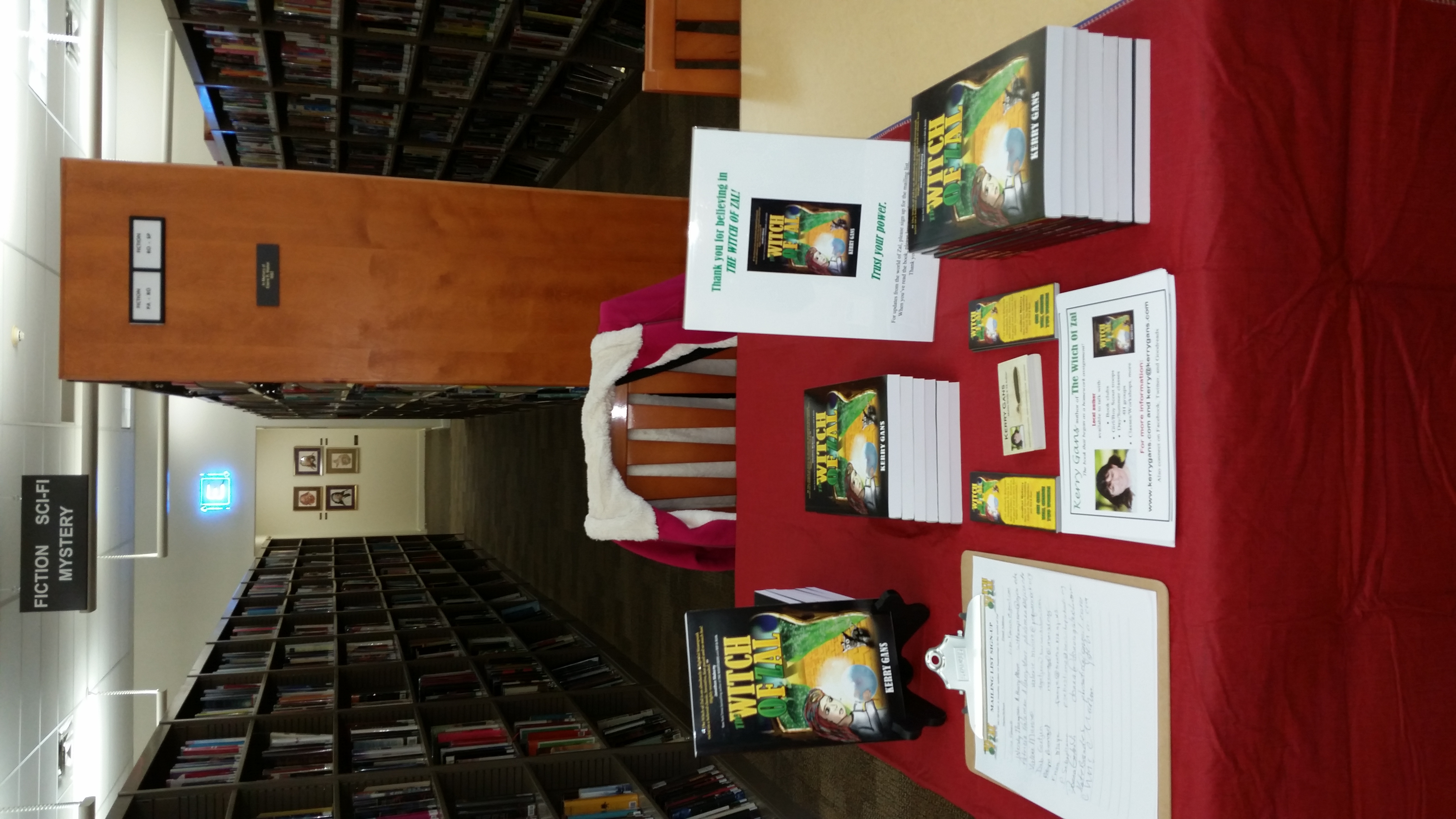
I had a successful and stimulating day at my home library. I sold some books, chatted with a bunch of great authors and readers, and got to breathe library air for the day. To top it off, my book, The Witch of Zal, is now available in the Abington Library, which makes me giddy.

I enjoyed this event, and I hope to do it again next year. As my protagonist Dorveday would agree, there’s no place like home!

The Witch of Zal table at Abington Library's Local Author Expo

A Multi-Author Book Event Sandwich

This week I am sandwiched between two multi-author book events. Last Saturday I was at the Author’s Buffet at the Trenton Farmer’s Market, and this Saturday I will be at the Abington Library Local Author Expo.

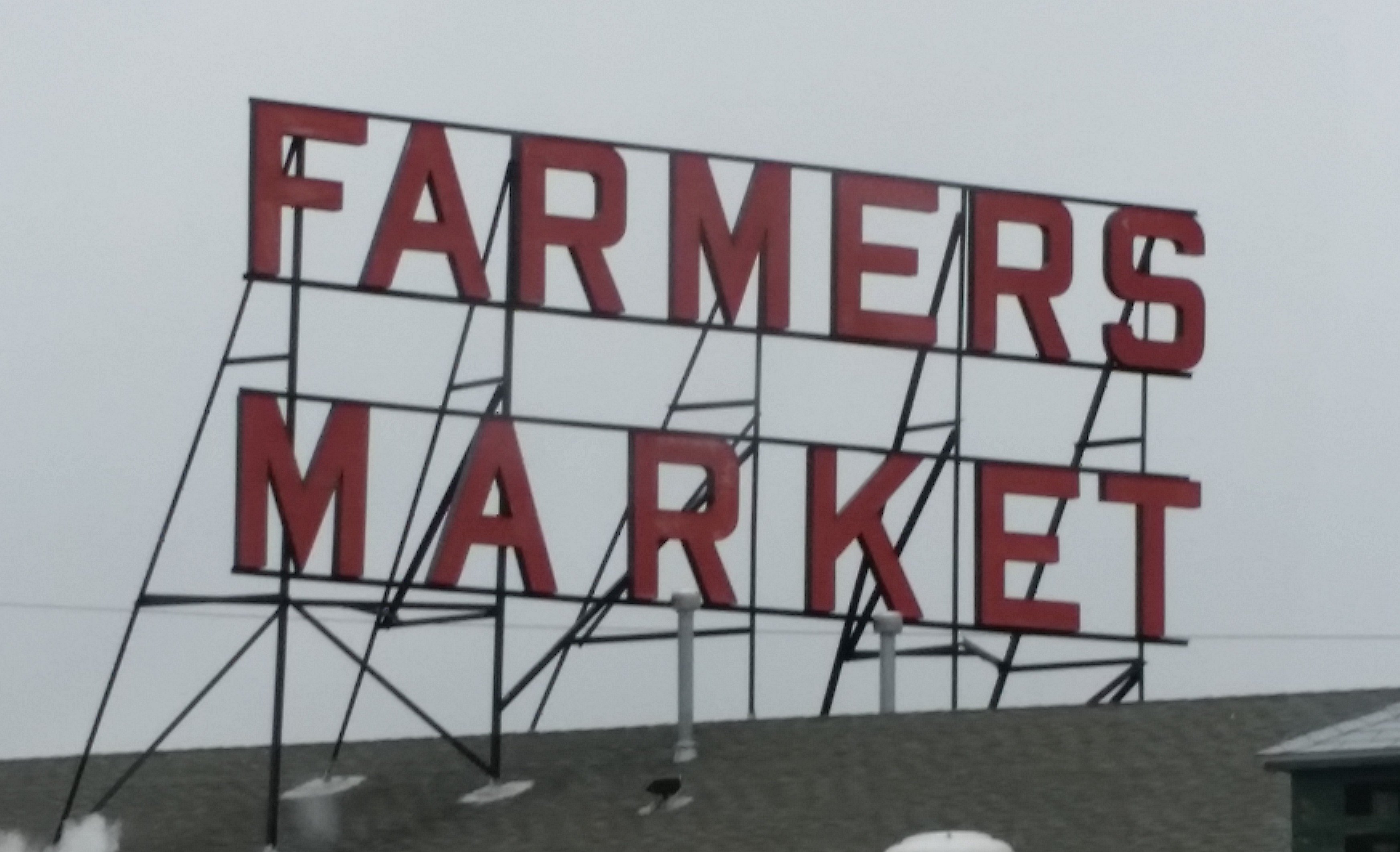
Trenton Farmers Market sign, where author Kerry Gans signed books at a multi-author eventThe Trenton Farmer’s Market was a fun event, even though my GPS seemed determined to keep me away. Twice it drove me in a circle–although the second time I was smart enough not to follow the directions! Luckily, I reached the Market in time to unload before the rain came.

The cold, wet day kept the foot traffic low at the Market, but I had some sales and chatted with people about books and storytelling.  My fellow authors at the event–J.R. Bale, Laura Kaighn, Kimberly Sentek, and Michele Lynn Seigfried–and a had some lively conversations about the state of the publishing business, our personal publishing journeys, and what events we were planning to attend this year.

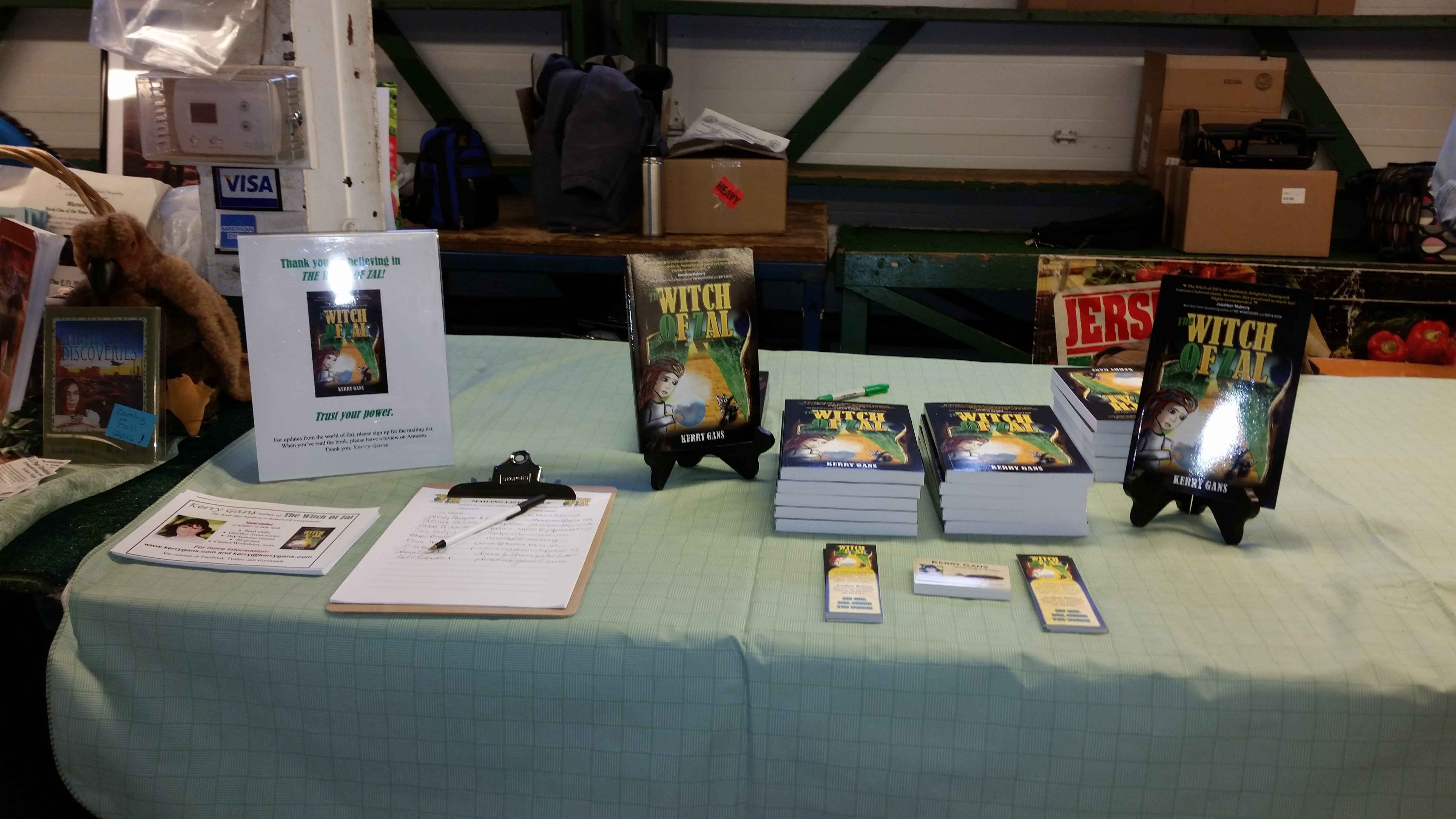
Author Kerry Gans at her table at the Trenton Farmers MarketThis coming Saturday, April 16th, I will be at the Abington Library Local Author Expo from 1:30-4:30 pm. This event features 40+ authors, half in the morning and half in the afternoon. A portion of the proceeds goes to the library, so any purchases simultaneously supports the author and the library.

The Abington event excites me because Abington was my home library for 32 years. That library filled my voracious appetite for reading from a young age, and I still remember the magic of browsing the stacks and finding wonderful worlds to lose myself in.

I’m finding that I like these multi-author events, even when sales are slow.  As an introvert author, I appreciate not being the center if attention all the time, and I enjoy the camaraderie of the other authors.  I always learn new things from them, and listening to their war stories passes the time pleasantly.

Kerry Gans' author table at the Trenton Farmers Market

If you are in the Abington, PA, area on Saturday, stop by and support your local authors–and if you’re there in the afternoon,  be sure to stop by and say hello!

Do you prefer multi-author events, or solo events? Does your opinion change based on if you are attending as an author or a fan?

Exploring My Author Theme: Connection to the Past

A long time back in a post on The Author Chronicles blog, I talked about author theme—a theme that seems to recur in every book by that author. In that post, I realized that all of my current WIPs deal with individuality, with the struggle to be yourself and still be accepted and find a place to belong. So that seems to be my primary author theme.

Concept cover art for Veritas by author Kerry GansRecently, I have found another author theme that seems to pervade my work—that of connection to the past, of problems set in motion well before the protagonist came into the picture. Perhaps this is an outgrowth of my fascination with genealogy, or perhaps it’s because I have a soft spot for Chosen One narratives. After all, Chosen Ones are, by definition, chosen by someone or something else outside themselves—usually because of events that happened before they were born or able to influence their own lives.

Concept cover art for The Curse of the Pharaoh's Stone by author P.G.K. HansonIn one WIP, the protagonist’s problems start with something that happened when his uncle was a young archaeologist. In another, the secrets parents kept threaten to tear apart sisters. In a third, a battle 300 years in the past is influencing the present. In a fourth, a conflict of beliefs between her grandparents and her mother force hard decisions on the protagonist. So in many different ways, decisions made by people in the past propel the protagonist into the adventure of the present.

Concept cover art for The Oracle of Delphi, Kansas by author Kerry GansThis is not the same as predestination. My protagonists are free to reject or pick up the task handed to them. They are free to handle the situation as they see fit—not as others deem proper. And even though the decisions of the past are driving the present, those decisions were not predestined, either—those people could have chosen differently.

So this is not predestination—it is reality. In the reality of our world, we are often impacted by decisions made in the past. Had my parents not moved to Pennsylvania, I would not have made the friends I’ve made or met the man I married. Would I have made other friends and met someone else? Probably. But that would have been a different life, a different narrative. And my daughter would not exist. A daughter might exist, but not the one who exists now. And that would change the future. Every decision our ancestors made led to our existence. Every decision we make, even as a child, changes the trajectory of the future.

As Jane Goodall said: “You cannot get through a single day without having an impact on the world around you. What you do makes a difference, and you have to decide what kind of difference you want to make.”

Who or what made a difference in your protagonist’s past? What difference is your protagonist making today?

Good-bye to Cousin Warren

My folks were supposed to spend Easter with cousin Warren and his family, but a week prior he emailed and cancelled, saying he was having side effects from chemotherapy. He closed the email with a cheery, “There’s always next year.”

Warren died on Easter Sunday 2016.

Warren was the younger son of my great-uncle Ed and great-aunt Marge, as well as a husband, brother, father of four, grandfather of four, and friend to many.

Warren was my dad’s first cousin. When they were kids, they saw quite a bit of each other as the families spent time together. The Christmas the boys all got tin trumpets is a favorite family story. As the families aged, they saw less of each other as everyone went their own way.

When I was a very small child and my great-grandmother still lived, the 3 branches of the Warren family gathered together for holidays. When great-grandmother moved to a nursing home, those gatherings ceased and we rarely saw each other as time and distance took its toll.

In the past few years, the Warren family cousins have reconnected. The deaths of Aunt Clare, Uncle Ed, and Aunt Marge (the last of that generation) within a few years of each other seemed to bring the need for family and the awareness of our own mortality to the forefront.

I have seen Warren several times over the past few years, and what I remember most was his smile. Like his parents, he had an unfailing positivity, a cheerful attitude, and a generous spirit. His warmth filled the room, and he had a knack for giving you his undivided attention even in a crowd.

Warren is my father’s first cousin, making me his first cousin once removed. Nevertheless, we connected over genealogy. Warren’s mother Marge was the last surviving Warren Sister, and she had inherited all the family errata. Warren painstakingly went through the boxes of paper and pictures and came out with gems—photos of ancestors back to the Civil War, ancestors we never had photos of before. He also had batches of photos of my great-grandparents, as well as some papers such as letters and deeds. He handed all of them to me, since I am the family historian.

It is always wrenching to lose a family member, but especially so when you feel like you are just getting to know them. I will always remember his laugh, his intelligence, and the genuine joy in his face when we would meet.

Godspeed, Warren. We will miss you.

How to Cope with Book Launch Anxiety

As an extreme introvert with an anxiety disorder, I can simultaneously be looking forward to something and wanting to crawl in a hole and hide until it’s over. Such is my state of mind over my upcoming book launch event on Saturday. I am so excited to celebrate with everyone, but terrified of being the center of attention.

Author Kerry Gans has Book Launch AnxietyMy anxiety level has already swung upward, with several almost-panic attacks barely avoided this week. My protective avoidance behaviors have been strong as well, with fatigue wanting me to sleep all day to still the anxious thoughts swirling in my brain. After 2 hours of errands (many related to the launch) today, I gave in and slept for an hour and a half. Not the most productive use of my time, perhaps, but sometimes it is necessary to indulge the anxiety in order to knock it back down to a manageable level.

And what of the big day? How am I going to handle Saturday? There are two approaches I could take: keeping busy or keeping quiet. Both options work, but there are tradeoffs with each.

If I keep busy, I have less time to think myself into an anxiety attack. I have less time to dwell on the anxiety, and so it tends not to grow as large. The tradeoff is that by keeping busy I use up a great deal of my social energy, leaving very little by the time I actually get to the book launch event, and that might make the launch less enjoyable as fatigue catches up with me.

If I keep quiet, I use little of my social energy, but I have a much greater chance of curling up into a sobbing ball before launch time and being a wreck the entire time I am there. Too much time to think, to feel, can be very dangerous for me. What if I get sick? What if my car breaks down? What if no one comes? What if I have a heart attack in front of everyone? What if the store catches fire? (You see what I have to deal with in my head?)

So which have I chosen for Saturday? As it turns out, I am busy by default. My daughter has to be at my parents’ house by 9:15, so I’ll be up and out early. I have scheduled a tax accountant meeting for 11 am (my accountant lives near my folks), and at 1 pm I need to head up to Doylestown for a Craftwriting workshop with Kathryn Craft. Then I will buzz out of there at 4 and hop over to the Doylestown Bookshop for the launch event at 5.

Busy it is, then. I think that’s the better option for me, because when my anxiety level is very high, busy is more effective than quiet. Quiet will be reserved for Sunday, when I will get to sleep late and relax—and enjoy remembering what I know will be a fun and successful book launch the night before.

I hope to see many of you at the launch on Saturday. And if you see my face turn bright red, that’s just my anxiety trying to crash the party. Ignore it—I plan to!

How do you cope with out-sized anxiety?

Break It Down to Avoid a Breakdown

If you read my post about all the hats we writers wear, you can see how overwhelming our tasks can be, and also see why so many authors get burnt out. With so many tasks to accomplish, how can we do it without having a mental breakdown? Simple: break it down.

Marketing is a huge task, and ideally all the many moving parts should combine into an overarching whole. But if I look at the marketing plan as a whole it seems un-doable. Mind-shattering—especially for a deep introvert like me. So I break it down.

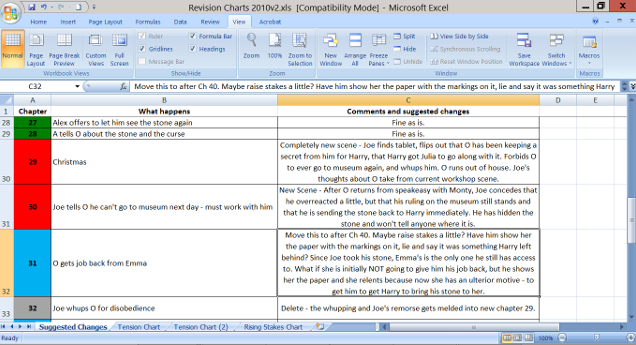
Breaking down is not a new concept to any writer. We do this all the time when we write, particularly when we revise. Trying to fix everything in every chapter on one pass is impossible—we would inevitably miss something. So we break down the editing into multiple passes. We do one for structure, one for chronology, one for character arc, one for dialogue, one for grammar, etc. We take a huge, overwhelming task and break it down into smaller, more manageable tasks.

Revision Chart for The Curse of the Pharaoh's Stone

Marketing is another mammoth task that can paralyze me with its sheer magnitude. So I have to break it down. I choose one or two tasks a day to accomplish. One day I might contact possible reviewers. The next I might work on my email list. The following day I might update my website. And every day I carve out a little bit of time for the big social media platforms—Facebook, Twitter, Pinterest, etc. (although I admit Facebook is where I spend most of my time).

When I break it down that way, it doesn’t seem as overwhelming. Also, since the marketing is the hardest (emotionally) task for me, knowing I have only one or two tasks to complete in a day makes it easier. Otherwise my well-honed procrastination skills would kick in and I’d push it off forever.

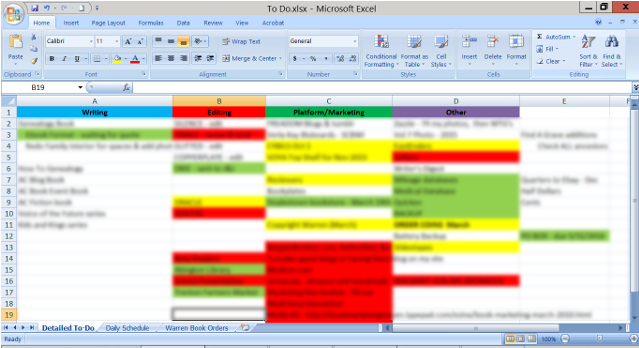
Breaking down large tasks creates a longer To-Do list, but it also gives me a sense of accomplishment because I can check tasks off the list quickly. That sense of immediate gratification is nice—especially with the marketing, where sometimes you don’t see the impact of your efforts for weeks. Plus, since I often have to grab small amounts of time to work, having smaller tasks allows me to get more done in the scattered work environment I have at the moment.

To Do List for marketing Kerry Gans' book The Witch of Zal

So that’s how I avoid having a mental breakdown over the huge tasks—I break them down and tackle the pieces one at a time.

Do you break down larger tasks into smaller ones?

WP-Backgrounds Lite by InoPlugs Web Design and Juwelier Schönmann 1010 Wien