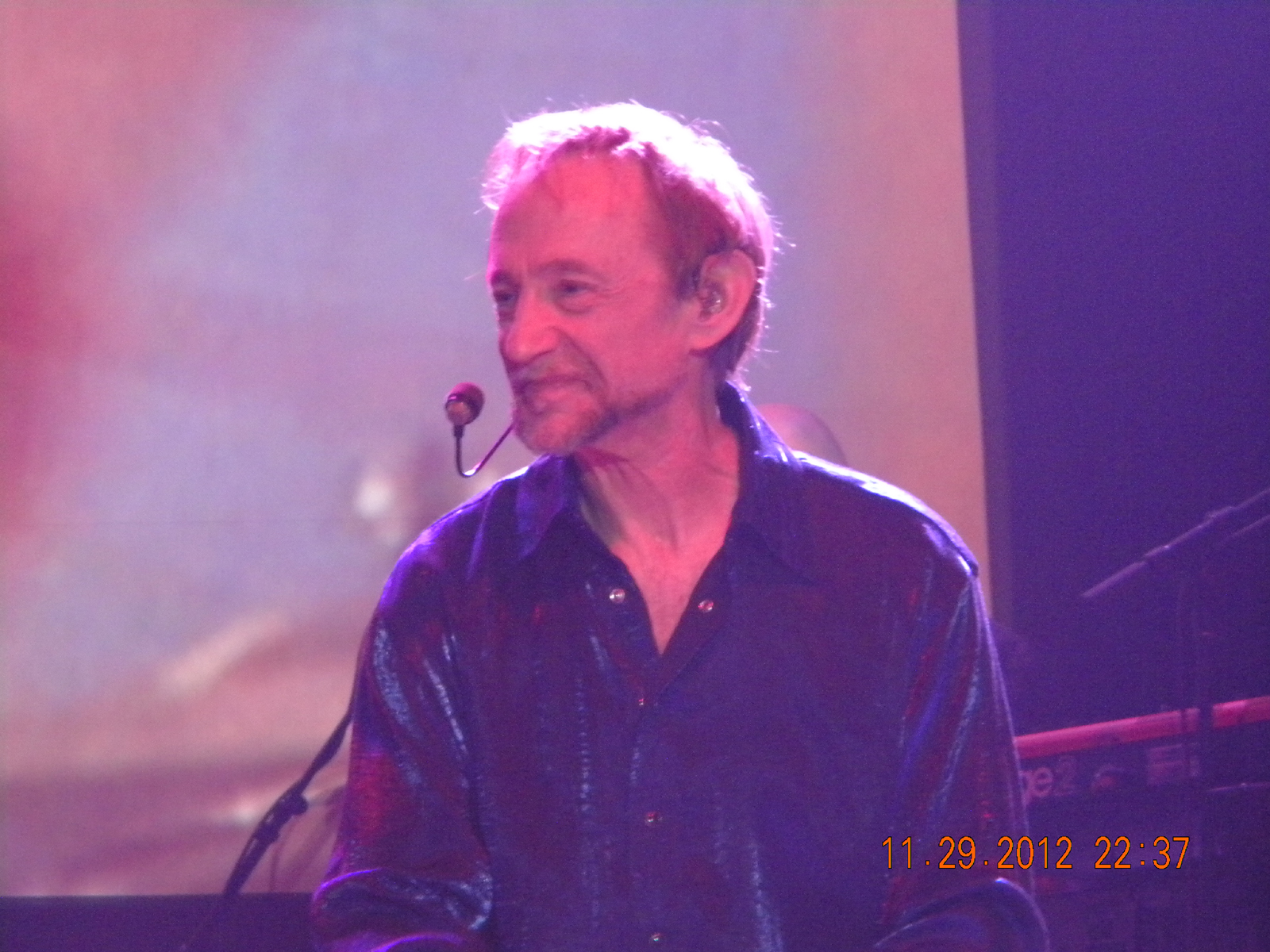


The Internal Saboteur

We all know about the “internal critic” or “internal editor.” You know, the one who keeps telling us things like, “That comma doesn’t go there.” or “That’s the worst sentence ever written.” or “No one’s going to want to read the trash you’re writing.” And there are many blog posts out there dealing with how to turn him off or shut him down.

But what about your “internal saboteur”?

What? You’ve never heard of that one? Then pay attention, because he might be why you’re not moving forward as fast as you’d like.

The internal saboteur is not loud like the internal editor. Like most saboteurs, he prefers to work quietly and unnoticed. Subtle. Insidious.

The internal saboteur is why you stop working on a manuscript when you’re getting close to the end. He’s why you put off sending out those query letters. He’s why cleaning the bathroom suddenly seems more appealing than doing the final polish on your short story.

In short, he is every reason you procrastinate when you could actually be accomplishing something.

The internal saboteur is fear made manifest—but not fear of failure. He is fear of success.

That’s right, fear of SUCCESS.

Why would you be afraid of success? Because success means change, and change is very hard for a lot of people. Success in writing can mean a huge amount of change in a short amount of time, too, robbing us of the ability to ease into our new world slowly. The internal saboteur doesn’t want to deal with the change.

How to I know about the internal saboteur? I live with him every day. It’s no secret I wrestle with an anxiety disorder. This means everyday things can be incredibly difficult for me—just talking on the phone can break me out in sweat. My fear rises up every time I try to step out of my sheltered routine—to see a movie or go out to eat or see a concert or visit a friend. Simple things. Yet my fear will grab me, try to convince me that I am too ill or too tired to go out and do these things. That I don’t really want to. That it would be harmful to go. I must fight the physical symptoms of this fear and push ahead anyway. Live my life in spite of my internal saboteur.

Since he is so prevalent in my daily life, it comes as no surprise that my internal saboteur is hard at work in my writing life as well. He doesn’t seem to have a problem with me writing, per se (he leaves that to the inner critic). But once I have a piece written, he fights hard to make sure I never do anything productive with it. It becomes too great a chore to finish revising those last few chapters. I’m too tired to research agents to query, and I definitely need to nap instead of researching markets for the short story I wrote. I procrastinate, playing Solitaire over and over, finding other chores to do, or simply escaping into the rabbit-hole of genealogy research.

I know my internal saboteur when I see him. Sometimes it takes a few days, but I know the signs. And when I finally recognize him for what he is, I have to rally myself, kick him to the curb, and get on with the things I need to do to further my career.

One of my goals in 2013 is to recognize him earlier, to loosen his grip on my career. I spend my whole life beating him off with a stick so I can enjoy my life—I refuse to let him steal my writing career from me.

Take a look at what’s holding you back in your writing career. Are the obstacles real—or are they the constructs of your internal saboteur? Is it the OBJECTS that are insurmountable—or the FEAR?

Don’t let fear of success hold you back.

No matter what your internal saboteur says, you deserve success just as much as everyone else. Go and grab it.

GoosesQuill FB

2012: A Year in Review

I really don’t do the whole New Year’s Resolution thing. I find that “resolutions” tend to be things I wish would happen, but not things I can realistically expect to accomplish. And I think, for me, there’s psychological pressure in the idea that a resolution means I have to accomplish it or I’m a failure.

I don’t like failure.

So I decided last year that I would have goals, not resolutions. Measurable goals, so I could at least see how much headway I made if I didn’t actually reach them. So I sat down and looked at my time, my schedule, and my enthusiasm levels. Because as we all know, if you’re not internally motivated to do something, it’s not going to happen—willpower is not enough to carry something for the long term.

I focused on my writing goals for the year. I had 3 goals:

1) To post on my blog every Thursday without fail.
2) To have at least one novel ready to query agents by the fall.
3) To write at least one short story and send it to several markets.

So how’d I do?

1) I haven’t missed a week blogging. That makes 2 years in a row I’ve maintained the pace!
2) I sent my middle grade fantasy Ozcillation out to agents this fall. Hurricane Sandy kind of got in the way, but I’ll resume the queries after the holidays.
3) I have written 3 short stories and sent one of them to multiple markets. The other two should be ready after the holidays.

So you can see that I’ve accomplished what I set out to do this year—even did a little better in some places. Yay, me! It’s nice to feel like you’ve made positive progress in your life.

Next year’s goals? I haven’t thought them all through, but they currently look like this:

1) Keep up the pace with the blog, and start to use the blog to more effectively connect with my potential readers.
2) Continue to query Ozcillation.
3) Send out at least one more novel by mid-year.
4) Continue to write short stories and send them out.

Those are the writing ones. I really need to add some personal ones like exercise more, eat better, and get more sleep. But I’m wary of them because I rarely have the stamina to maintain those for long periods. Usually after a couple of weeks, I’m back to my old habits. Which doesn’t mean I shouldn’t make them goals. It just means I need to think more about how to turn them into achievable goals, instead of fantasies.

So here’s to reaching our goals in 2013! What goals do you have for the coming year?

GoosesQuill FB

Sandy Hook School Shooting: A Wake-Up Call For Our Nation

I can’t stop thinking about the Sandy Hook tragedy. It hit me very, very hard. Grief-stricken and dazed. I didn’t know anyone there personally. I had no connection to the town. But the pain and the horror struck me like nothing has since 9/11.

I am left with the overwhelming conviction that something must be done. It should not be this easy to kill children.

It should not be.

One of the things that disturbed me was when they said that the killer’s mother had guns as a “hobby.” Perhaps because I am a writer, I am sensitive to the power of words. And although I have heard about people’s gun “hobbies” before, this time it really struck me how wrong that word is. Woodworking is a hobby. Genealogy is a hobby. Knitting is a hobby. Lethal weapons should not be a “hobby” comparable to those. I have heard people refer to their guns as “toys” and going out to shoot as “playing” with said toys. These words should not be used in conjunction with guns. It sends the wrong message. For those of you who are serious about your gun passion, please deter people from speaking this way. It diminishes what these weapons are meant to do: kill. Killing is serious. It is not a game. It is not a toy. It is not “play.”

Mention gun control, and inevitably a flame war will start. But see, I have friends who are gun owners. They are reasonable, responsible, rational people. They are caring and compassionate people who undoubtedly shed their own tears over this tragedy. It is time for people like my friends, who I am certain would not be against reasonable restrictions to help stop the mentally ill from getting their hands on guns, to speak up, to help find the middle ground that we can all live with.

Mention mental illness, and people shudder or shrug. It’s not their problem, right? Tell that to the families of the 27 dead in Connecticut. And the families of the victims of Virginia Tech and Columbine and Aurora, Colorado. It is everyone’s problem. It is time to start talking about mental illness, to stop stigmatizing it. It is time to revamp the health care system so that people who need help get it before they reach the breaking point. Right now, it is too hard for families to get the help they need for loved ones who are suffering from mental illness. We need to change that. Until we do, we are doing a disservice not just to the victims of those people but to the people themselves who deserve a good life even with a mental illness.

I don’t have the answers. But we as a country need to have the hard conversations. There are other countries with many guns and fairly loose laws, like ours, who do not have these mass killings happening. Canada and Switzerland have both been mentioned to me as such. What are they doing that we are not? Is it cultural? And if it is, then it is time we start addressing our culture, too.

All I know for certain is this:

There are 27 people dead who should be alive.
There are 7 adults who died before their time.
There are 20 children who will never grow up.
There are 27 families who have wounds that will never heal.

We have lost more than we will ever know.
We have lost too much already.
We must change course before we lose everything that’s left.

GoosesQuill FB

A New Adventure: A Novelist in Short Story Land

If you read this blog, you know that I’m a novelist. I think long and I like to use a lot of words. (My husband is nodding his head vigorously.) I never thought short stories would work for me. I had written some while getting my Masters’ degree, but they had been a struggle, so I shied away from them once I got out of school.

Recently, at the behest of Jonathan Maberry, I tried my hand at them again. And I like doing them! There are a lot of “scholarly” reasons I’m enjoying them (see my Tuesday post on The Author Chronicles for details), but I think the main reason I like them is that they are…short.

Don’t get me wrong, writing short is not easy. Short stories are an art form unto themselves, and the lessons you learn as a novel writer don’t always translate. But I have found the instant gratification (getting from first draft to polished in days rather than months—or years) very satisfying.

My writing friend Donna Galanti also said short stories keep her writing fresh. She’s right—it lets us appease that urge to follow the new, shiny idea (don’t look so innocent—you know what I’m talking about) without distracting us from our novel-length project for too long.

So, I’m using some of my newly found writing time to learn the craft of short stories. I have one that is ready to send out, with two more in the final stages of polishing. I’m taking some deep breaths and readying myself to send them out in the world.

The funny thing is, I am not so nervous about them being rejected as I am about the query process itself. It’s different than for novels, so I feel a bit out of my depth. Right now I feel like it’s my first day on the job and I’m nodding my head like I understand when I really have no clue. (Come on, you’ve all done it.)

But as my friend Keith Strunk would say, “fake it until you make it.” Because I know these “first day” jitters will pass with time and experience. Will my stories find homes? I don’t know, but I’m ready to find out.

It’s a new adventure! What new adventures are you embarking on?

GoosesQuill FB

Monkee-ing Around

If you know me at all, you know I’m a huge Monkees fan. I was devastated when Davy Jones died earlier this year, because I was sure I’d never see another Monkees concert again. However, in a surprise move, Micky Dolenz, Peter Tork, and Michael Nesmith got together and did a short tour this November!

Disclaimer: All the photos in this post are my own and are owned by me.
If you use them for any purpose, please identify them and attribute them to me.
Do not change them in any way or use them commercially.

All Three

Mike Nesmith, Micky Dolenz, Peter Tork
Keswick Theatre
Glenside, PA
11/29/2012

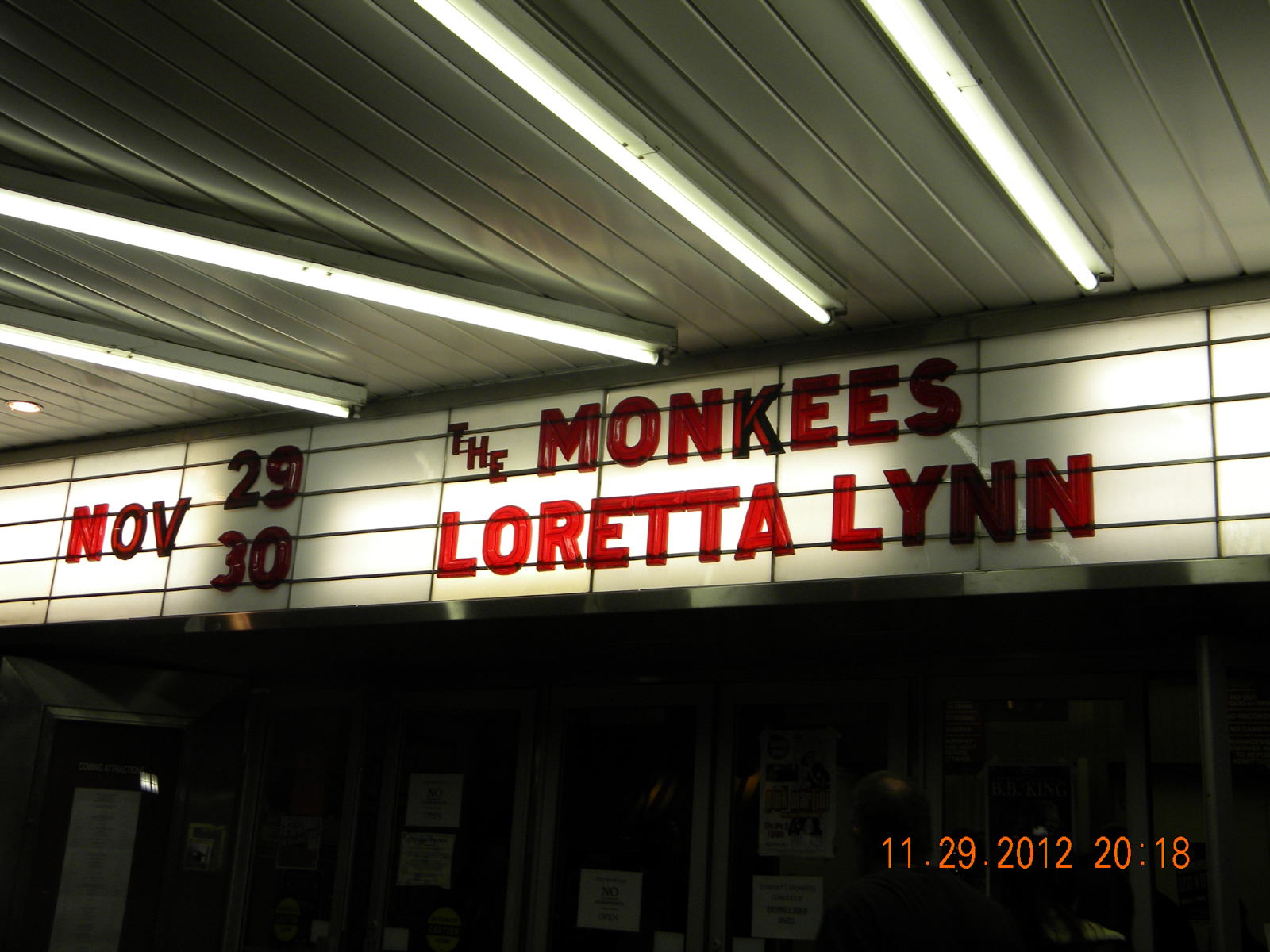
Not only were they touring, but they were playing my “hometown” theater, the Keswick…on Nov 29th. Why does the date matter? Because my two best friends and I rocked the Monkees all through high school and college and beyond. And Donna Hanson Woolman’s birthday was Nov 29th. She died almost 10 years ago, and I couldn’t help but feel some sort of karmic convergence in the date.

Keswick Marquee

And to further the cosmic aspect of the Keswick’s date, my other Monkee friend, Donna L., scored 6th row center seats for me. The amazing thing is not that she got the seats, but that she got them 4 HOURS after the tickets had gone on sale. As a veteran of many concerts, I can tell you those prime seats should have been gone in the first 4 MINUTES. While I don’t believe that God cares a hoot where I sat to see the Monkees, I couldn’t help feeling that Donna Hanson Woolman had a heavenly hand in making that happen.

So, I saw them at the Keswick Theater in Glenside, PA, and at the NJ State Theater in New Brunswick, NJ. Both shows rocked! All the favorites, plus all of my favorites that they never used to play. Since Mike never toured with the other three in the USA before, this was the first time I ever heard a lot of his songs live. Since his are some of my favorite tunes, I greatly enjoyed rocking to them.

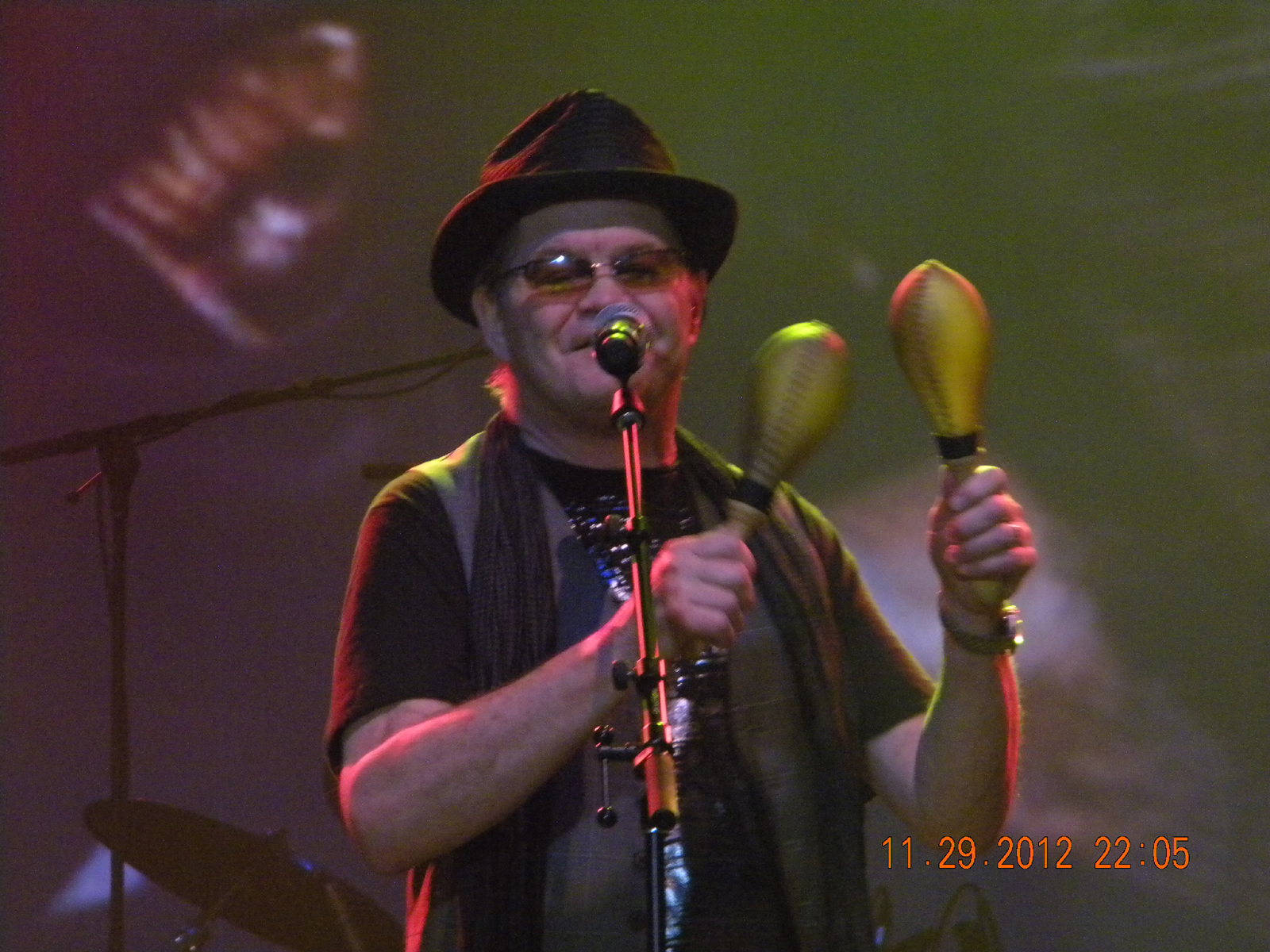
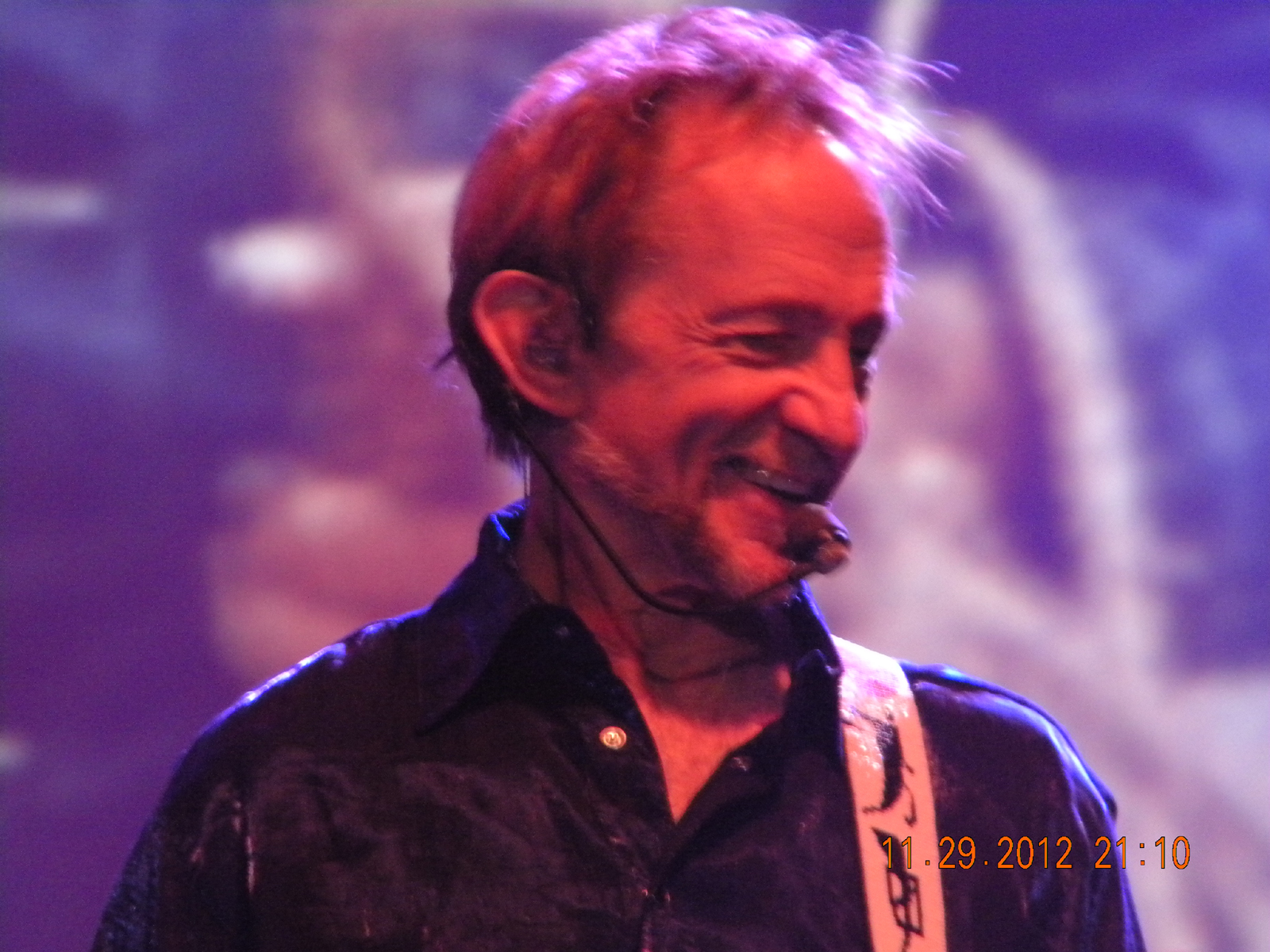
Micky MaracasThe guys sounded great, and the music was excellent. These guys can still rock it like no one’s business! Mike on the guitar, Peter on guitar, keyboard, and banjo, and Micky on guitar, drums, tambourine, maracas, bongos, and the big timpani drum for Randy Scouse Git. The crowds jammed hard, too, singing along with every song.

The guys had an easy rapport with each other, talking back and forth in a mix of ad lib and scripted banter. They didn’t mind goofing aroundMoog Mike a little either, with Peter hamming it up during Auntie Grizelda, and Mike pretending to be a Moog synthesizer during Daily Nightly.

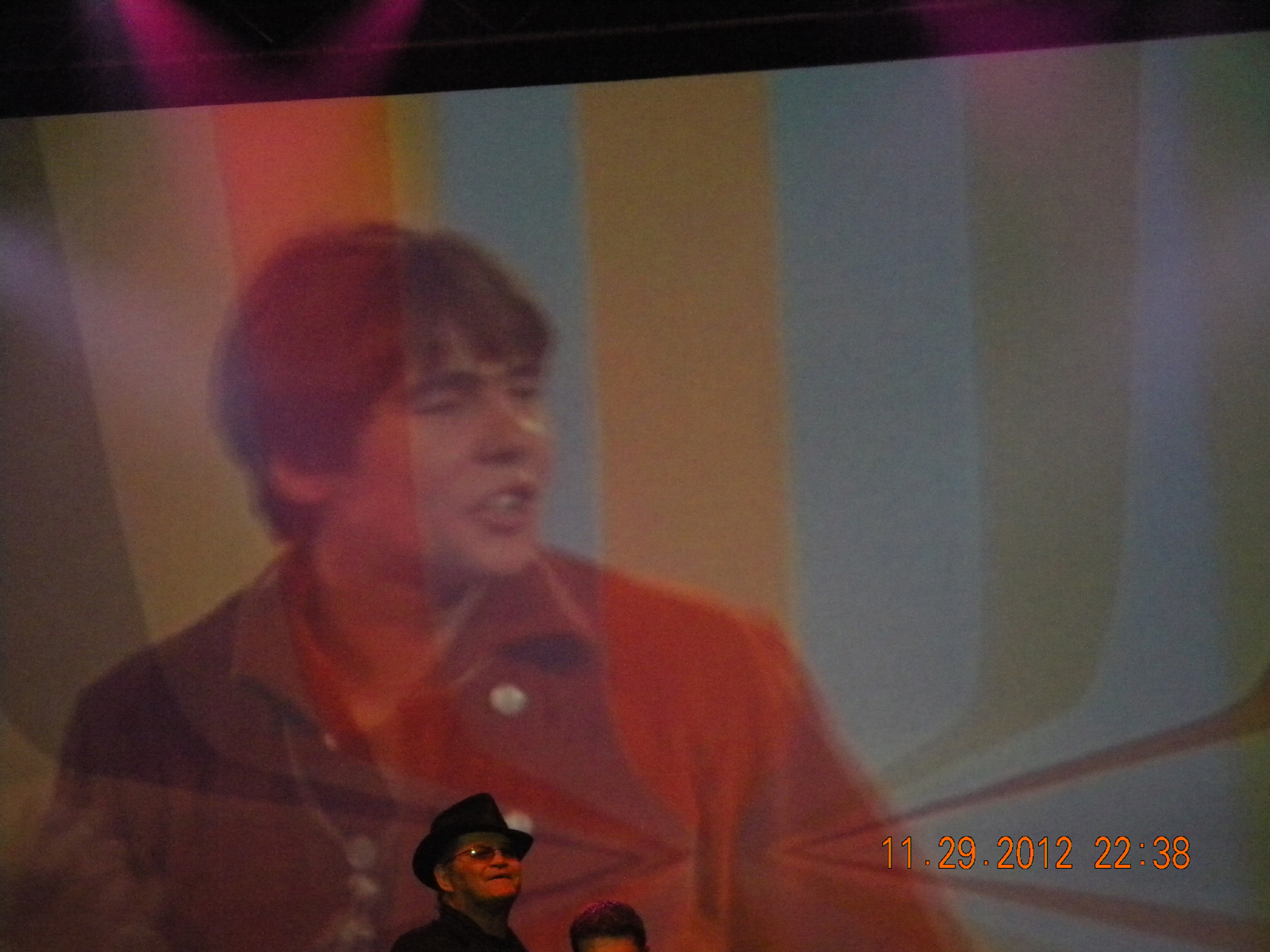
Peter CUIn an interview I read, Peter stated very firmly that this was not meant to be a “Davy is Dead” tour, but that Davy would be very much represented. Sure enough, on the big screen behind the band, video clips from the TV show, their movie HEAD, and even from 33 1/2 Revolutions Per Monkee ran continuously, Davy included. They also had a special tribute video montage of Davy, featuring clips from his pre-Monkees day as well as Monkee highlights. And, of course, no Monkees concert could be complete without Daydream Believer. For this, Micky pulled an audience member up on stage to help him sing, and the audience as a whole carried the refrain, while Davy danced on the big screen. It was a moving and fitting tribute.

DavyDaydream Believer

Davy
Daydream Believer

I had a great time, hitting back-to-back Monkees concerts and singing myself hoarse! I felt like a teenager again – until Toddler woke me up very early in the morning. Then I remembered I wasn’t 18 anymore!

I’ve been a Monkees fan since grade school, and starting following their tours in 1986, their 20th Reunion Tour. I’ve seen them together and on solo tours many times over the past 26 years. No matter how many times I see them, or in what configuration, I always love their shows. Together or separate, they have never failed to bring the energy, the skillful musicianship, and the showmanship I’ve come to expect.

Even after all these years, I’m A Believer.

Micky CU

Peter KeyboardMike

Finding Golden Writing Time

Most writers squeeze their writing in between jobs and/or family. Writing time is precious and rare. But a funny thing happened when I suddenly gained more writing time: I didn’t know what to do with myself.

My daughter started preschool this month, and that gives me about 6 hours a week extra to write. More importantly, it is CONCENTRATED writing time—no distractions from child, phone, or Internet (I work at the local library while she’s in school).

On her first day of school, I had planned what I would work on for the 2 hours I had that morning. Thing is, I had forgotten how much you can get done when there are no distractions—I finished my project in half an hour. So I moved on to another project. Then another. I actually ended up playing Solitaire for the last 5 minutes because I had run out of things that “needed” to be done!

These weeks of her in school have let me be a great deal more prolific in a shorter amount of time. I’m now able to work on short stories in addition to my novels and weekly blog obligations. And once I get home, I still have Toddler’s nap time (when she takes one) and after she’s in bed to work even more.

At first I felt like I needed to keep cramming in writing tasks in the nap and bed time slots. But I found that trying to use ALL my free time for writing was counter-productive. I ended up getting burnt out on the writing. So I did something totally radical. I started using the evenings to do OTHER THINGS I ENJOY! For instance, reading or genealogy or conversing with real people in my life.

I’ll admit I felt guilty at first, having fun during what had been dedicated writing time. I don’t feel guilty any more. Having that fun time has allowed me to focus better when I have the writing time in the morning, and it has left me more energetic and mentally sharp.

I still use nap time for “business” stuff – queries, social media, and, of course, more writing if I feel like it. I also will use the evenings to write if I want to, but I don’t force it if I’m not feeling creative. Overall, I am quite happy with the new writing setup. Am I a bad mommy that I am already looking forward to all-day kindergarten in 2 years? 🙂

Where have you found your golden writing time?

Thanksgiving 2012

 In our culture, it’s easy to not be grateful for what we have. We are constantly bombarded with the newest gadgets, bigger houses, more elaborate lifestyles. And even in our daily life, we wish some things were easier/better, or that we had what someone else has, or that a dream we held dear would come true.

It is so easy to lose sight of what we have.

Thanksgiving is, of course, a good time of year to look at our lives and be thankful for what we have. Coming so close on the heels of Hurricane Sandy, I am immensely thankful for the sturdy roof over our heads, the electricity running through our power lines, and the easy fulfillment of our basic necessities such as food and water and heat. We were so, so much luckier than so many of the people not so far from us.

The other things I am thankful for sound familiar, and that’s because these things should be the most important in our lives. I am thankful for my family. I have a wonderful, loving husband who supports my writing dreams and me in every way. I have a healthy, energetic, intelligent Toddler girl who can drive me up a wall but whom I love with all my heart. I am lucky enough to still have my parents, healthy and active. And my brother, who I fought like crazy with as a child, but who I am so proud to have as an ally in my life now. My extended family—sisters-in-law, nephews, nieces, mom-in-law, cousins, aunts and uncles—is warm and generous and I am grateful knowing that if I ever need them they will have my back.

I am thankful for my writing community, who have helped support and forward my dream—including all of my blog readers. My Author Chronicles pals have shared the burden of creating author platform, my Advanced Writing Workshop classmates help keep me laughing and energized, and my beta readers, Nancy Keim Comley, J. Thomas Ross, and Bob Drumm lift my writing to higher levels. Professional mentors (and friends) Jonathan Maberry, Marie Lamba, and Kathryn Craft have help sharpen my writing skills and keep me from giving up on this long journey.

I am thankful for my health and that of those I care about, for the opportunity to pursue my writing dream, and for the 3 mornings a week my Toddler is now in preschool so I can write!

Mostly, I am thankful for the love in my life.

Without love, the rest means nothing.

With love, I already have everything.


Happy Thanksgiving, everyone!

Preschool and the Craft of Character

My daughter started preschool this month. Hard to believe she’s old enough, but she is. Watching her go into that school all by herself was a little surreal. She was ready, though—she turned and gave me a big smile, that smile that showed she was proud of herself. And she should be—she’s handled the new routine very well.

The really weird thing for me is that now she has this entire facet of her life that I’m not a part of. Seven and a half hours a week where she’s “off stage” to me and I have no idea what’s going on with her. My toddler is no help, either. When you ask what she did in school, she says, “I don’t know.” Sometimes I think 3-year-olds are really teenagers in disguise.

The point I’m making (there really is one) is that my daughter’s “off stage” activities will change her as a person and will change the way she interacts with the world once I pick her up. This is the same with all of our characters—they all have a life “off stage” in our stories, too. Or they should.

The main character, and perhaps some of the other leading characters, don’t have much off-stage time. But some of the supporting, recurring characters do. We need to remember that their lives continue even when we don’t see them. Every time they show up in our book, they should be subtlely different. Perhaps one time they’ve had a fight with their other half, the next they’re late for work, the next they just learned that they got the job they’ve been wanting. They don’t need to have experienced a life-changing event to be different. Maybe they simply haven’t had their morning cup of coffee.

We need to remember this for every character we see more than once in the book—even our main character. If there is a scene where they are off stage, take a moment to think about what they are doing while this other scene is happening. Are they sleeping? Driving in a car frantic to get somewhere? Having lunch? Talking to mom on the phone? Once you know what they’ve been doing, you can introduce the results of their activities the next time we see them.

The reader need never know what our characters do off stage—honestly, they never should know, because if it was important enough for the reader to know we probably should have shown them in the first place. But keep in mind that whatever it was will affect how that character interacts with the others. If their off stage activity has made them irritable, show it. If it’s made them happy, show it.

By shading our recurring characters with the impacts of their off stage activities, we add depth to them and give the reader a sense that their lives go on even when we’re not watching. After all, that’s what we want the readers to believe when they close the book: That our characters are real people whose lives continue after the story ends.

Why Can’t We Talk about Politics?

With the election newly over, passions are still running high. But, as one of the pundits pointed out last night, after all the hard campaigning, we are still pretty much where we started: with Washington gridlock. Some people blame the President and Democrats for the gridlock, some the Republicans. Some just want to sweep both current sides out of office and start over.

The fact of the matter is, we as a people are losing the ability to truly talk about the issues facing our country. Presidential debates have become nothing more than a series of pre-packaged messages bits and sarcastic jabs at the opponent. The media as a whole tends to give the megaphone to whoever has the most extreme views of each party, ignoring the vast majority of people in the middle. “Discourse” in America has become an exchange of negative ads, half-truths, and sound bites.

This has got to stop.

America faces huge issues—energy, immigration, and the debt, just to name a few. By the narrow margin in the popular vote, it is clear our nation is split down the middle. The problems America faces cannot be solved by one party ramming an agenda down the other’s throat, only to have it repealed when the opposing party comes to power. To enact real and lasting solutions, our politicians have to work together—and they are not.

We the people need to demand more. We need to demand that our politicians put the country first and their own re-election second. We need to demand that our media dig deep into the issues, giving us reliable facts, not spin and sound-bites. We need to demand that debates become a forum for true discussion, not “issue speed-dating” where you touch on these complicated issues for two minutes and then move on.

We the people can do this by setting the example. By learning to talk to each other without letting passions overcome our ability to listen to the other side. This year, a child went Trick Or Treating with his friend. They went together as Obama and Romney. There were actually people who refused to give the Obama child candy because of politics.

Is this who we want to be as a country?

Of course not. The majority of us, in both parties, are rational, intelligent people who simply want common-sense solutions. We understand that there may have to be some compromise to find a way forward, and that the compromise solution will likely only be a first step, not a final fix. We want to see all people treated equally, to see all children have an equal shot at attaining their dreams, to see America strong again.

We all want the same things. We disagree on how to get there. The popular vote numbers show this. But rather than despair that the roughly 50-50 split means more gridlock, we should accept it as a challenge to learn to communicate with one another. Our learning to talk across the divide and find common ground is not a luxury—it is an imperative. We must do this, or we will destroy our country from within. United we stand; divided we fall. This is more true now than ever.

The election may be over, but our role in our country’s future didn’t end when we cast our ballot. Going forward, we still have a voice. Use it to speak to your representatives. Use it to speak to the next generation. Use it to speak to your neighbor.

Just remember to listen, too.


UPDATE: Visit Don Lafferty’s blog to find out how YOU can get your voice heard and protest the gridlock in Washington. http://donaldlafferty.com/the-election-is-over-but-were-not-finished-end-government-gridlock/

A Tale of Two Bullies

October is Bullying Awareness Month (and yes, I realize it is November, but anyone reading my last 2 posts will understand why I am behind.) I experienced bullying twice in my life. To anyone who thinks all bullies and all bullying are the same, let me share A Tale of Two Bullies.

The first was in 8th grade. While I was never popular, I had a few close friends and that was enough for me. But then my best friend turned on me. For some reason, she and the other friend we had hung out with started picking on me, talking about me, and generally making my life miserable. They would taunt me, tease me, and there was even on instance where pages were mysteriously torn out of my textbook—the exact pages I had been supposed to do for homework that night (which I then couldn’t do, of course).

My friend’s behavior baffled me. She had always been a warm, generous person, and now I hated coming to school because of her. I hated walking home because she lived near me and walked much the same route I did. She and her bully ally would walk past my house on weekends, waiting for a chance to see me outside and tease me. I remember climbing a tree once so they wouldn’t see me.

It culminated in my best friend slapping me across the face in the classroom one lunchtime. I went home for lunch and cried and cried. I didn’t want to go back to school. But then I got angry. Who was she to keep me from school? And I refused to let her see how she had hurt me, hurt me so much more than a temporary stinging slap in the face.

Summer alleviated the situation, removing me from her daily reach. And then one day, towards the end of summer, she called me. She wanted to meet. To talk. I hesitated, because she had lured me into traps earlier in the year with similar promises. But I went, because she had been my best friend.

I met her, and the meeting was sincere. She apologized. She explained that she had been having a rough time with her parents’ divorce and had taken it out on me. She asked me to forgive her. I did. While never as close as we were before, we remained friendly as we went through high school, eventually growing our separate ways, as often happens with childhood friends.

The other bully event happened in high school. A girl in my class apparently decided I was to be her target. I don’t know why. I had never “done” anything to her—heck, I barely knew her. But in the first semester of sophomore year, she and her friends bullied me every single day.

They would titter and whisper about me in class. They followed me into the bathroom once, so I started only using the bathroom during class time. They would jostle me in the hallways. They would surround me and taunt. One day this girl started getting in my face, saying, “I call you out! I call you out!” (For those that need translation, that meant she wanted to fight me.)

I never answered her. I always pretended I didn’t see her, didn’t hear her. But I did. She grated on my nerves like a constant nails on chalkboard. I held my breath as I dove into the shark-infested hallways between classes. My friends stuck close to me when they could, but our class schedules weren’t the same. This girl made me not want to come to school, when I loved school. She made me loath to get up in the morning. She made me so angry I wanted to hit her. Hard.

And I hated her for it.

I hated her for taking away my pleasure in my friends. For taking away my love of school. For making a misery of what was supposed to be a fun time in my life. I hated her for laughing at my pain.

After Christmas break, I braced for a renewed assault—but it never came. Apparently this girl had gotten rid of whatever bee had gotten into her bonnet. I was relieved—but it wasn’t enough.

You see, this girl never apologized. Indeed, she never even alluded to her behavior. She even had the nerve to ask me to vote for her for class president. (I did not.) I have seen her at reunions since, and she has smiled at me, pretended she was happy to see me, acting like nothing had ever transpired between us.

And perhaps she thinks nothing did. Perhaps she thinks it was “just words” or “just kid stuff.” Perhaps she thinks that because I never showed my emotion that it didn’t hurt me. Perhaps she doesn’t even remember, or thinks I don’t remember.

But I do.

She would be surprised, I’m sure, to know that her actions still make me so angry I want to hit her. That remembering that time still makes me almost cry. That when she smiles at me now I want to slap her. That I want to tell her what a hypocrite she is, and let everyone know what a nasty, mean person she is at heart. That the scars have not healed.

The difference in these two tales? One bully apologized. The other didn’t. The bully that had been my best friend was more devastating during the event, but the wounds healed with her sincere explanation and apology.

I know my high school bully will never apologize. And my wounds will never fully heal because of that. And I would never ask her to apologize, because unless the apology came truly from her heart, it would mean nothing. Most of the time, I’m okay with that. Most of the time I don’t even think about that girl or her actions. But when I do—the freshness of the pain surprises me. The rawness of the wound, even after almost 25 years.

So if you’ve ever bullied anyone, or even think you might have inadvertently, and regret it, let me tell you: It is never too late to apologize. Those simple words, “I’m sorry for hurting you,” will work wonders towards healing your “target.”

Because the pain is real.
Because the pain lasts far beyond high school.
Because words can wound, sometimes fatally.

But words can also heal.

WP-Backgrounds Lite by InoPlugs Web Design and Juwelier Schönmann 1010 Wien