

Working Vacation

Writing for a living is a blessing and a curse. It’s a blessing because you can do it anywhere. At swim practice, sitting in a waiting room, in a traffic jam. You can relocate anywhere and still write. But writing is a curse because you can do it anywhere. Even on vacation.

So while I am up here on the Long Island Sound, my blogs are still due and my book revisions still call and what minimal marketing I can do awaits. Still, it’s a beautiful, peaceful place to write.


Like many writers, I rarely take a vacation from writing. My brain is always churning, the characters hovering at the edges of my mind. In truth, I often get MORE work done when I’m on vacation, because there are other people around to keep my daughter occupied. When it’s just us at home, she always wants my attention. But when she has grandparents, cousins, or Daddy, Mommy gets ignored. And that’s okay by me.

So I am soaking up the sun, sand, water, and serene scenery to recharge myself…even if it is a working vacation.


How about you? Do you ever have vacations where you put the writing completely aside?

Save

Save

Save

Summer Brain

It’s that time of year again. The time when I start suffering from the dreaded summer brain. An unproductive, fuzzy, and often lazy mindset that afflicts me about this time every year.

The first few weeks of summer are not bad. My daughter attends a day camp that mirrors school hours, so our schedules don’t change much and we tick along as usual.

But at the end of July, day camp ends and summer sets in full throttle. Days where we don’t have much on the calendar. Days where we can actually sleep in. Nights where bedtime is rather loosely enforced.

That’s when summer brain sets in. Some days I don’t remember what day of the week it is. Many days devolve into spur of the moment plans. As a person who thrives on schedules and does not do spontaneity well, this can cause anxiety, which can further fog the brain and scatter my focus.

My writing definitely suffers during summer brain. When I do find time to work, I find it difficult to focus. Because I am constantly awaiting an interruption, I am often reluctant to begin working during the day at all and end up wasting chunks of time. If I flip-flop between writer hat and mommy hat too much, it can make my head spin and make me irritable.

So how do I cure summer brain? I don’t. Only time cures it. Eventually school resumes and a work schedule emerges and I am able to think clearly again. Until then, I just ride with it and do what I can and try not to beat myself up for not getting more done. My daughter won’t be little forever. So maybe missing a few work days to go swimming, or out for ice cream, or browsing through the library, or hanging out at the park isn’t really time “lost.”

It’s memories gained.
Raising the Dead: Giving an old manuscript new life

Every author who has written for any length of time has novels in the drawer that didn’t quite make the grade. They are “almost” there, but sometimes we can’t quite figure out what’s missing the mark. For the moment, they are dead novels.

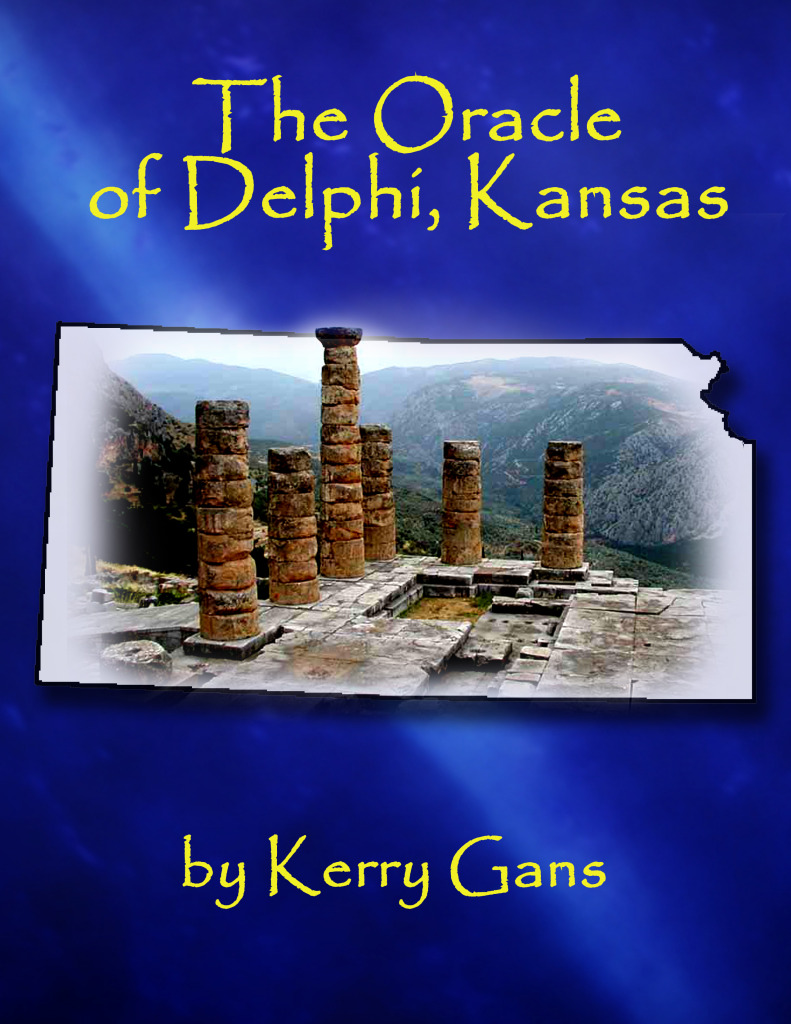
The novel I am raising from the deadI have one such novel, The Oracle of Delphi, Kansas. It’s a YA contemporary fantasy that made the query rounds a few years ago. I had a few requests, but ultimately no one took it. The feedback I got pointed to a confusion on the reader’s part on the character’s goal, the driving force behind the action.

I didn’t know how to fix it, so I put it aside and moved on. Now, though, I am ready to raise it from the dead. I have learned a lot on the past few years, and have new ideas on what might help move the book from “almost” to “ready”.

One tool I am using with this review is Story Genius by Lisa Cron. Her book is meant to be used before you start writing, but can be used to revise. Her exercises focus on the “why” that drives all the character’s actions–and thus the plot. Since the feedback I got from the agents who looked at the manuscript was that they didn’t understand the main character’s driving motivation, Cron’s exercises seem tailor-made for bringing this to the front.

Hopefully my revamping under Cron’s guidance will move the manuscript from “almost” to “there”. I am having fun viewing this story through a different lens. Even at this early stage of revision, I see my protagonist more clearly, and I can hear her voice in my head more precisely than ever before.

Do you leave your dead manuscripts buried? If you do raise them from the dead, what methods do you use?

Save

Save

Save

Save

How Writing is Like Swimming

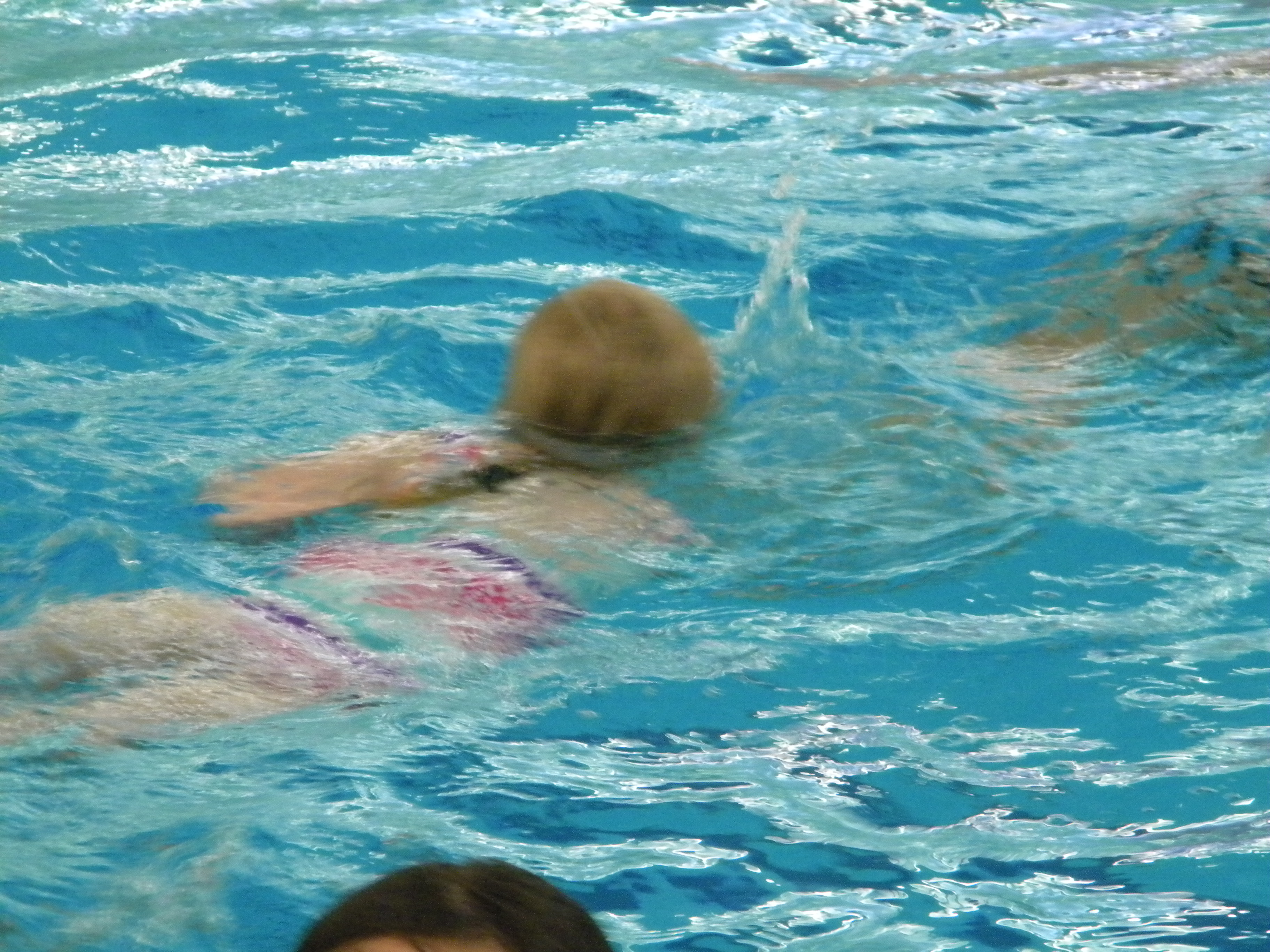
Swimming as analogy for writingMy daughter’s swim season is drawing to a close. After 3 months of breathing chlorine fumes and sweating through sunscreen, I can see many similarities between swimming and writing.

Technique & Form

Technique is important for swimming. The way your hands enter the water, the precision of your kicks, how you position your head, all combine to power you smoothly through the water.

Technique is equally important in writing. The choice of words, precision of punctuation, flow of elements such as dialogue and metaphor, all combine to bring your voice to life and give the readers a smooth experience.

Technique can also be called “form”. Writing has different forms as well, from poetry to novels. Writers need to master the structure and expectations of their form and genre.

Stamina & Muscle Memory

Incessant laps in the pools increase a swimmer’s stamina. Hours of repetitive practice ingrain the techniques in muscle memory, enabling swimmers to swim faster without having to concentrate so hard in their movements.

Writers who practice their craft also build up stamina, so they can plow through the tough times to get to the end of a novel. Careful study and repetitive practice of techniques store them in a writer’s subconscious so they come easily, allowing the writing process to flow faster and the writer to seamlessly weave the elements together.

Breathing

Swimmers who don’t master breathing will run out of oxygen before the end of a race. Similarly, writers who don’t step away once in a while and recharge risk burning out on longer projects.

Like swimming, mastering writing takes hours of practice to build up those creative muscles, coaches to help you perfect technique, and a cheering section to get you through the hard times.

So pick up your pen, stroke out boldly, and don’t forget to breathe.

Save

Interlibrum: That down period between books

My manuscript pre-interlibrum

Veritas, before editing

An interregnum is the space between regimes. I am currently in an interlibrum—the period between books. An interlibrum occurs when one book project is completed, but another has not yet taken its place. It is a rather unmoored time (as I imagine an interregnum is as well).

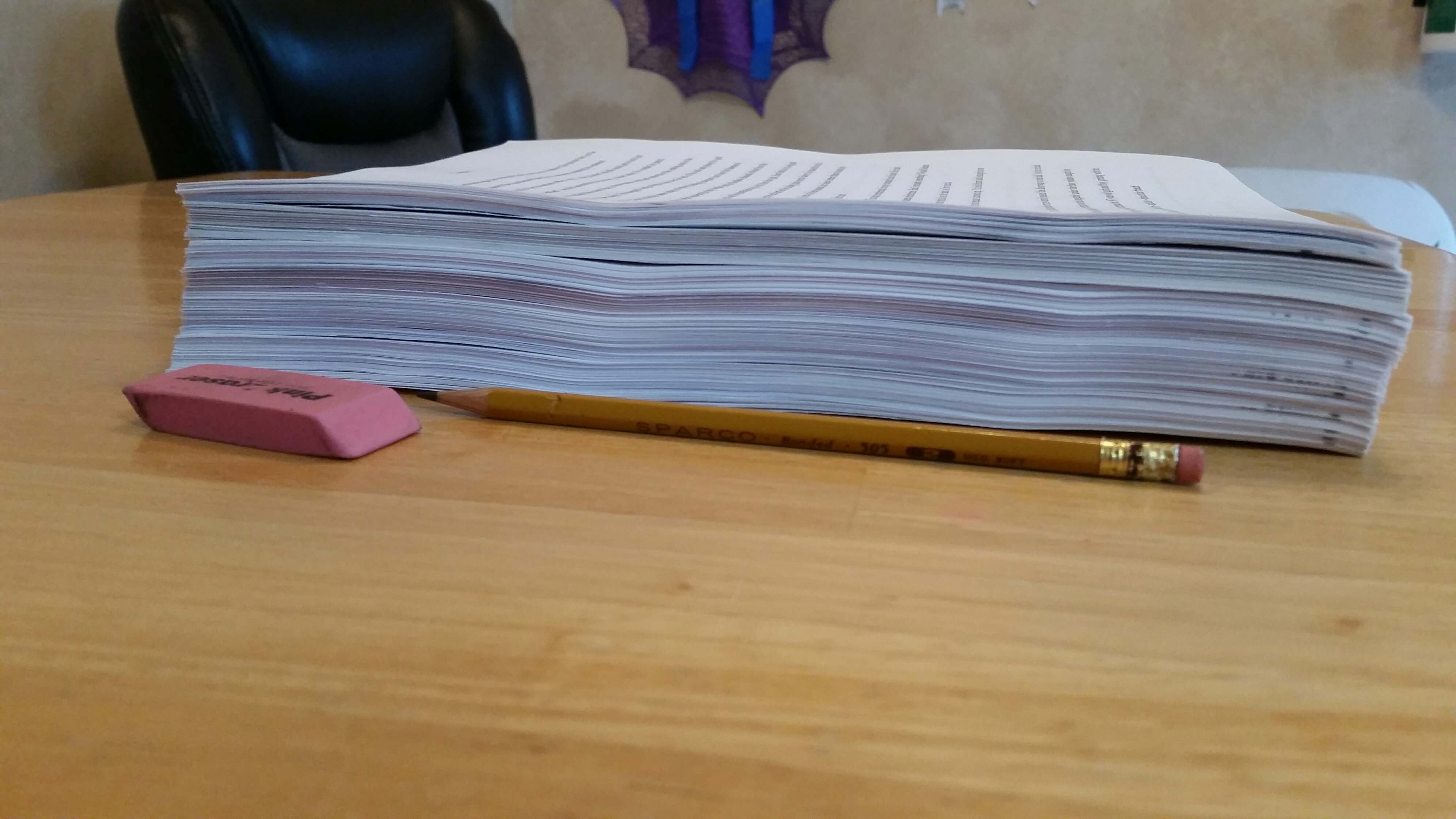
I finally finished my work-in-progress, Veritas. I pared it down from 101,000+ words to 90,000, and by the time I had completed that (my fifth revision), I was done with the book. Does that mean the book is finished? No. It just means I had reached the point where my brain could no longer tell if further changes would help the book or hurt it. My objectivity was shot.

When I get to that point, it’s ready for my wonderful editor, Kathryn Craft. So now I have sent it off for bloodletting…er, editing. And suddenly, I have no book to work on.

Now, this does not mean I literally have no book projects. What I mean is that there is no project I am currently actively working on. One that is taking up the head space Veritas did. When I was younger, and had more energy, more time, and no child, I often juggled two projects at once, so I rarely experienced interlibrum.

With the increased demands on my time and energy now, I find I can only focus on one book project at a time if I hope to make meaningful progress on it in a reasonable amount of time. So interlibrums are a new part of my writing landscape.

The good news is that I have at least 5 book projects to choose from:

1) The Oracle of Delphi, Kansas: a YA contemporary fantasy that got some interest from agents but ultimately a “well written but not quite there” response. A return with new eyes and new craft tips may allow me to finally get it “there”.
2) The English Expedition: a first draft of book 2 in my middle grade historical adventure series that is currently making the query rounds.
3) The Enemy of Zal: a from-scratch book 2 of my published book, The Witch of Zal.
4) Amoris: a from-scratch 2nd book in the series of the YA scifi I just finished.
5) The Forgotten Planet: a from-scratch new scifi that will likely also be a series.

They all have their appeal. Oracle has the advantage of being nearest completion, in the interest of getting more books out more quickly. The English Expedition has a completed first draft, but will need a good amount of revision before it’s ready. The Enemy of Zal has a brief outline, but it appeals because it follows an already published book. Amoris follows the one I just finished, so my brain is still immersed in those characters and that world. And The Forgotten Planet intrigues because it is shiny and new. I am leaning toward Oracle at the moment.

Have you ever experienced an interlibrum? How did you deal with the adrift feeling that comes when you are floating between books? Do you revel in the feeling of endless possibility, or do you grab on to a new work quickly to anchor yourself?

Save

My Biggest Takeaway: Philadelphia Writers’ Conference 2017

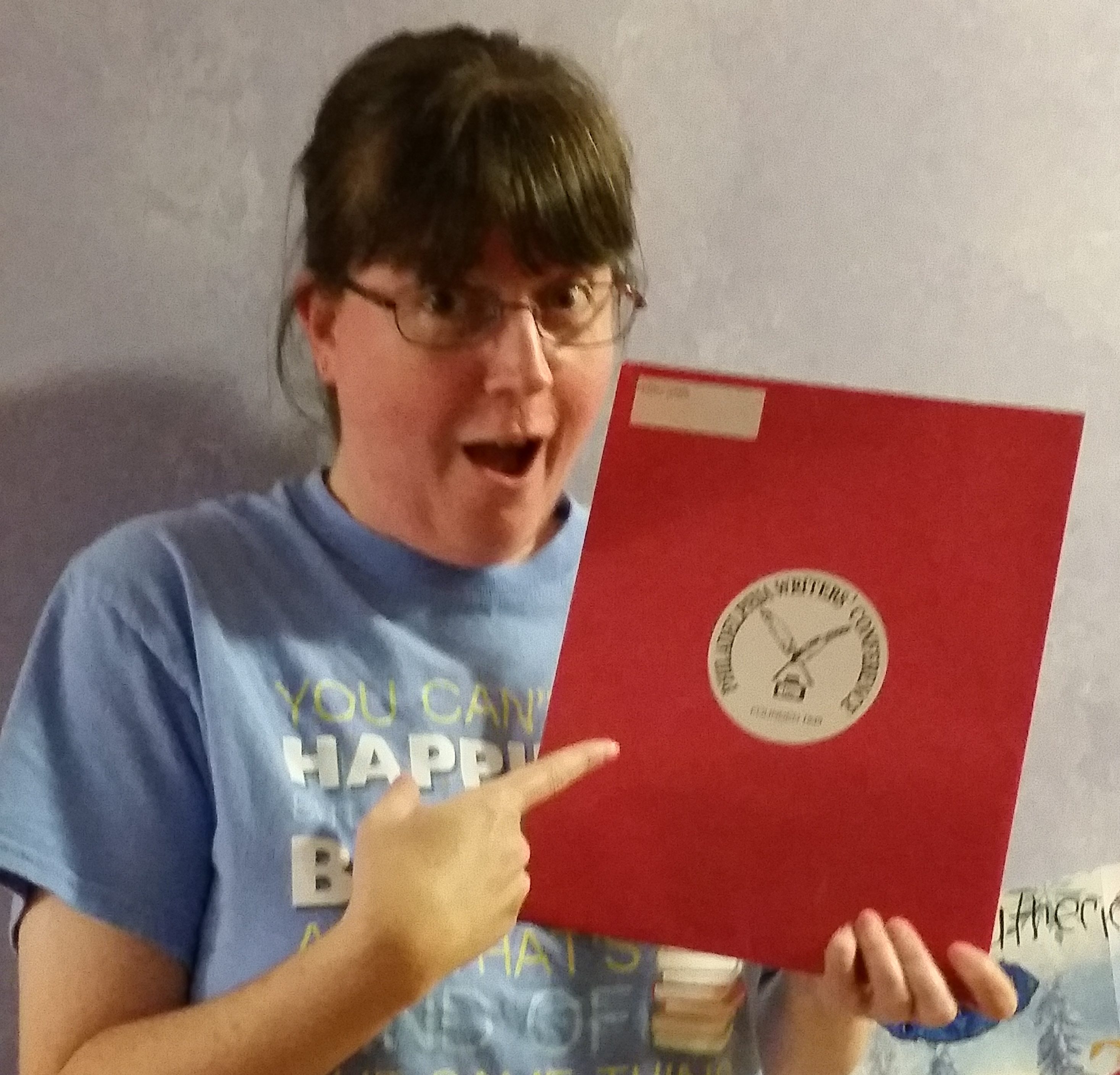
My biggest takeaway from PWC 2017At the Opening Speech at this year’s Philadelphia Writers Conference,  Yolanda Wisher, the Philadelphia Poet Laureate, coined the word “kinfluences”, meaning the family and friends whose stories influenced her life and informed her writing.

My biggest takeaway from the Philadelphia Writers Conference this year was my own reconnection with people in my writing family. “Kinnections”, if you will allow me to play off Ms. Wisher’s word.

The conference itself was a forum for connecting with people in real life who I usually only see online. Mary Mooney, Doreen McGettigan, and Kelly Deeny crossed my path this year. So did Uriah Young, who I met at his first Philadelphia Writers Conference a few years ago. At that time he was a newbie with a story to tell, this year he’s on the Philadelphia Writers Conference board.

The biggest blast from my past was Jonathan Maberry‘s visit to Doylestown. I met him more than a decade ago, and he has been a large influence on my writing career. He moved to California a few years back, so it was good to see him.

Keith Strunk is another writer friend of long standing. He was part of a group project that stands as a major turning point in my writing life, and also in my personal life, as I got married during the project. Connecting with him both at Jonathan’s book signing and at the Philadelphia Writers Conference was great fun.

Perhaps my biggest career-related reconnection at this year’s Philadelphia Writers Conference was with Denise Camacho, head of Intrigue Publishing. We first met three years ago at the 2014 Philadelphia Writers Conference.  At that conference, I pitched a novel to her at the pitch session. Not only was she interested in that novel, but she was very excited about a novel that I had literally just begun. This year, that novel is essentially finished, and she is still excited about it, so I will send it to her after I get final edits back from my editor.

So my biggest takeaway from this year’s Philadelphia Writers Conference were my “kinnections”–relationships built on previous years’ attendance, relationships cemented or expanded by shared experiences. Some people ask why I go to the same conference year after year. There are numerous reasons, of course, but the ongoing connections I build and strengthen every year are a part of it.

Writing can be solitary,  but publishing is a communal effort. For me, the Philadelphia Writers Conference is a large part of finding the publishing community to help me succeed.

Save

Save

Save

When You Realize What You Were Missing

My daughter is deaf in one ear, diagnosed at 14 months with mild/moderate loss. Got her first aid at 26 months. Took her first booth test somewhere around 3 years old. At that point, her hearing level had dropped from moderate to profound loss.

It’s hard for those of us with normal hearing to understand what profound hearing loss means. I didn’t really get an inkling until those first booth tests. I sat in the booth with my daughter, but several feet away. She wore headsets to listen to the instructor. The doctor would ask her to point to cards with pictures on them. When the doctor asked for the airplane in the good ear, my daughter pointed without hesitation.

In the bad ear…nothing. The doctor would gradually raise the volume, to the point where I, sitting a few feet away, could hear the doctor as clear as day even through the headsets, while my daughter sat unmoving, waiting for the instruction she could not hear.

That is profound hearing loss.

Still, the loss didn’t seem to impact my daughter much. She can’t localize sound, and if you talk in her bad ear she will not hear you, but those were the only major issues. She has a hearing aid for the bad ear, but has been saying for some time that it doesn’t help at all.

So we are trying out a new type of hearing aid, called a cross or crossover.  This consists of a microphone on her bad ear that pipes the sound over to the good ear, so she is hearing both sides on one ear.  Eventually, the brain learns to discern which sound comes from which ear, and it helps with sound localization, as well as hearing sound and speech from the bad side.

When we first put it on my daughter, her eyes got big, and she yelled, “Everything is so LOUD!” For the first time in her life, she was hearing the world as I do. She was stunned and delighted, excitement shining from her face. The funny thing was that every time we put the aid on, she started yelling instead of speaking normally. That seemed counter-intuitive, until I figured out that she probably thought she had to speak louder to be heard over her louder world–much like we yell over a TV up at high volume.

While excitement was her first reaction, a different feeling surfaced a few days later. “Mommy, I’m a little sad.” I asked her why. “Because I never realized how different I am.” I asked what she meant. “I never knew how much I couldn’t hear that everyone else could.”

Sometimes it’s hard when you finally realize what you’ve been missing.

So I whispered into her aided bad ear, “I love you.”

It piped over to her good ear.

And her smile shone out and her eyes lit up.

Maybe she realized that she’s not really missing the things that matter most.

Rejection & Perseverance

Latest title to get a rejection

(Concept art)

I’m shopping a middle grade historical adventure, The Curse of the Pharaoh’s Stone. I’ve had wonderful feedback from all of our beta readers, and am very excited about the quality and prospects of this book.

Unfortunately, real life has other ideas. I have queried 50 agents. 3 requested fulls (yay!), but all ultimately passed. The rest of the agents either passed on the query (19) or have not answered at all (28), which is usually an assumed rejection.

The last agent who requested just passed Tuesday, so at the moment I am in the pity party stage of acceptance. And I will allow myself to feel it until Thursday. After that, it’s back on the horse. (A horse actually threw me once, so I know how this goes.)

I’ll compile a new list of agents and start over. Maybe take another critical look at the query, although 3 requests is not bad in today’s market. And then I’ll send them out.

Am I glutton for rejection? No. I am a stubborn writer who has a book I believe in passionately. Somewhere out there is an agent who will believe in this book as much as I do.

We just need to find each other.

Do any of you have a cutoff point for when you stop querying?

Save

Save

Time Travel: Philly to Phoenix and back in 52 hours

Time travel is real. I did it this past weekend. I went back in time, to a different world, and then into the future. Amazing.

Friday afternoon, I boarded a cramped metal tube and was catapulted through time. After a slightly bumpy ride, we arrived at our destination 3 hours earlier than our time.

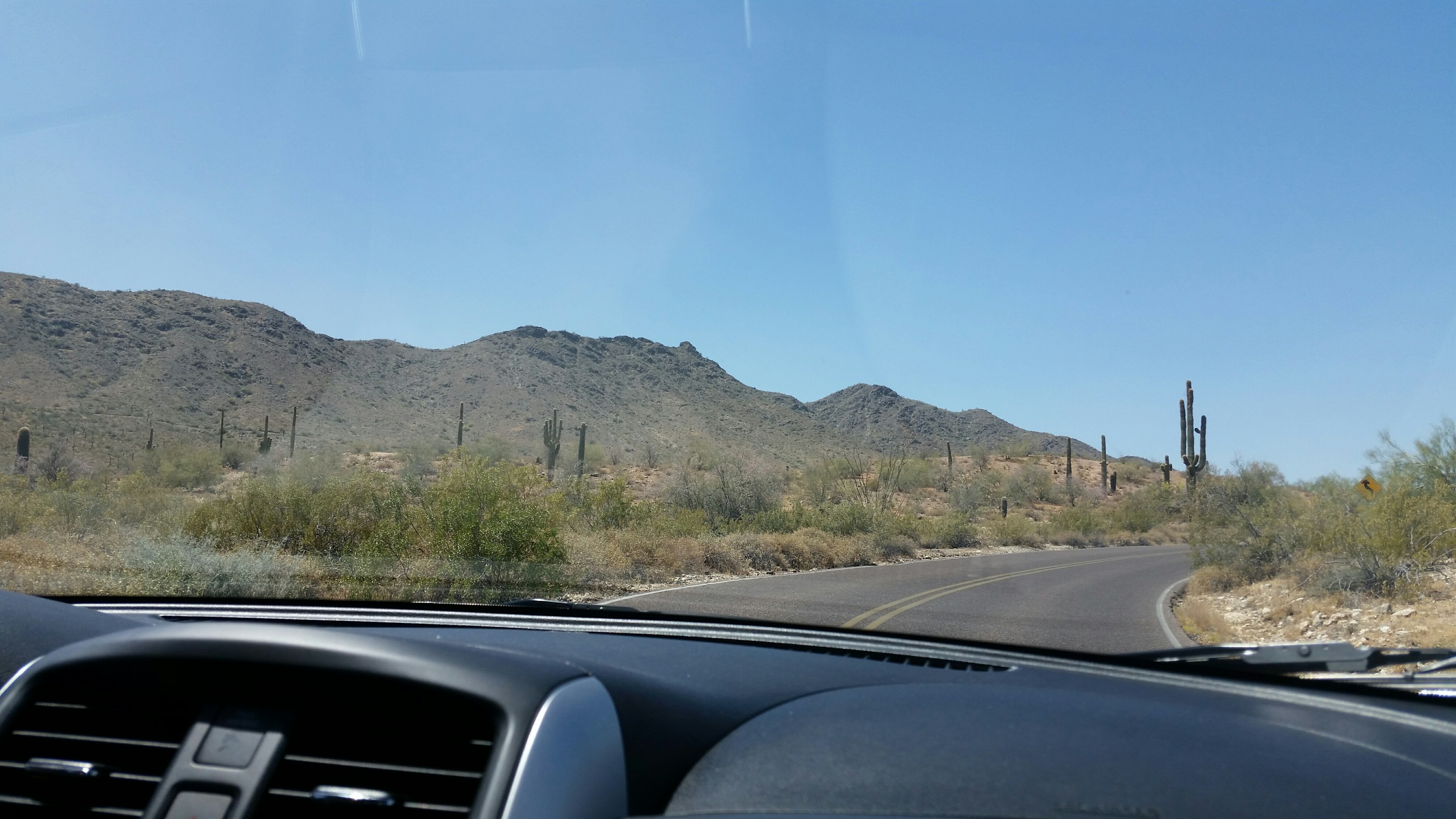
A different world! The environment we had left had been a cool, rainy 60 degrees. We exited our capsule to an arid 106 degrees. Instead of waving deciduous trees, newly green with the spring, we saw stunted trees and twisted cacti. Brown, sandy desert replaced my soft green landscape.  Mountains towered on the distance, dwarfing the sprawling intrusion of humanity.

We enjoyed our visit to this other world. Time spent with longtime friends, an exploration of nearby South Mountain with its grand vista overlooking the city, and culminating in a beautiful renewal of vows for my friends celebrating their 21st anniversary.

Although Phoenix is a modern city, the Western landscape evokes the Wild West and time long past. Stone structures on South Mountain brought the old time atmosphere to life. And spending time with a friend you’ve known for 32 years brings the inevitable nostalgia and memories. The past was very present out there.

Sunday morning we climbed into the tiny tube again and reversed course. Aside from a seatmate who had an inflated idea of his own personal space, the ride was pretty smooth. And when we arrived back in the cool (and still rainy) airport, we were 3 hours ahead of where we had started.

We had come back to the future.

For all its discomfort, air travel is truly amazing. To be able to travel 4,600 miles in about 9 hours of flight time in order to visit friends for a single day is a minor miracle. I am a terrible flier who often has panic attacks on the plane (fun!), but I am grateful I live in a time where such speedy travel is possible.

I am, however, waiting eagerly for transporter technology to become a reality…

Save

Save

Save

A Change of Place: Creativity and Location

So many things can impact our creativity—how we feel, what we eat, time of day, how much we’ve slept, outside worries. But one major component of creativity is place. Where we write. How does where we write influence what we write?

I’ve often read advice that we should have a specific place where we write. Perhaps an office, a local coffee shop, the library, or even a spot in our home. I’ve even heard that if you write on your sofa (as I do) you should write at one end and watch TV, etc., from the other. The idea behind all this advice is that having a dedicated writing space triggers your creativity because it trains your brain to write when you are in that spot.

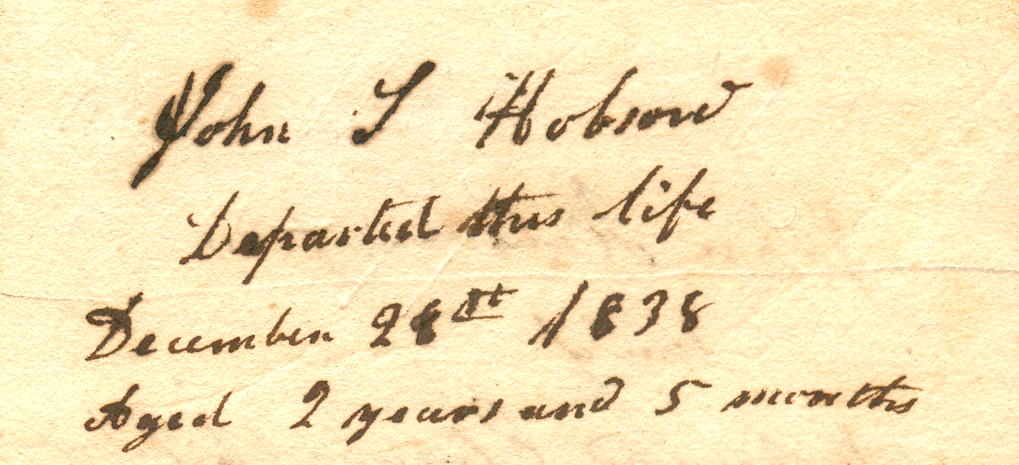
This week I had a much larger change of place than the opposite end of my sofa. I spent some of the week in North Carolina, in a small rural town in the Blue Ridge Mountains. Over the years, I have noticed that this change of place triggers a change in mindset for me almost every time. For some reason, genealogy obsesses me when in North Carolina.

genealogy obsession heightening in one place

Now, it doesn’t take much to get me chasing down rabbit holes for genealogy. But for some reason, the past feels much closer to me while I am there. Perhaps it is because the town often feels like it is from a bygone era, and the surrounding mountains have a timeless quality. The many farms could be from a hundred years ago, and the pace of life is slower. Not everyone knows everyone, but the community is close knit. In the way of rural communities, many earlier generations had more than the 2.5 kids families have now, so kin networks sprawl across the land. The past is still very present here.

Maybe part of the mindset shift is because we come here specifically to visit family, so family is very much top-of-mind. Whatever the reason, it ramps up my genealogy obsession and I want to chase ghosts for hours.

This got me wondering what kind of stories I would write if I lived there. Would I still write fantasy and science fiction? Or would I be drawn to family dramas and small-town conflicts? What stories I would write if I lived on Chincoteague Island, as I did for 8 months one year? Would I be writing stories of wind and sea and sky?

Assateague Island--a favorite place

Your location undoubtedly influences your writing, from topics to characters to theme. While a temporary relocation may not fundamentally alter what or how you write, a change of place can shake up your creativity and dig you out of a funk, break a writer’s block, or give you a new perspective on some element of your story.

Do you have a specific place you write? Have you found your creativity influenced when you have a change of place?

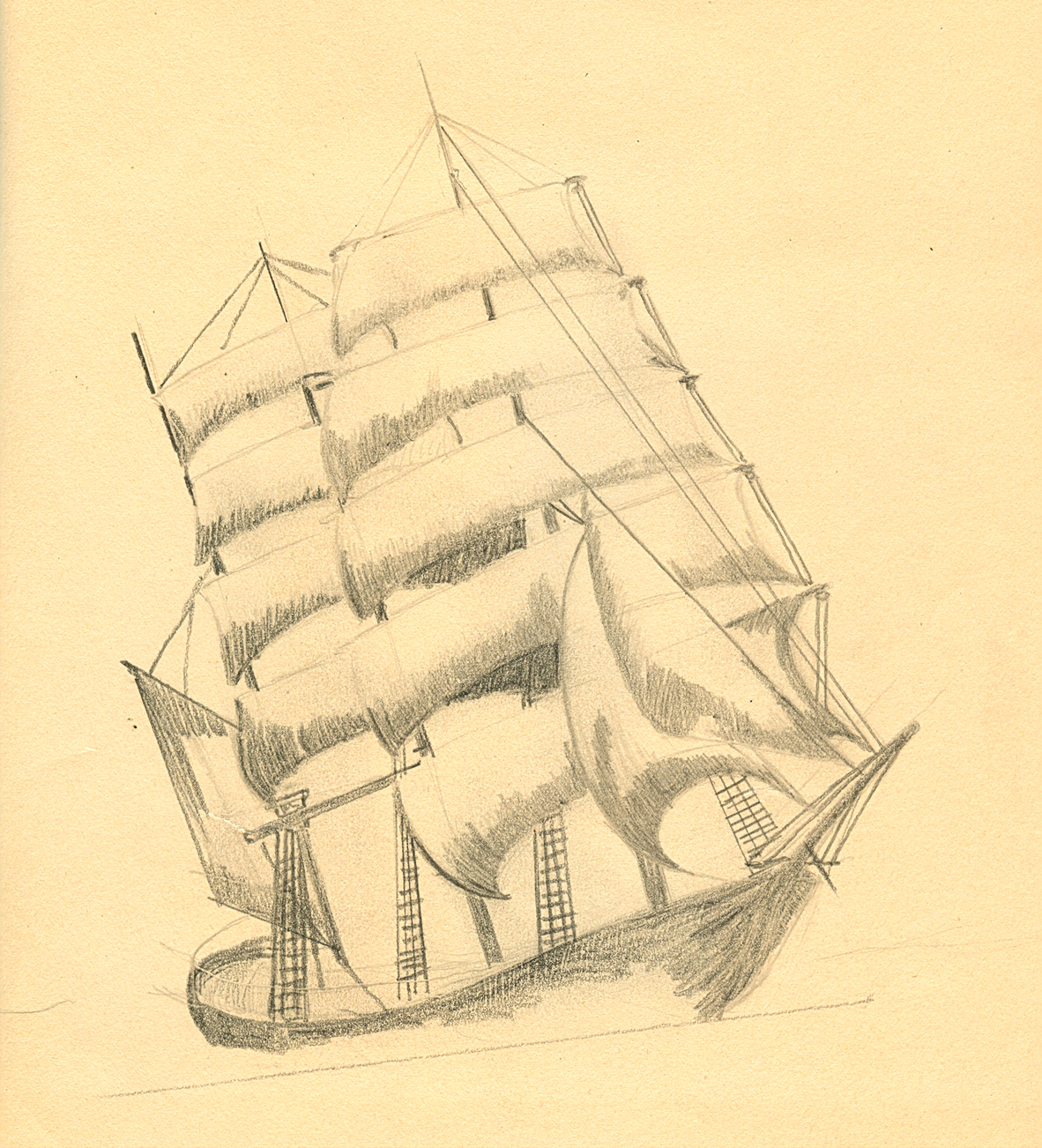
What place will you sail away to?

by William T. Gans, Sr.

Save

Save

Save

Save

Save

WP-Backgrounds Lite by InoPlugs Web Design and Juwelier Schönmann 1010 Wien