




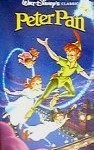
Disney’s Peter Pan
My preschooler has moved back to watching Disney’s Peter Pan this week. Seeing it again (and again and again…) reminded me of something I had noticed during her last obsession with it. Specifically, I noted that Peter Pan was the hero, but was not the protagonist.
Wendy is the protagonist.
Sure, Peter Pan is who the show is about—and he certainly has many heroic adventures! But Wendy is the character who changes through the course of the story, and it is through her lens that we view the story.
In my understanding, the hero of any story is who the story is about, while the protagonist is the character who changes and whose POV we use to understand the story. In the vast majority of stories, this is the same person. But in some, as in Peter Pan, they are two distinct people.
What are the benefits of splitting these functions?
- Emotional anchor
When your hero doesn’t change, or is so different from the reader that the reader cannot relate to them, a separate protagonist can serve as an emotional anchor. Wendy is a typical young girl, and the viewers can latch on to her during this wild ride with a boy who never grows up and whose emotional reactions are either lacking or not what most people would feel.
- Point of View
A separate protagonist provides a lens through which to see the hero. Peter does not have the emotional maturity to view life as anything but an adventure. Had we been locked into his view of life, the view would have been much sound and fury signifying nothing. Wendy’s viewpoint provides us with a different angle, where we can see the often frightening events in Neverland, and also see the value of friendship and family—things Peter does not value.
- Acceptance of over-the-top heroes and actions
Finally, a separate protagonist gives us distance. We come to an unbelievable world and character with Wendy, who is a stranger in a strange land as well. Through her acceptance of Peter Pan and Neverland as real, we are able to suspend our disbelief and immerse ourselves in the adventure.
A careful watching of Peter Pan shows clearly that Wendy is our anchor. The story begins and ends with her, it follows her change, and the Disney version even hints that perhaps all the unbelievable adventure was simply a dream (the stage play does not leave this ambiguous, as the Lost Boys come home with the Darling children). Wendy is the emotional and moral compass of the show, while Peter Pan provides the swashbuckles and pixie dust.
What other stories use this split function device? Can you think of any more benefits when the hero is not the protagonist? Have you ever used it?


The Rescuers: A message of worth
If you’ve had a preschooler, you know they go through obsessions. Foods, games, books, films—they will latch on to one until you are ready to scream, then move on to something else. My gal has been movie hopping—first it was Cinderella, then Peter Pan, then The Incredibles, and now it is Disney’s 1977 The Rescuers.
The interesting thing about seeing a movie a billion times in a row is that you see things you wouldn’t normally see in just a few viewings. This happened to me with Peter Pan, when I examined why I like Captain Hook as a villain. With The Rescuers, I suddenly caught a social angle I hadn’t seen before.
Cover of The Rescuers
In The Rescuers, two mice must go to rescue a kidnapped girl. The female mouse, Miss Bianca, is a member of the Rescue Aid Society, an international organization of mice that meets in the basement of the United Nations building and answers any calls for help that come its way. The male mouse, Bernard, is the janitor for this organization.
Every movie is a reflection of its time, and The Rescuers is no exception. Miss Bianca is an adventurous mouse who asks to be given the rescue mission—the first female agent to go on a mission. Every male agent wants to be her co-agent, but she chooses the timid janitor Bernard to accompany her. And this is where I noticed something odd.
We are all familiar with the trope of a character starting the story in a lowly position. Usually, this is accompanied by that character being treated badly and often feeling that they are less than everyone else in society. Then, after they save the world or what have you, at the end of the movie everyone loves them because they are heroes. In other words, being a good person wasn’t enough—they had to show the world “what’s in it for me.”
Disney does it differently. Bernard has clearly been the janitor for a long time. As all the delegates—the elite—enter the building, he is sweeping up. He greets them, and they all greet him, many by name. Never is he snubbed or “put in his place.” He speaks freely to the Chairman, so obviously he has never been told to be seen and not heard. And when Miss Bianca chooses him—over all the fawning male delegates—to accompany her, the company cheers for him.
Had this movie been made today, those cheers would have been boos. Disney has turned the trope on its head. The movie shows in very subtle ways that a man’s (or mouse’s) worth is not in what he can do for you, but in who he is at his core. Bernard does menial work, but he is respected by all the delegates—respected before he has done anything heroic. Respected for being a decent, hard-working mouse.
I think that’s a great message to send to kids. In this day and age, so much of the media message seems to be one of greed—of not asking if this person is a good person, but what that person can do for you. Of not measuring a person’s worth by the size of their heart, but by the size of their bank account.
Perhaps Bernard’s position of respect in spite of his menial job was also a sign of the times. A time when a person wasn’t judged by what you could get out of him, but by what was inside of him. I’d like to think that America is not gone. That we can get back to a time when we respected people for their work, instead of their paycheck. When you didn’t have to be a hero to be a somebody.
We’re all somebody—and our humanity alone is worthy of respect.