

Why I do things the “right” way

When I first started doing genealogy, I had no idea how to properly cite my sources. So I did it any old way. Now, I do know how to do it right, and I am engaged in a time-consuming process of going back over my source citations and correcting them. Since I’ve been doing genealogy for about 20 years, that’s a lot of source citations!

So why am I bothering? What I have is adequate, in that a person looking at it will know where my information came from. For example, I had a lot of entries from the Philadelphia City Directories. I noted the year of each directory, but not the page number. Good enough, right? I mean, someone else could easily look up the page number if they wanted to. Yes, they could. But it’s not the proper way to cite something. So I spent several hours re-finding the pages and entering them into the database.

Why, when what I had was good enough? In this case, it is because I want people who find my tree online or who read my book to take my work seriously. I want them to have the confidence that my sources are correct, that I am not guessing or engaging in wishful thinking (often an issue with amateur genealogists).

The same goes for my fiction writing (and everything I do, really). I can get to “good enough” in most aspects of the craft very easily. But “good enough” is not good enough for me. This is different from perfectionism, which is never satisfied and will never let go of a project that isn’t “perfect.” I know perfection is impossible, but I want to give my best effort on all levels at all times. I want to put everything I have into a project—cross all my t’s, dot all my i’s. Even when I don’t HAVE to.

Why? Because I am serious about my craft, and I want it to show. So I take the time to do the extra round of editing, to do the search and find on the “to be” verbs and “ly” words. I take the time to storyboard the book several times during the process, to make sure it all fits together and that I am not forgetting something. I take the time (and money) to have a professional editor give me feedback to make it stronger.

We all have experienced times in our lives when other people gave half-hearted effort and yet still got ahead—they got a better grade than you, they got a promotion, etc. We all know that doing things “right” is not a guarantee of success, or even a guarantee of acknowledgement. Sometimes I think my life would be much easier if I could be the type of person who settles for “good enough.”

So why do I bother trying to do things “right”?

Because at the end of the day, the product I put out reflects on me. Whether it be a book, a short story, a batch of cookies, a video, it is a product I created. I want to be able to take pride in the work, no matter if it gets me accolades or book deals. I want to know in my heart that this particular piece of work was done as well as I could do it at that time. That it reflects the best of me at that moment.

I suppose this strong work ethic was instilled in me by my parents (for which I thank them). But I have internalized it because of the satisfaction it brings me. Knowing that what I put out there is the best I can do is a rewarding experience for me. Another way to think about it: Most of us don’t leave much behind when we leave this earth—I want whatever I leave behind to be the best of me.

What drives you to put so much effort into your work?
GoosesQuill FB

A Mile in My Daughter’s Ears

Some of you are aware that my preschool daughter wears a hearing aid in one ear. We are lucky that she has one good ear, so she did not have trouble with speech acquisition and the like. In fact, she often seems to be able to hear me very well even without the hearing aid, so I have sometimes wondered just how much she really needs it.

I got a taste of her life this week.

On Saturday night I took myself to the emergency room. My ear and the area around my ear were in so much pain I was shaking. I couldn’t rest my head on anything. I just wanted the pain to stop. I could think of nothing else.

And then my eardrum burst.

Sitting in the ER waiting room, I heard a “shhooom” noise in my ear and then clear fluid started trickling out. The pain trickled out with it, and slowly it dropped to a manageable level. They gave me antibiotics for the infection and sent me home.

I am now deaf in that ear.

Hopefully, it will only be for a few weeks as the perforated drum heals, but it has given me an unexpected insight into my daughter’s world. Granted, she can hear something in her bad ear, but it’s still a pretty good approximation. I’ve learned a lot.

If I lay on the side of my good ear in bed, I cannot hear anything. This is not good, because I need to hear the baby monitor (my husband cannot hear it). So I am sleeping on the side I don’t usually sleep on, so I can keep my good ear up.

If I am on the phone, I cannot hear anything in the house. This can be a good thing, because I do not get distracted by my daughter’s constant chatter, but it usually results in her trying to climb up my leg to get my attention, so on the whole it’s a wash.

If the sound I want to focus on is on my bad side, and there is any noise at all on my good side, forget it. All I can hear is the sound on the good side. This is why positioning my daughter in school so her good ear is always toward the teacher is so important.

Localization is an issue. I know this from my daughter—she never knows where a sound is coming from. Losing your other ear is akin to losing one eye. If you cover one eye for long enough, you will lose your depth perception and have trouble judging distance. The same with losing one ear—you can’t judge accurately the distance and position of the sound. Because I am older and have more experience hearing normally, I can usually tell where the noise is coming from, but not because I can hear it—just because I know.

The weirdest phenomenon for me has been the phantom music. My bad ear can hear nothing. If you’ve ever been in a completely silent room and you just hear that low hum of nothing, that is what I hear. But the ear must also be picking up other sounds I am not consciously hearing, because I hear strange noises—a voice that isn’t there, music that isn’t playing. Last night I could have sworn I heard circus music in my house. My brain is obviously trying to make sense of random auditory input it’s getting from that bad ear. Does my daughter hear things that aren’t there? She’s too young to tell me.

Lastly, I was not aware of how much energy it takes to simply pay attention when you can’t hear well. People with 2 good ears learn so much information from passive listening—from the information overheard rather than sought out. When you can’t hear well, you need to always be seeking so you don’t get left behind. It can be exhausting.

I don’t advise puncturing an eardrum to experience what deafness is like, but having it thrust upon me has given me a new appreciation for my hearing, and a new understanding of what my daughter deals with every day. Hopefully, it will help me make the right choices to help her achieve her full potential.

How about you? Have you ever had an unexpected insight into another person’s struggle with a mental or physical challenge?

GoosesQuill FB

The Gavin Effect: A Tsunami of Kindness

As a writer, I routinely place characters into situations where they are caught up in events larger than they are. It is rare in anyone’s real life to feel something similar—but I am feeling that way right now.

My friend Kate Leong’s 5-year-old son Gavin died last week. He was pronounced dead on Kate’s 43rd birthday. But instead of screaming the heavens down with the unfairness of it all, Kate posted on her blog that for her birthday she would like anyone touched by Gavin’s life to do an act of kindness in his honor.

Boy, did people around the world respond.

Kate’s blog, Chasing Rainbows, has chronicled Gavin’s remarkable journey from babyhood. She has followers all around the world. Her request did not fall on deaf ears. Whether it was people like me who felt like Gavin was a part of our own family, or people who had found Kate’s blog for the first time and were moved by her generosity of spirit, acts of kindness rippled out from their epicenter—one small boy who never spoke a word.

I watched as the word spread through social media. I saw it hit other highly-popular blogs. I saw it make headlines on Huffington Post. I saw people sending Gavin’s story to the Ellen de Generes show. I read as people donated to charities, collected toys for children’s hospitals, made soup for local families in need, donated to hippotherapy or asked their local special needs teachers what they could do to help. The company who makes the popular communication software Speak For Yourself gave away 30 free apps in Gavin’s name. A jeweler named their new keepsake pendant “Kate’s Heart” in honor of the Leong family. A person kindly donated her talent to creating the program for Gavin’s funeral service, and so many people contributed money to help defray the cost of paying a printer that she ended up with well over $5,000 (anything not going to pay for the printing will be donated to the “in lieu of flowers” charities the Leong’s suggested). Everywhere I looked, people reached out to one another, to strangers—to help.

This tremendous wave of generosity, a tsunami of kindness, is something far more than any of us can comprehend at this moment. Certainly, the peak of the movement will fade as Gavin is laid to rest and people return to their normal lives, but this courageous little boy has reached out and changed us all permanently.

Some people will become organ donors who otherwise might not have. Some people who have begun helping organizations in his name will continue to do so out of their own newfound passion. Connections have been forged between people who might not otherwise have met. Any one of these things—EVERY one of these things—has the potential to change someone’s life.

We do not always know the results of the good that we do. Something that seems like nothing to us can have a deep impact on someone else. Even a small act of kindness on our part—an old iPad given to a school, a $5 donation to a cause—can be the thing that profoundly changes someone’s life. Any act of kindness might be the act that opens another person’s eyes, or becomes the helping hand a person needs to turn their life in a positive direction, or gives a child the freedom to reach their full potential. Any act of good we do can be the key to changing a life, and that life we change could be the key to changing the world.

Even after the initial tsunami of kindness fades, the effects we set in motion will continue. They will cascade and pass on from person to person. We may never fully grasp the impact Kate’s request and our response has upon this world.

But I know we made a difference and will continue to do so.

So to anyone out there who doubts that one person can change the world, I hold up the example of Gavin Leong.

One person CAN change the world—even if he’s only 5 1/2 years old.

A superhero sleeps here

The World Lost A Superhero: Farewell, Gavin

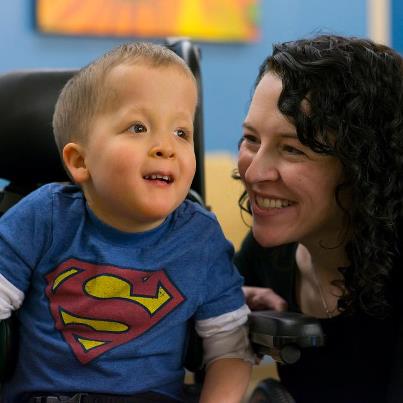
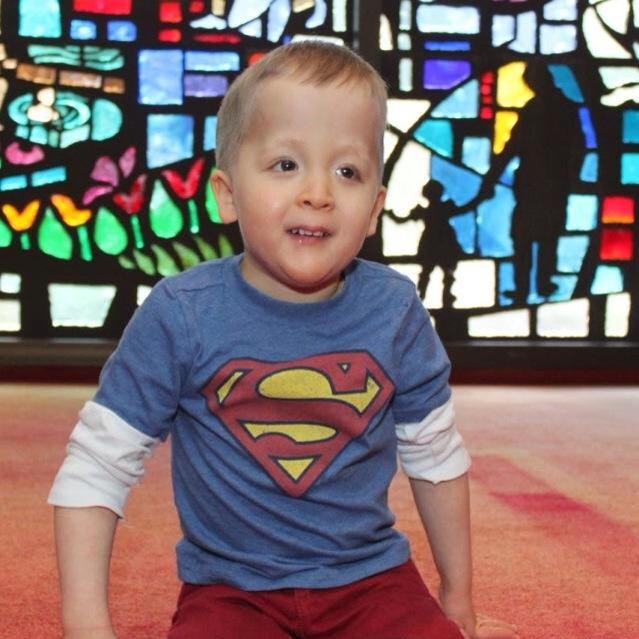
On April 14, 2013, the world lost a superhero: Gavin Leong, age 5 ½.

Gavin & Kate

Gavin had the biggest heart I ever saw, so it is the cruelest of ironies that his heart was what failed him in the end.

Gavin was special needs, but most of us would describe him with just the first word: special.

I never met Gavin in person, which shocked me when I realized it, because I felt like I had. His mother Kate has blogged about his amazing journey from the time he was born, and took us with him on her blog Chasing Rainbows. Kate and her family allowed us unprecedented access to their lives, sharing both their joy and heartbreak. But Gavin’s house wasn’t the house of a special needs child…it was a house of miracles.

Gavin’s parents were told when he was a newborn that his issues were so severe that they should just “keep him happy.”

But his parents saw more potential in their son than the doctors did.

After a long stay in the NICU after birth, Gavin was home barely a few weeks and he was back in the hospital for a two month stay, battling two illnesses that should have killed him.

Kate and Ed were told Gavin had permanent hearing loss as an infant—until the day the audiologist told them his hearing was normal and he no longer needed his hearing aids.

They were told Gavin would never eat without a feeding tube. He graduated to pureed foods and some solids.

They were told Gavin would never sit up. He started walking unassisted at Christmas 2012.

They were told Gavin would never communicate. Two days before his final illness, he independently and repeatedly sought out and pressed a button asking for water.

Gavin’s body may have been frail, but his spirit was not.

Gavin did everything in his own time in his own way. He faced his challenges with patience and courage, and even when crying in frustration he continued to fight. He never gave up, and his parents never stopped believing in him and his strength.

We were so privileged to experience it with him. At his preschool, Gavin had the goal of walking the equivalent of a 5K over the course of the school year. When he made his final lap, the entire preschool lined the halls to cheer for him. Gavin probably never knew that he had an entire Internet cheering section as well.

When Gavin needed the final miracle that never came, so many, many people prayed for him, rooted for him, and sent him positive thoughts. Many people displayed the Super-Gavin logo.*

Super Gavin Logo

Sometimes it seemed as if half my newsfeed had changed their profile pictures to Super Gavin. People who had never met him, never read Kate’s blogs, shared it on their walls and sent their support. This little boy who couldn’t talk touched the world, and taught us so much.

He taught his mother the power of hope and faith.

He taught his father the power of unconditional love.

He taught his little brother the power of compassion.

He taught me to celebrate the everyday triumphs of my daughter—to rejoice in her running around even when she exhausts me; to find joy in her constant talking and singing even when all I want is a moment of quiet; to be grateful for her health and her love even in the whirlwind of life.

The answer to why Gavin was taken from us so early will never be fully understood. But the answer to why he was placed on this earth in the first place is clear:

Gavin was given to us to teach us the power of persistence, of hope, and of love.

And the greatest of these is love.

Farewell, Gavin. You are now free of the body that failed you so often in this world. You can talk and run and play with your grandparents, your sister, your twin, and your other siblings who never made it to this world.

The world lost a superhero today—and Heaven gained an angel.

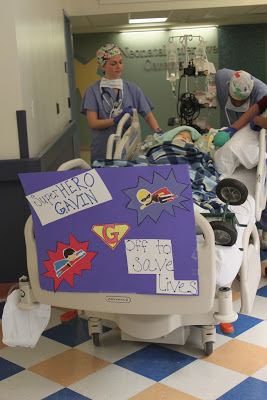
Gavin's last missionGavin the Superhero

Spinning Plates…on a Rollercoaster

I’ve written several times before about my quest for balance—balancing my writing life with my mommy life, in particular. I have learned one thing from all this searching:

Balance is a pipe dream.

Balance can’t be found, largely because I don’t control all the variables in my life that I need to balance. Just when I think I’ve got it all figured out, something changes. For instance, I am now used to having 6 hours a week free to write. Then summer will come and that time will vanish like a mirage. Or my kid gets sick. Or I do. Or technical issues stop my progress. Always something unplanned gets in the way.

So my new metaphor is spinning plates. You’ve seen what I’m talking about—the people in circuses who spin plates on top of thin sticks and then run around frantically spinning the ones that are slowing down so the plates don’t fall off.

Yeah, that’s my new life metaphor.

See, I don’t just have two things to balance—work and mommy. Each item has sub-items which become plates of their own. The writing has my fiction work, non-fiction work, blogging, sometimes editing for others, social media, and querying. The mommy has school, play time, dressing, feeding, washing, entertaining the child, among others. Household duties include everything from cleaning the house (that plate falls a lot) to doing the finances. And that doesn’t include other family and friends. Plates everywhere. Lots of running back and forth.

Inevitably, some fall.

Usually just one or two fall, and the crashing is cyclical. The social media will fall for a few days, then I’ll pick that up and the finances will fall. Then the finances are back up and the querying falls, etc. Eventually every plate gets picked back up, but it is rare I can keep them all spinning at once.

As if the plate-spinning wasn’t hard enough, I’m doing it on a roller coaster. It’s no secret that life has its ups and downs. Sometimes everything is going smoothly and I feel like my dreams are within reach. Then, sometimes just days later, I feel like everything is completely out of control and I’m a terrible mom, terrible, wife, and terrible writer. Usually the down time is when many plates have crashed to the floor simultaneously. All that shattered porcelain gets me depressed (did I mention my aversion to cleaning?).

But the thing is, I’m stubborn. Some people prefer the word “determined,” but stubborn fits me better. There’s nothing like life saying, “You can’t.” to get me saying, “I can.” Most successful writers I know are like this.

So, I’m stubborn and I pick up the shattered plate pieces, and I glue them all back together (I’m too cheap to buy new plates) and start them spinning again. I begin slowly, one at a time, and add them back as I can. But eventually, all the plates are back up, all are spinning, and I am once again on the upswing of the roller coaster.

What a wild ride!

What about you? Is stubbornness your key to pushing ahead when things are tough? Or do you have a different secret you can share with us?

Devaluing Ourselves

Humans are strange beings. We are forever envying what other people can do. Whether it is another writer’s success or that mom who always seems to have it all together, we always find something we wish we had or wish we could do as well as someone else. I don’t know if it is cultural or human, but this envy seems to be everywhere.

Here in America, we seem to feel that if we can do something easily, it has no value. Just think of the terms we use: we “earn” our paycheck at “work.” If we don’t have to struggle at it, then it’s not work, right? If we don’t have to work hard, then we haven’t “earned” anything, so what we did must not have value.

That thinking is false.

We all have skills—things we do more easily and better than others. Some of these skills are innate; some are learned. But all of us excel at something. It is ironic, then, that the very things we are good at are often the very things we devalue.

A few weeks ago, at my 25th high school reunion, we held a dedication ceremony for the new doors my class financed as their reunion gift to the school. We dedicated the doors to my best friend, Donna Hanson Woolman, who died of cancer 10 years ago. Along with speaking about Donna, I created a photo montage to show.

The number of people who cried at the montage shocked me.

Many people came up to me afterward and told me how wonderful it was, and what a good job I had done. I nodded and said, “Thank you,” but I was flummoxed. A photo montage, for me, is nothing. It is simple. I have been in video production for nearly as long as I have been out of high school. So to have people so moved and impressed by it felt a bit—embarrassing.

But it did make me understand, perhaps for the first time, that while we are busy admiring others’ skills, there are other people admiring ours. Putting together a photo montage for me is a few hours of work—for others it would be nearly impossible. Writing a blog post (once I have a topic) takes about half an hour. For others, it would take days.

We all have skills, either learned or innate. While we will never totally vanquish envy, when we feel particularly envious maybe we should stop and look at our own skills. We should remind ourselves that the person we are envying might be envying us our skills. Just because we find something easy or fun does not make it less of a skill.

We need to stop devaluing ourselves.

We all have gifts.

Our gifts have value—and so do we.

GoosesQuill FB

Contents and Endnotes and Index, Oh My!

I’m embarking on a new venture—non-fiction. It’s a whole new world.

As you may know, I am heavily into genealogy. Several years ago, I compiled all my data into a prose format to distribute to my father’s family (I’m still working on writing out my mother’s). Now, I have more information, and I am updating the book. But this time, I am working on it with an eye towards a wider audience.

Now, I know that genealogy books do not appeal to the general public. However, to that sleuth searching for their family, for that one missing link, a book about their line is pure gold. I cannot thank enough the people who have helped me on my quest, nor can I fully describe the joy of finding a treasure trove of well-documented information.

I want to give others that “family tree high.”

My intention is to fully source the book with endnotes and citations, so anyone reading the book will know the primary source of the information. Wherever possible, I will include pictures and scans of those sources. And I will put it online for as reasonable cost as I can so that others can access the information easily. I also intend to donate copies to local historical societies and/or libraries with genealogical collections. I want this information to be found.

But writing this book is much harder work than I thought.

Not the content itself—writing about each family lineage and couple is pretty easy, as it is chronological and all the information is right in front of me in my genealogical database. It’s the rest of the book that’s making me a little nuts. Like the Table of Contents. And Endnotes. And Index. Oh my.

My version of Word (2007) insists on creating my Table of Contents for me. Which would be very nice if I could figure out how to do that. It’s got something to do with “Styles,” but I have yet to get the details right. I need to sit down and figure it out because once I do, Word will supposedly update the Table of Contents as page numbers change. But so far it has been a headache and I long for the days of the old Word where I could do it myself without my computer freaking out and trying to think for me!

The Endnotes are fairly easy—soooo much easier than on a typewriter!—but I had forgotten what a pain it is to cite every fact on a page. Haven’t done that since my Master’s Degree ten years ago. However, citing everything has been a wonderful way of double-checking my sources within my own database and finding holes I still need documents to fill.

Then there’s the index. What a Herculean task! As far as I know, there is no shortcut to doing this in Word. I have to go through each page of the manuscript and enter each name into my Index database, along with the page number. And if I end up adding or deleting things and those page numbers change, what a headache to go in and fix! If anyone out there has and helpful hints at this, please leave them in the comments.

So there you have it—my latest project. It’s growing alongside my fiction works-in-progress. I’m juggling this book project, two fiction WIPs, several short stories, the weekly blogging, and querying for a third fiction project. I’m kinda busy! But I prefer having multiple projects—it keeps me from getting burned out.

Do you switch between fiction and non-fiction? Does it help keep you balanced?

GoosesQuill FB

Sick Days

If you are self-employed and/or a stay-at-home parent, you know that sick days are a myth. First as a video editor and then as a writer, I have worked through fever, colds, and stomach bugs. After all, if you don’t work, you don’t get paid. It’s that simple.

Any stay-at-home parent knows that you don’t get the day off unless you are at death’s door. Your kid needs what she needs when she needs it. I know I am always reluctant to ask my spouse to take off from work when I’m sick. After all, the parent job is much more important than the writing, and I do that even when sick. Besides, he has his job and I have mine, so I soldier on whenever possible. I even avoid taking my temperature when I think I have a fever, because I subscribe to the Schrödinger’s cat theory of illness: If I don’t measure the fever, I don’t really have one.

But it’s all different when it’s your kid that’s sick.

I can’t tell my 3-year-old to soldier on when she’s getting sick at 5 AM. I can’t tell her Mommy’s busy when all my feverish girl wants is to be held. A normally productive day grinds to a halt when she falls asleep in my arms for hours, or when her fever is so high she cries while I hug her and we wait for the medication to work. My daughter needs me, and the rest of the world—including this blog—has to wait.

And that is how it should be.

Cuddling my little girl, feeling her radiating heat, reminds me what’s really important in life. Comforting my sobbing child is a calling more urgent by far than any blog post or writing assignment. I know that it will not be long before a simple hug won’t stop her pain, and there will come a time when I will not be there to hug her. So I cherish these moments when I have this magic power to protect her, to make her feel better, to heal her with nothing more than a hug, a kiss, and my love. Because that time passes far too soon.

So that is why I have no urbanely witty and deeply philosophical writing-related blog post today. And I’m sure it won’t be the last time life gets in the way of a post. But without life, we wouldn’t have anything to write about, so it’s all good.

GoosesQuill FB

A Writer’s Thick Skin: Do We Need One?

There’s been a lot of talk on the Internet lately about the need to have “a thick skin” if you are going to be a writer. After all, being a writer comes with a ton of rejection and a necessary amount of critique. Nothing you write will ever be perfect, and nothing you write will be loved by everyone who reads it. These facts are part of the job description.

Kristen Lamb tells us we need a thick skin, while Rachelle Gardner makes the case that we don’t. Jody Hedlund ignores the thickness of skin altogether and talks about the unnecessary shame involved in getting feedback.

They all have good points, but I think the key to developing a so-called thick skin isn’t in strengthening your epidermis, but in changing the way we approach criticism and rejection. A thick skin simply means we can take a beating and keep on going—but have we learned anything worthwhile from the beating?

I didn’t always take criticism well. I mean, I never screamed at anyone or anything like that, but it hurt a lot when my work wasn’t up to snuff. The first time my Master’s degree advisor ripped apart my work, I was nearly in tears. I suspect that part of this reaction is that I was a very good student in school. I was used to getting all A’s. To be told that my work was not an A was rather unprecedented, and I had no coping mechanism in place.

So I learned to cope. I turned around the way I looked at the red marks splashed on the page. Instead of seeing them as glaring testaments to my worthlessness, I looked at them as a challenge: every red mark was a place I could improve my story. Once I changed my outlook from a negative (“I suck”) to a positive (“look at how much better my story can be”), the ouch factor of criticism lessened considerably.

This doesn’t mean that when I get a bleeding critique back I do a dance of joy. I get down in the dumps like everyone else. The task can seem monumental. Overwhelming. But in the end it becomes exciting, because each change is an opportunity to learn something new about our craft, and the results of the changes are instantaneous: you can actually feel the story growing stronger.

I admit that revision fits my personality. I love to learn—and honing our writing offers endless opportunities to try something new, to push ourselves higher, or to master a nuance of the craft. I am also by nature a troubleshooter: I love to fix things. When I was a video editor, I was the go-to gal when a system wasn’t working. Tracking down and fixing the problem thrilled me. The same goes for my writing. Figuring out what the problem is, and then finding the solution is an adrenaline rush.

So, back to the thick skin. Do you need one? I don’t think so. Becoming impervious brings with it the risk of becoming immune to the helpful criticism as well as the bad (and there is bad criticism out there that should simply be ignored). I think Jody hit it on the head that our task is not to grow rhino skin, but to change the way we approach criticism altogether.

What do you think? Do we need a thick skin to survive as writers or not?

GoosesQuill FB

Overload Paralysis

A few years back, when my daughter was still an infant, we lived for a time on the island of Chincoteague, VA. Since I still had commitments back home, I would make the trek up and down the Eastern seaboard twice a month, my car filled to the brim with all the ridiculously large items a tiny baby seems to need.

Almost every time I needed to start packing up, I experienced a strange phenomenon: I couldn’t do anything. I would find myself standing in the middle of the living room, frozen. My mind whirled with the long packing list I had, as well as with all the things I needed to do other than packing—cleaning, bill paying, etc. I had so much to get done that I couldn’t do anything at all. The overload would paralyze me.

I sometimes get that way about writing, too. I end up with so many projects going on at once, that when I do get some free time to work on something, I end up doing something totally unrelated to writing. The overload of work can paralyze my creativity and my motivation. Right now, I am editing 2 novels, polishing up 2 short stories, have 2 blogs due every week, and have to maintain the constant round of social media—Facebook, Twitter, Goodreads… Not to mention reading the dozen or so blogs I follow regularly.

It can be overwhelming enough that I want to hide from it all.

There is a way to break the paralysis. The answer is both easy and hard.

Pick something.

Do it.

That’s the big secret. Do something, anything, on your list, and you can advance into productive work. But what to pick? Hardest thing first? Easiest thing first? It depends on your mood and your personality.

If I have a very long list but most of it is little stuff, I will do the easiest first and work up to the hardest. By doing the easy things first, I get the instant gratification of checking things off my list and seeing the list get shorter quickly. If I have a shorter list but the tasks are more complex and time-consuming, I will usually do the hardest one first. That way I know the most difficult (and often the most time-consuming) one is done and the rest will be easier and usually take less time than that first one. So, sometimes I inch my way up to the top of the hill, and sometimes I start at the top and coast down.

Of course, there are always things that are not on your To-Do list that crop up and need to be done. Those you just have to incorporate based on their necessity. I immediately need to take care of my daughter when she falls off the bed and hits her head, but the crayon drawn on her closet door can wait until I have more time. The phone call from my family needs to be answered, but the one from an unknown number can leave a message.

Do you experience overload paralysis? Do you have a different way of busting out of it? Or do you have a method of organization that bypasses this overwhelmed reaction altogether?

GoosesQuill FB

WP-Backgrounds Lite by InoPlugs Web Design and Juwelier Schönmann 1010 Wien