

The Split Brain Phenomenon: On the Outside Looking In

I used to think only I experienced a split brain. Even in childhood, I always had the strange sensation of being on the outside looking in. I watched my peers and marveled at the ridiculous (to me) things they fought about, raged about, lost friends over. I always just figured I was an “old soul” type, plus being an introvert I did not usually place myself in the center of social angst.

But there is more to it than that, as I have found as I grew into adulthood. I have often felt like I am in two places at once—both experiencing my life and observing it. As an introspective type, this observing of my experiences often takes a two step form that most people are familiar with—something happens, and later on in a quiet moment, I examine it. But sometimes I have disconcerting moments where the two happen simultaneously.

For example, as my best friend was dying, I and my friends spent many emotional hours in the hospital. One night another friend and I fell into each others’ arms in a hallway and started sobbing. And my split brain says to me, “This would make a good story.” Seriously, brain? So now one part of my split brain is deeply grieving, while the other is arguing with itself over the inappropriateness of its intrusion.

I am aware that this “removed” feeling in the situation above could have been a defense mechanism against my grief, but that is only one instance where I had this occur. Many times I feel both inside and outside my life, like a bridge with an upper and lower deck—connecting to the same places, but taking different routes. Both observer and observed.

I have since found that other creative people experience a similar phenomenon. So maybe I’m not crazy—or maybe we all are. This ability to see the larger picture, to see beyond our own experiences even while having them is, I think, a part of what makes a creative brain what it is. We interpret as we experience, and are able to then lay that observation over the larger human experience and make it resonate with people.  Rather than being a disconnect, it is actually a unique connection between the intensely personal and the widely human.

It is often said that artists see things other people don’t. That they have vision. The split brain is part of that perspective. We are a conduit, able to extrapolate from our experience to that of others. Our job, our purpose, is to shine a light on the humanity in us all.

That moment of grief in the hospital hallway? That is a story played out in every hospital in every country in every language in the world. It is more than a good story—it is the human story.

And my split brain allows me to see both stories at once.

Book Events Past and Future

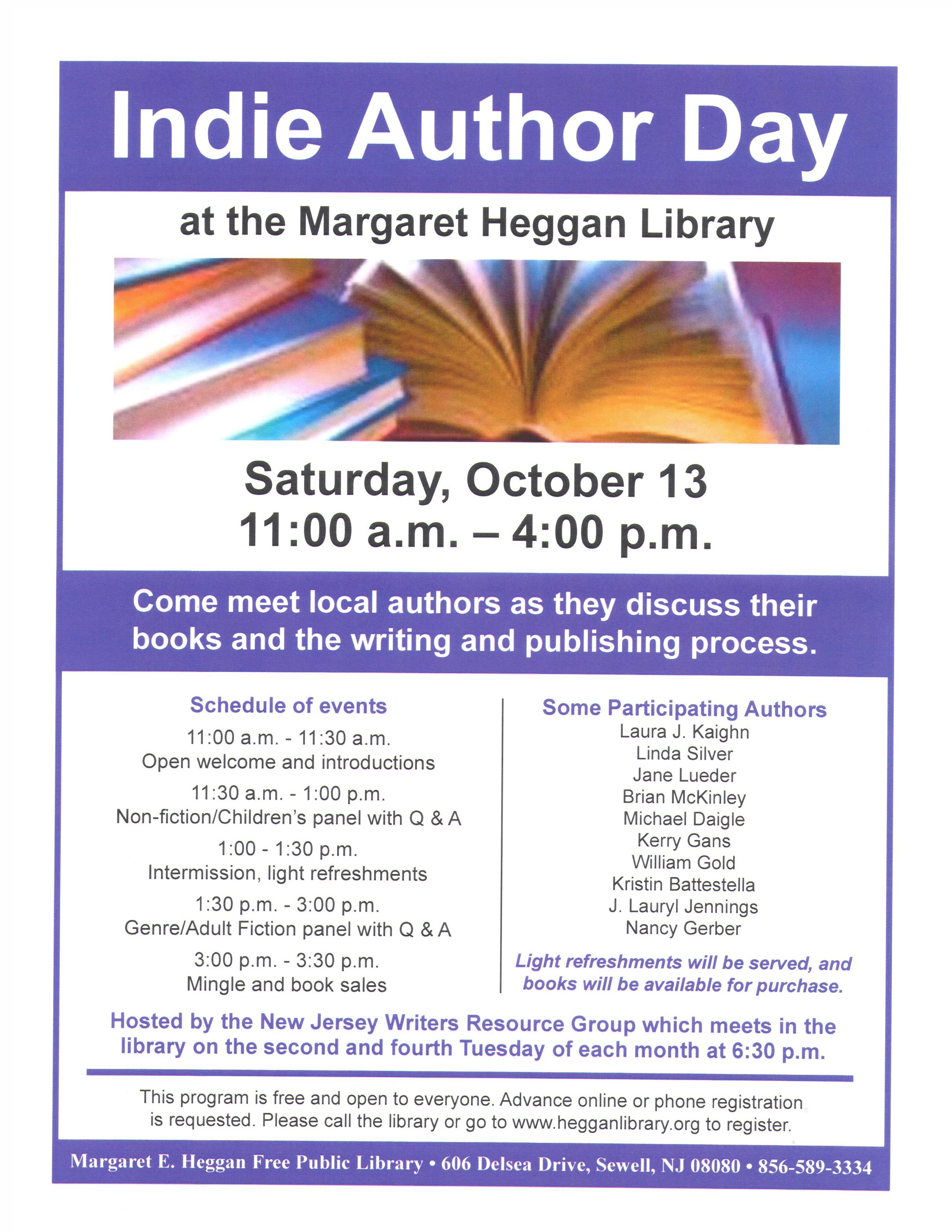
This is a “sandwich” week for me–the week in between two book events. Last Saturday was the Collingswood Book Festival, this coming Saturday is Indie Author Day at the Margaret Heggan Library in Sewell, NJ.
Book Events: Collingswood Book Festival

Collingswood, photo taken by my Young One

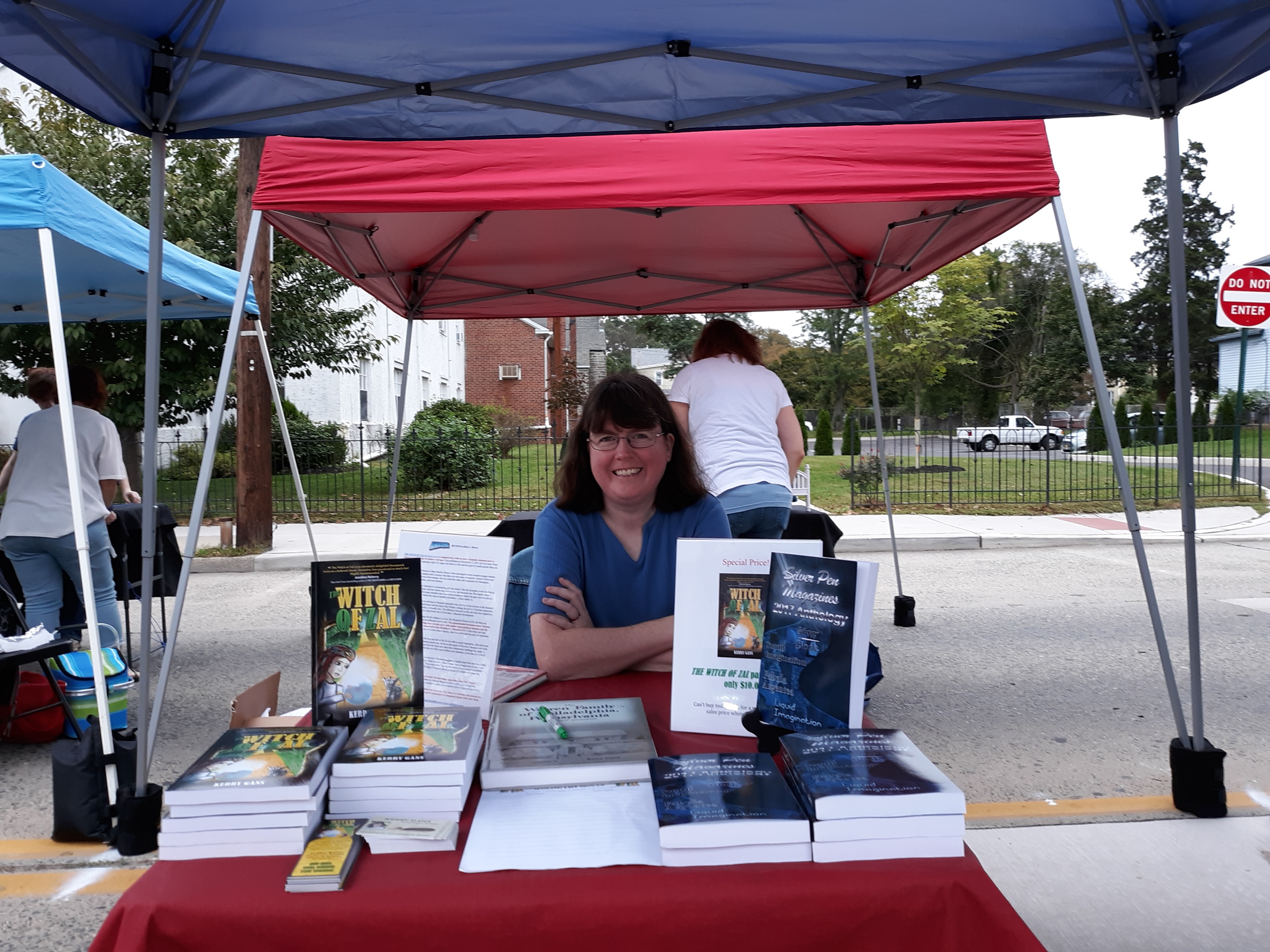
This was my 3rd year at Collingswood, and luckily the weather held out. No sun, but warm weather and therefore a good turnout. I had a pretty average sales day, but enjoyed talking to my fellow authors and the customers while watching the world go by from my (new) tent.

Perhaps the most enjoyable part of my Collingswood experience this year was having my daughter with me. My child care plans fell through, so my Young One got up at 6 AM with me and soldiered through the long day until we got home at 5 PM. You never know the mood your 8-year-old will be in, but Young One faced the day with grace and good will. She helped me set up and break down, she chatted vivaciously with our neighbors, danced a lot when one vendor played music, and even got me a sale! I made sure she got a break, though, and we went to the LoompaLand children’s alley, where she got face paint and an appropriate tattoo.

Book Events: Collingswood

While barely recovered from Collingswood, I am preparing for Indie Author Day. I have spent the last 2 Indie Author Days at the Vineland Library, but this year Laura Kaighn invited me to join an event she is putting together at the Margaret Heggan Library. This is a panel event, and I will be on the 11:30 Non-fiction/Children’s Panel, then I get to relax and watch the second panel at 1:30, Genre/Adult Fiction. There will be time to mix and mingle and hopefully sell a few books. I am looking forward to it! If you are in the Sewell area, check it out–info is below.
Book Events: Indie Author Day 2018

And when both book events are finished, I can relax…for a week or two.


On Being a Low-Energy Person in a High-Energy World

I am tired All. The. Time.

I don’t sleep nearly enough.

I don’t eat as well as I should.

And although I average about 7,000 steps a day, I’m not sure “chicken-without-a-head” steps count as real exercise.

So it’s no surprise I am tired.

But I think it’s worth asking: Why? Why am I cutting my sleep short? Why am I opting for the faster meal rather than the better one? Why am I not making time for more focused exercise?

Because there is too much to do and not enough time. The modern world is high-energy, and I am not.

I see people who can do everything I do and more. I don’t know how they manage. Somehow, they have the first 10 things on their to-do lists done while I’m still on number 1.

They are high-energy people. The type that makes me tired just watching them. I am low-energy. I always get things done, but it takes longer. Takes more time. And time is in short supply in today’s world. Hence the shortcuts.

Am I taking on too much? Probably. Most people are in today’s day and age. So perhaps I need to prioritize and prune a bit. And I know my anxiety has been high for a while now. This matters because the way my anxiety works is to make me feel massive fatigue to deter me from engaging in anything.

Sleep deprivation and general overwhelm exacerbate my anxiety, creating a feedback cycle. I need to break the cycle so I can pick up the pace of life a bit.

Even if I do that, I will still never match the high-energy people. But if I can be even a little more productive, I will be happy.

Do you ever feel like your natural energy level doesn’t match the demands of our modern life?

Childhood Book Influences

I read an article this week about what childhood books influenced a writer. So that got me thinking about what books I read as a child and how they influenced me.

I voraciously read animal books, particularly horse books. I owned the entire Black Stallion series and read them over and over. I read almost all the Jim Kjelgaard books, as well as the Marguerite Henry books. A childhood dream came true for me when I lived in Chincoteague for 8 months and not only visited the Misty museum, but saw the famous Pony Swim.

Yet, I do not write animal books. You will see horses appear in most of my books, and the occasional dog, but they are not my focus.

I also read–and reread—The Chronicles of Narnia, which definitely seeded my love of fantasy.  I was fascinated by the idea of magic portals, of the interconnection of everything seen and unseen. Many of my books deal with magic and the ripple effects each of our actions cause.

But perhaps the biggest influence on my writing was Madeleine L’Engle. I read her Time Trilogy until the covers got tattered. Although most people know the first book in the series, A Wrinkle In Time, my favorite was the third, A Swiftly Tilting Planet.

It stars my favorite character, Charles Wallace, who had to find and reverse the one event that would change history to prevent nuclear war, and it has a time-traveling unicorn. How could I not love it?

I see a lot of the themes in L’Engle’s writing coming through in my own. The intersection of magic and mystery with everyday. The connection of everything, everywhere. The understanding that love gives you more strength than hate. That being true to yourself and what you believe in is the most powerful magic of all.

Those are some of the influences on me. Who are some of your childhood favorites that shaped your writing and your worldview?

The Enchanted Book Fair: Fall 2018

It’s the most crazy time of year again! Book Fair week! This time we did not get closed by a blizzard, thankfully.

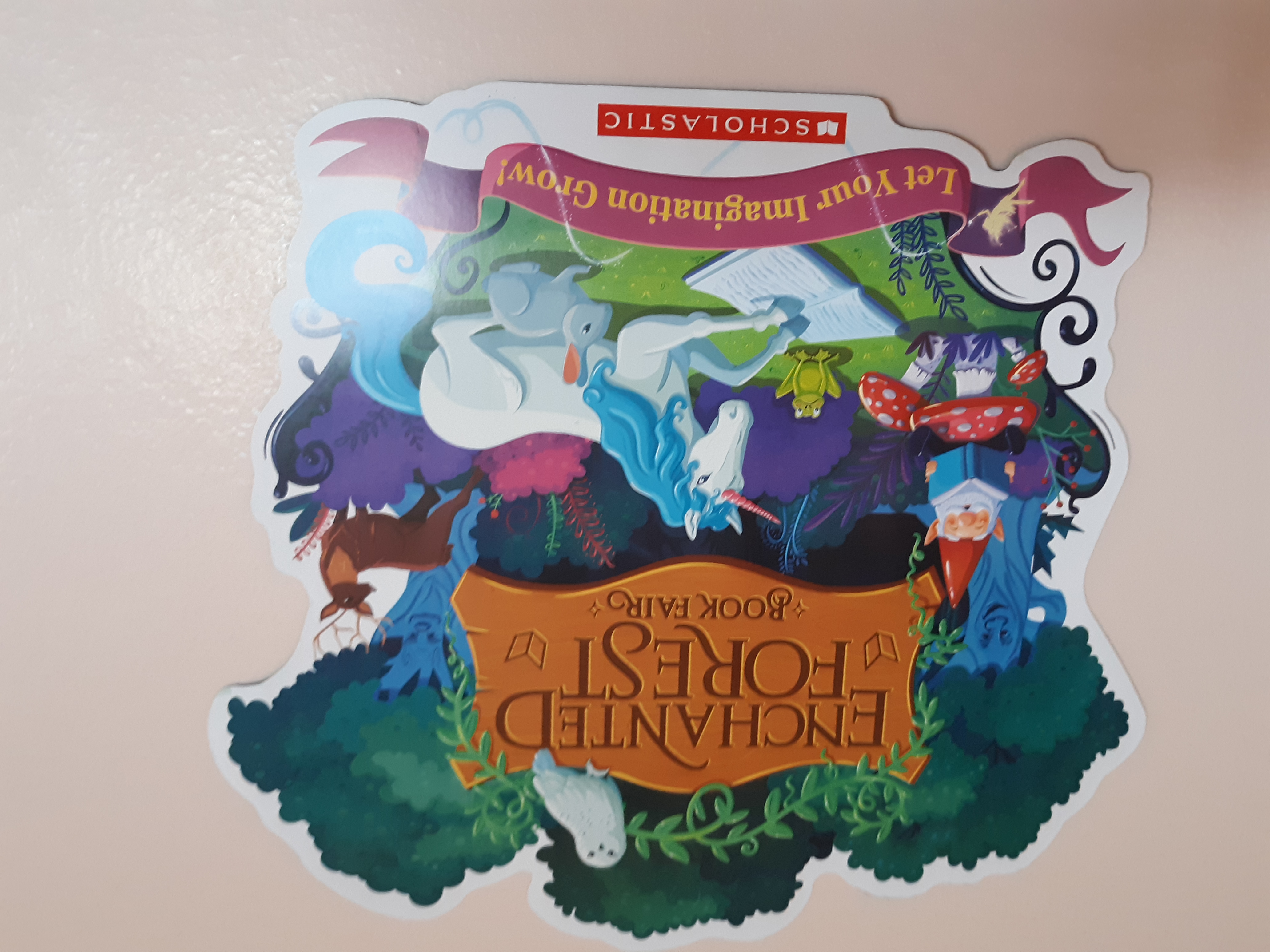
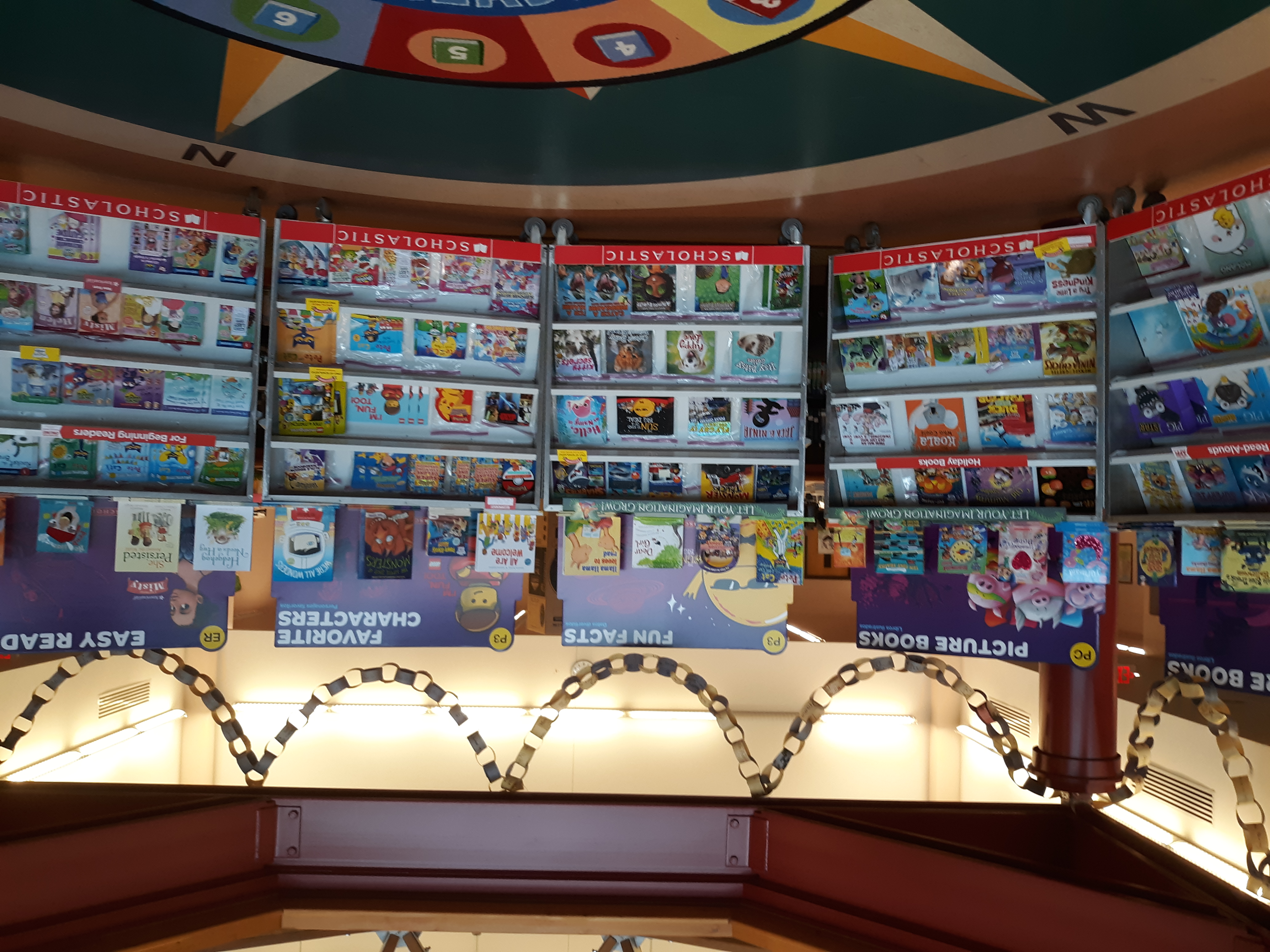
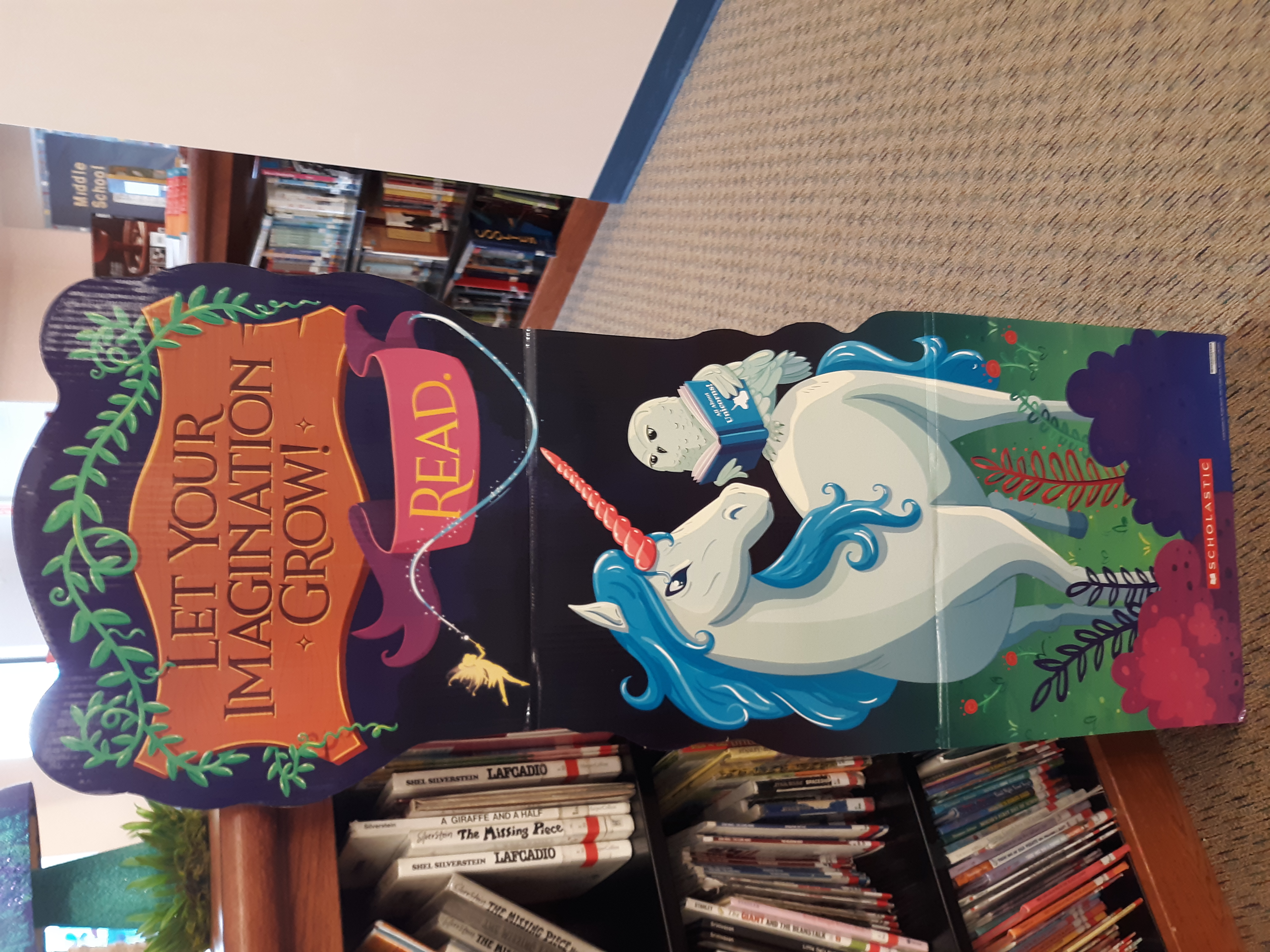
This year’s theme was Enchanted Forest, and our Book Fair moms did a great job bringing the magic to the library. And the kids felt it. One mom commented that she loved watching the kindergarteners when they first rounded the corner into the section where the books are. Their eyes get huge and they stare and some even gasp. They feel the magic.


The early part of the week is the hardest part, when we need the most parents in to help. That is the time when the kids come in to create Wish Lists to bring home to their parents. Many of the kindergarteners can’t read or write yet, so they need helpers to get their lists in order. Some of the first graders do, too, although by second grade they’re pretty self-sufficient.

The latter part of the week, the children return with money (and hopefully their lists), and buy their books. Again, the kindergarteners need the most help, since most of them have no clue about money. One little boy was proud and excited because he was taking a penny home to his mom as change.

But the best part, to me, is seeing the kids hugging their books as they leave. Even the older kids—too cool to actually hug the books anymore—clutch them possessively, a quiet joy hidden under the laconic exterior. Every child, young or old, takes some of the magic out into the world with them, as if trailing pixie dust in their wake.

Enchanted, indeed.


Revision: The fun and the fear

Revision can seem never-ending. But when someone gives you feedback you know will make your story better, you have to act on it. I have embarked on yet another major rewrite and restructuring of my YA scifi. After some great feedback from an agent, I am now revisiting the story viewing it through a new lens.

I’m experiencing mixed emotions about this revision. On the one hand, I can see how her feedback will majorly strengthen my main POV story. So my body tingles with excitement when I think about tackling that part.

But the restructuring will also require cuts to my other two points of view characters. I will lose much if not all of my villain’s POV, which pains me because I love my villain. I fear she will become a two-dimensional cardboard character and that I will have trouble finding new homes for essential information that currently comes from her.

My other POV character is a secondary protagonist. I know I will need to keep SOME of his POV or the story will not make any sense. But I will probably have to lose much of his romance subplot. This is problematic for me because I envision this as a series, and the second book would focus more on him, growing out of the plot points in this book. The rest of his POV that remains I will need to tie even more closely to the main character’s plot.

So I am facing this revision with a mixture of excitement and trepidation. Excitement for the way this will strengthen the story; trepidation because I am not certain my skills are up to the challenges ahead.

Now that my daughter is back in school, I can dig into the revision full bore. I’ll let you know how it progresses!

Do you experience the same emotional dichotomy when facing major edits?

Back to School, Back to Work

Today is my daughter’s first day back to school–which means it is also my first day back to work. Now I will have about 6 hours a day to accomplish things before she comes home. I like this schedule because it gives me quiet, concentrated time to work. Also, because I do it while she’s not home, I can be more present for her once she comes home. Over the summer it feels like a constant push-pull, wanting to spend the time with her but needing to get certain things done.

I have my plans in place (and we’ll see how those plans work out, LOL). Today I plan to catch up on PTA Treasurer stuff, and maybe squeeze in one or two other household things I’ve been putting off. Tomorrow I have to finish and send to the printer my brochure for my campaign for the local school board. I need them by Sept 22nd, and I have suddenly realized that is not all that far off!

Next week, with those large projects out of the way, I hope to settle into a school-year work routine. A couple of years ago I had one that worked well, but for reasons I still can’t pinpoint, it rather fell apart over the last year. As a result, my productivity slipped and my self-esteem as a writer with it.

I want to get back to writing every day. Doesn’t have to be much every day, but I would like to work on my fiction a little every day. Make it a priority again. Like many of us, I fall into the trap of putting everyone else first. Next thing I know, the day is gone and I’ve done nothing for me or my own work. I want to try to balance that a bit more. I know I’ll feel better about myself if I do, even though it’s hard.

So for me, back to school means back to work. Does back to school change things in your routine?

August Days: Lazy Yet Anticipatory

This time next week, my daughter will be back in school. The last lazy days of summer are winding their way past us.

Gone will be the days of sleeping in, reading for hours, spending afternoons in the park, and taking long evening walks as the sun lingers in the sky. Play dates, vacations, and excursions to interesting places and events will be replaced by early bedtime, homework, and normal extracurricular activities.

Also gone will be the days where writing time is scarce and schedules are a fantasy. As much as I cherish my summer days with my gal, I will be relieved to have my structure back. I work best with a routine, and that is brought home to me every summer vacation.

I have several projects I am dying to dive into, but I need some concentrated time to do the necessary revisions. I also have some non-writing projects that I have let slide over the summer that I want to re-energize.

The end of summer is always bittersweet. A time of enjoying the easy pace of summer and time with my girl, but also a time if looking forward to a return to productivity and focus.

Do you look forward to the end of summer?

Why Marketing Is So Hard For Authors

Many authors find marketing difficult. It’s awkward, embarrassing, and confusing. Even writing marketing copy can be a struggle.

Why is it so hard?

I think it’s because we are told over and over that WE are the brand, not our books. And many authors are introverts, so putting ourselves out there as a brand is tough.

Also, it is common to believe that you are nothing special. Many people suffer from Imposter Syndrome, writers perhaps more than the general population. That feeling that you are a fraud and everyone will find out is quite a deterrent to opening ourselves up to the public.

Another prevalent human condition is to assume that what you know, everyone knows. We literally cannot see how knowledge and skills that we use every day can be of interest to anyone else. To us they are ho-hum, and we fail to see the value.

I am currently writing campaign materials, so I am thinking a lot about marketing myself. And I am finding that this is easier than author marketing–perhaps because I am able to focus on the benefits I can bring to the position. Writing the campaign pieces is much like writing a resume–take your know skills and show how they apply to the potential job.

Many marketing gurus will say to sell the benefits of your books or the problem your book will solve for the reader rather than the book itself. I find it much easier to tout the benefits of a non-fiction book. Such a book usually has a clear purpose, a defined audience. I find this hard to do for fiction. My book is a middle grade fantasy. Hopefully one of the benefits is that the readers enjoy it. If they also pick up on and resonate with the themes of being true to yourself, protecting the environment, friendship, and not becoming an oppressive dictator, that’s a bonus.

How about you? How do you sell the benefits of your books, especially if it is fiction?

Control Your Inner Critic: The power of a name

Naming things gives you power over them. Years ago, my father got sick. His illness progressed from a persistent cough to weakness to dementia-like symptoms. He lost weight, got easily confused and forgetful, and fell asleep all the time, sometimes in mid-sentence. He had to stop driving, stop working, stop exercising, stop socializing. Doctor after doctor saw him but no one could name the disease. We were certain we were going to lose him. Finally, my mother dragged him to the ER in the middle of the night when his fever spiked yet again, and a young doctor there said, “You need to see Infectious Diseases right now” and called in the specialist. The diagnosis: strep infection in his heart valve.

The name gave us power. We, and the doctors, finally knew what to do. Thanks to that name, he is with us today, still running in 5Ks and playing tennis with his buddies.

My anxiety therapist told me that some people use the technique of naming their anxiety. Giving their anxiety a persona—a name—allows them to have control over it. Just as you can argue with another person, resist another person’s advances, they can push back against their anxiety persona. It also helps to remind them that their anxiety does not define them—it is only a part of them. And by thinking of their anxiety as something outside themselves, they can sometimes push it away, hang up on it, and slam the door in its face, at least for a while.

I never named my anxiety, but I wonder if I should name my inner critic–that little voice that tells me how bad my writing is and how I’ll never get ahead. You know the one I mean. You have one too. Don’t pretend you don’t, all writers have one. It came with your “I Am A Writer” starter kit.

Would naming your inner critic help you control him? Perhaps being able to call your critic by name would make him think twice about messing with you. After all, some demons can only be banished when you know their true names. By isolating the inner critic from your essential self, you are able to give yourself distance—and distance enables you to hear the lies he often tells.

I think my inner critic’s name is Shut Up. At least, that’s what I hear in my head. “Shut Up, I’m not listening!”  “Shut Up, I’m trying to think!” “Shut Up, I don’t need this right now!”

So what would you name your inner critic?

WP-Backgrounds Lite by InoPlugs Web Design and Juwelier Schönmann 1010 Wien