

The End of an Era: When Writing Mentors Move On

You know that moment in Star Wars where Obi-Wan Kenobi gets killed and you freak out because Luke’s just lost his mentor and he still is nowhere near where he needs to be, training-wise? That’s kind of where I am right now.

In 2005, I met Jonathan Maberry, who had joined the now-closed Writer’s Room in Doylestown. From that moment on, he has built a wonderful society of writers in the Greater Philadelphia area. Now there is a thriving community, helmed by the Liars Club, that has workshops and networking meetings and just has a generally good time.

I have been a part of an ongoing workshop of Jonathan’s since 2006. Originally called Revise & Sell, it is now known as the Advanced Novel workshop. Basically, all of us in the workshop have novels in some stage of development (but beyond first draft) and are trying to get published. I was one of the original workshop members. Over the years, people have come and gone, but a core group has stayed rock-solid and bonded together. We critique each other’s work when asked. We offer a shoulder to cry on when needed. We discuss problems, both craft and business, that are standing in our way. A group of us formed The Author Chronicles group blog about 3 years ago. Several of us have had short stories published, and one member, Tiffany Schmidt, is now a published novelist with her second book coming out in February!

So when Jonathan told us he was moving to San Diego later this year, it was a bit wrenching—one of the main pillars of my writing life was disappearing. We had what is likely to be our last in-person class last week, which was a weird feeling of endings and beginnings all mixed into one.
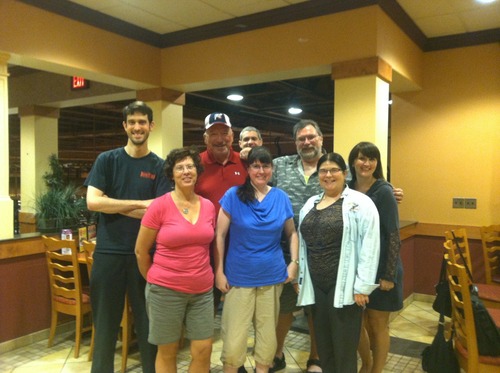
Last R&S Class

Last in-person class. Photo courtesy of Tiffany Schmidt


But the thing is, just like Luke Skywalker, we aren’t really losing Jonathan at all. Technology today has made it possible for us to continue this workshop virtually, through Skype. I am looking forward to keeping up the forward momentum we have built together. Although conversing with a flickering, pixelated mentor is a little too sci-fi even for me! But maybe we’ll get lucky and the Force will be with all of us.

I wish Jonathan all the best in his new adventures out in California. The man is a force of nature; I have no doubt he will do well. And I’m glad that technology will allow us to stay in touch as a class, because I get quite an energy boost from our meetings—and I think there are good things ahead for all of us. I want to be there to cheer the others on and celebrate when they get their big break. We’ve all done the hard work—but it’s with Jonathan’s guidance that we’ve come as far as we have.

So, thank you, Jonathan. It’s the end of an era—but the beginning of a new one. I can’t wait to see what new opportunities the new era brings.

Have you ever had a writing mentor?
GoosesQuill FB

The Monkees Came To My Town…

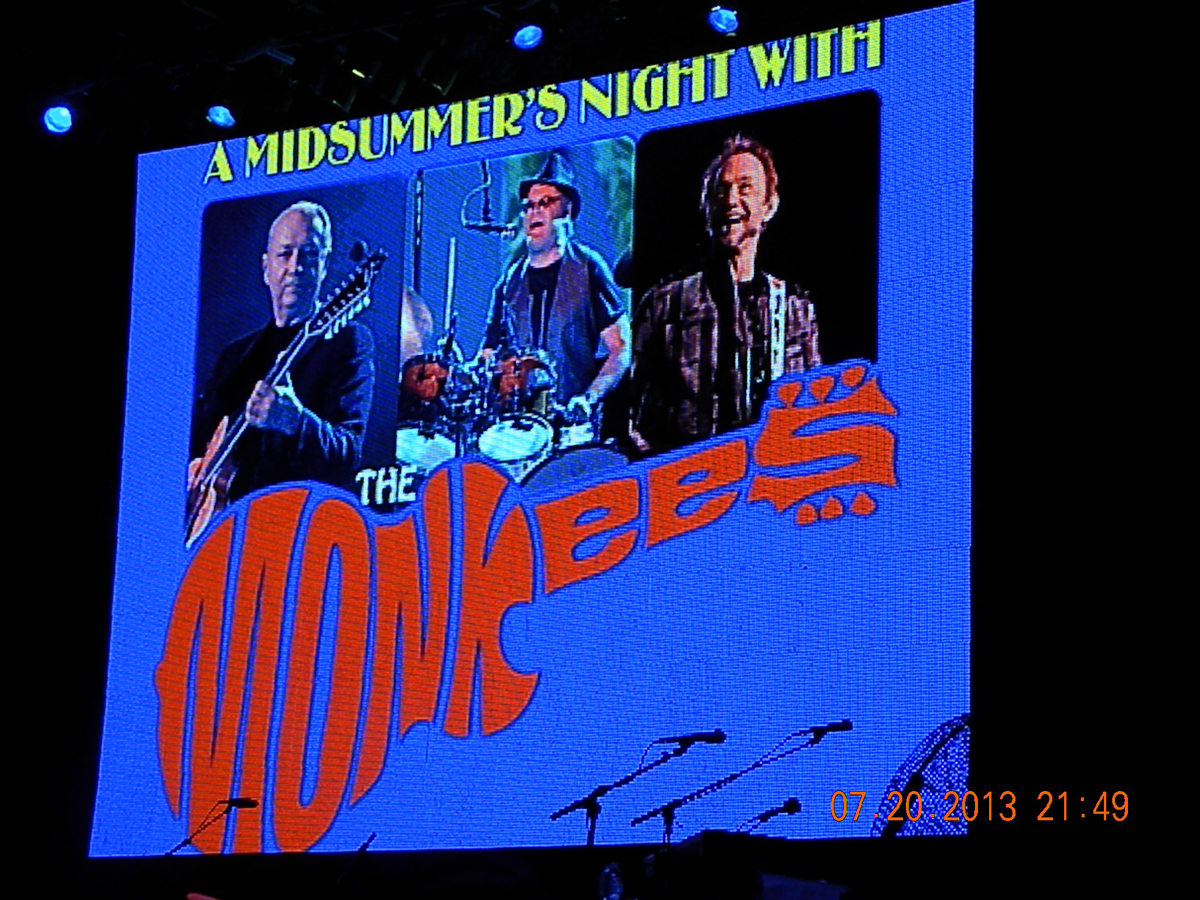
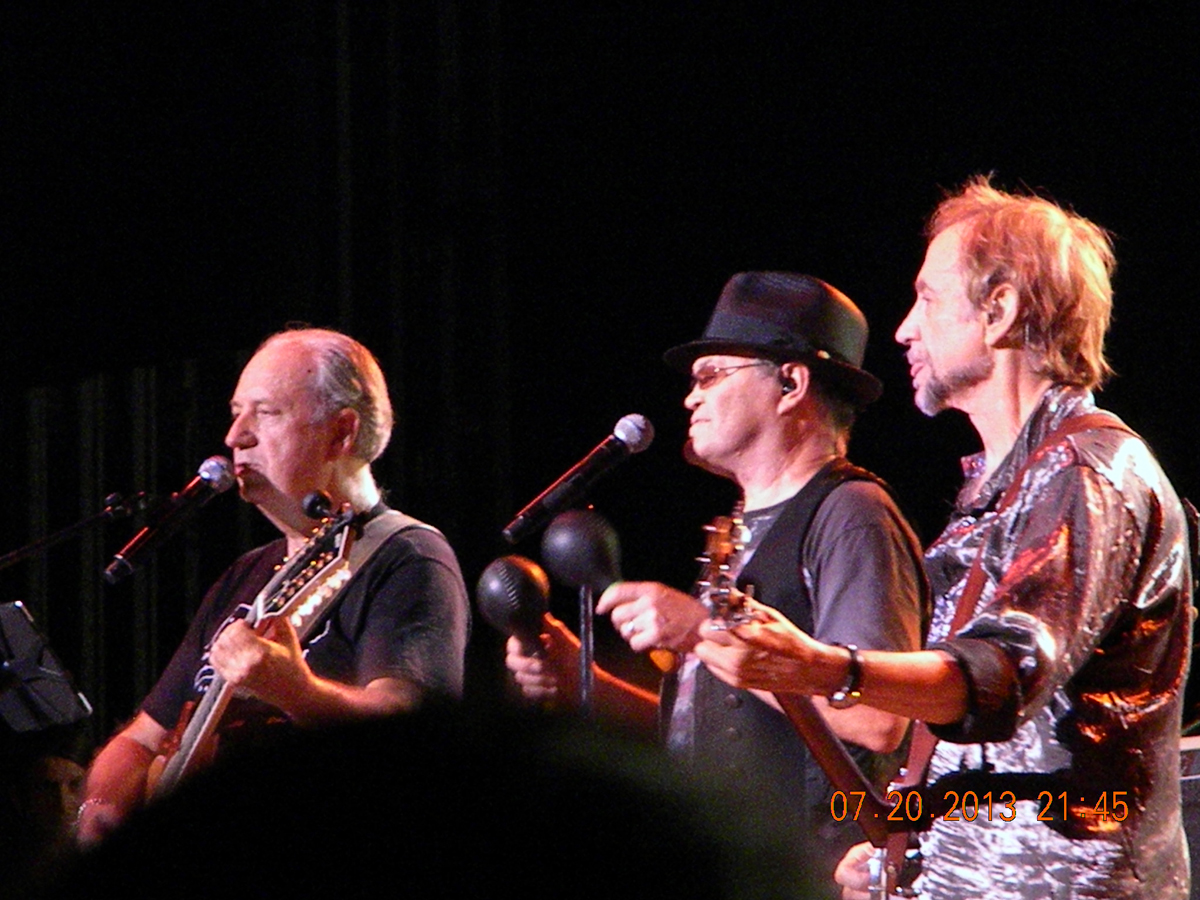
On July 20, the surviving Monkees—Micky Dolenz, Peter Tork, and Michael Nesmith—came to Philadelphia with their second year of touring. My friends who lived through the 1980s and 90s MonkeeMania know I am a die-hard fan. I have been to Monkees events in the snow, the scorching heat, the pouring rain, and even a sandstorm. I have learned that when going to see the Monkees, I should expect the unexpected. This show was no exception.

Mann - Logo

The Monkees at the Mann Music Center
Philadelphia, PA, 7/20/2013

The adventure began before we even got to the Mann Music Center. We were about a mile away (according to our Google directions) when traffic on the Expressway stopped dead. Not moving off the exit. The clock ticked ever closer to 8 PM (show time). The veins popping out of my temples must have finally scared my husband, because he left the non-moving line and went to the next exit to try to enter Fairmount Park from the far end and wend our way in. Except that we couldn’t—roads in the Park were closed everywhere!

We had no idea how close to the Mann we were, but people were parking all along the road, so we did, too. We loaded up and prepared to walk. A woman stopped her car and asked me, “Is this within walking distance to the Mann?” I replied, “I hope so.” I couldn’t figure out how she knew I was going to the Mann until I remembered I was wearing my Monkees tour shirt from last year!

So we walked. And walked. And walked. Did I mention that it was hot as Hades? The heat index was well into the 90s, even though it was eight o’clock at night. After we slogged the MILE AND A HALF to the Mann, I was dripping like a melting candle.

During the torture trek, we discovered the source of the closed roads and the stand-still traffic. The event planners of Philadelphia had decided to hold a run of some sort in the Park on the same afternoon as the concert. And the parking for the run was…the Mann parking lot.

By the time we oozed through the gates of the Mann, we had missed half of the first song—“Last Train to Clarksville.” Not bad, when you consider that I saw people arriving at the show as late as 30 minutes into it.

When we sat down, I gaped. Our seats were amazing! They hadn’t looked so close on the seating chart. We were in the 5th row! Only a Box containing 4 rows was between us and the stage. Unfortunately, the box also contained 2 girls who insisted on getting up and dancing. I had to laugh, though, because I could not have planned their blocking of my view any better if I had tried. Whenever they stood up, they were perfectly aligned with Micky at center stage and Peter at stage left. Perfectly covered those two. Every. Single. Time. So I saw a lot of Mike on the far side of the stage. Which is not a bad thing! I don’t know if someone said something to them or if they just got heat exhaustion, but they did stop blocking everyone’s view about halfway through the show.

Mann - The Coolest Fan

The Monkees and their coolest fan

In spite of the late arrival and the heat and the girls, I thoroughly enjoyed the show. The guys sounded fantastic, and they had a good time up on stage. They cracked jokes about the heat, and even played around with a cooling fan set up on one side of the stage. Their set list was almost identical to last years’, but that was fine by me because I think it features some of their best music. The only thing that would make this show perfect is if Davy were alive and part of the mix.

Highlights of the show? For me, every song could have been a highlight, either for the musicianship, the lyrics, the performance, or the memories it called to mind.

Specifically, Mike’s simple yet powerful “You Told Me” is a personal favorite, “What Am I Doin’ Hangin’ ‘Round?” brought flashbacks of the TV show, and the whirling, skirling “Circle Sky” rocked the house.

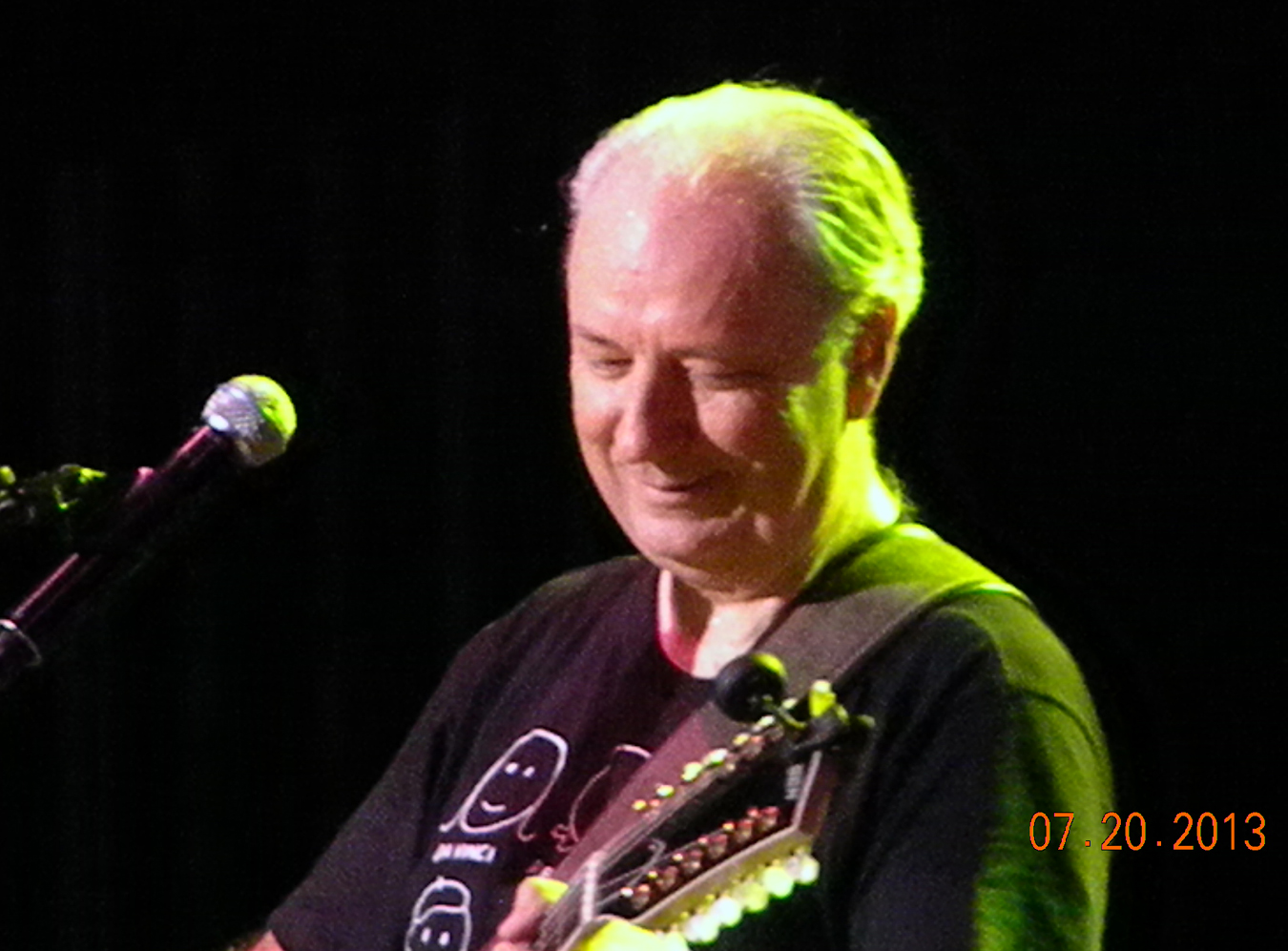
Michael Nesmith

Michael Nesmith

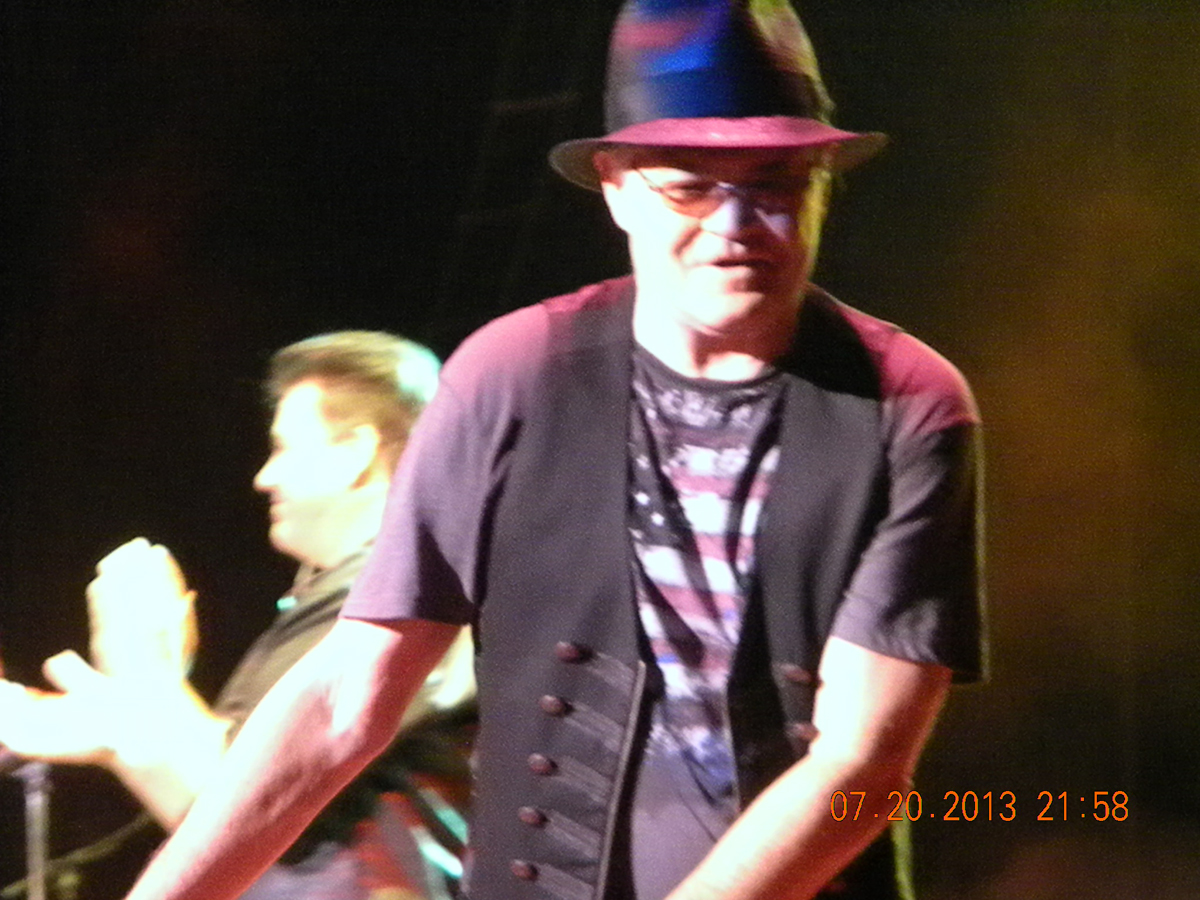
Micky’s ever-energetic “I’m A Believer” was a fan fave, his veiled protest song “Randy Scouse Git” got me singing (as always), and “As We Go Along” let Micky’s bluesy-jazzy voice soar over an enchanted crowd.

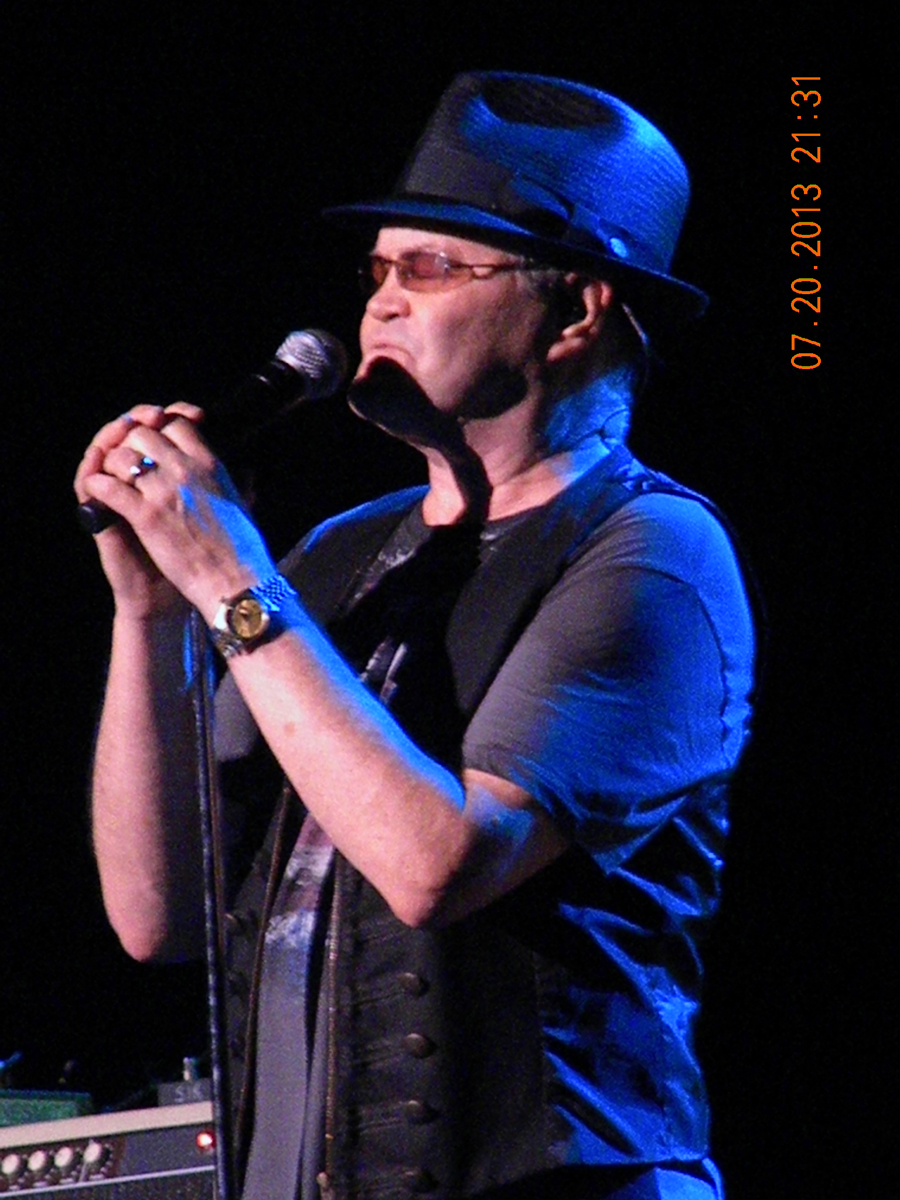
Micky Dolenz

Micky Dolenz

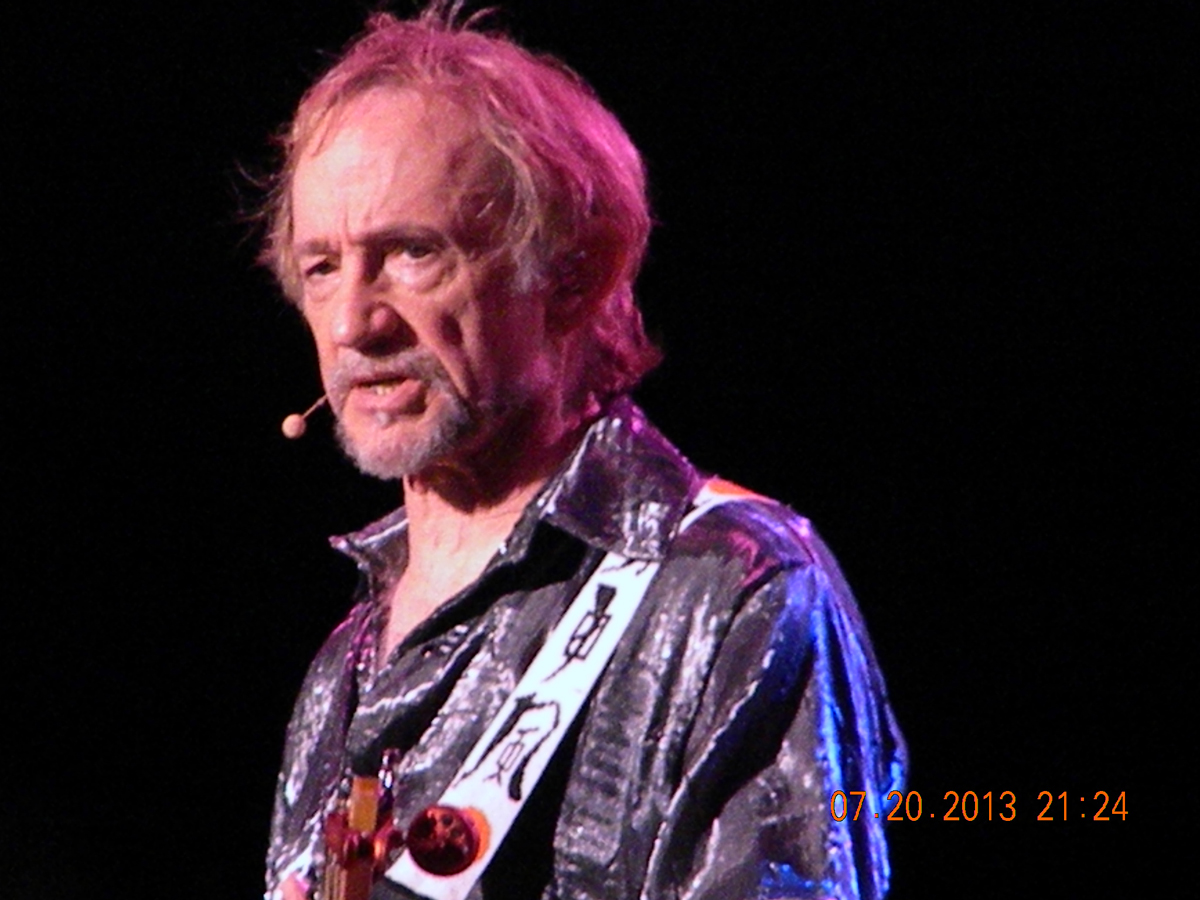
Peter’s rendition of “Early Morning Blues and Greens” was better than Davy’s original on Headquarters,  the 60s anthem “In This Generation” (written by Peter and used as the closing theme to the show in the second season) lifted the crowd out of their seats, and the kaleidoscopic, hallucinogenic “Do I Have To Do This All Over Again?” left me breathless and dizzy.

Peter Tork

Peter Tork

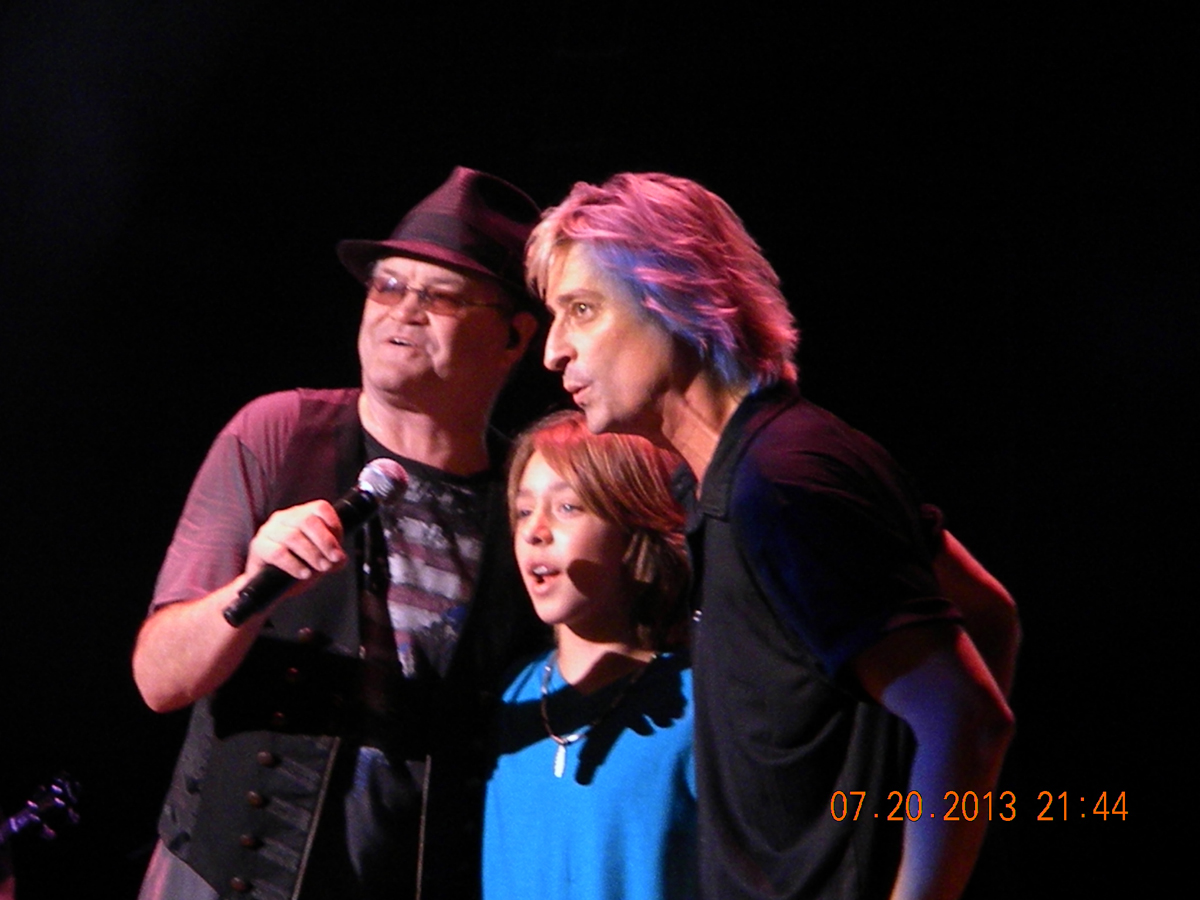
And what of Davy Jones? This year’s show was minus two of the video tributes to their fallen band member, but “Daddy’s Song” remained. Really, you cannot have a set focusing on the weirdness that is Head without showing the splendid positive-negative editing of that song (as well as Davy’s fantastic dancing). And, of course, no Monkees show is complete without the iconic “Daydream Believer,” carried this year, as last year, by people pulled onstage from the audience and the audience as a whole.

Mann - Daydream Believer

Daydream Believer

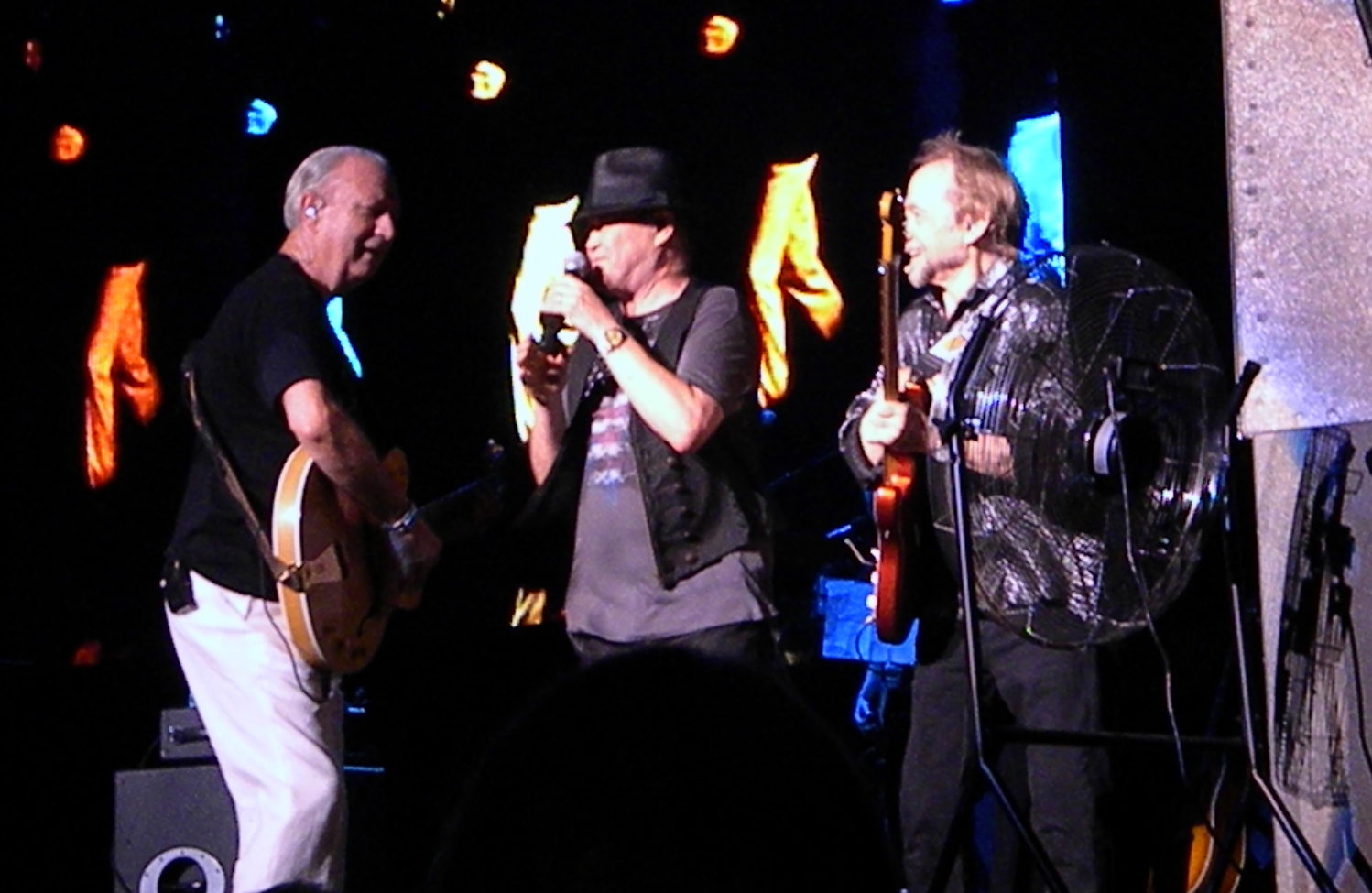
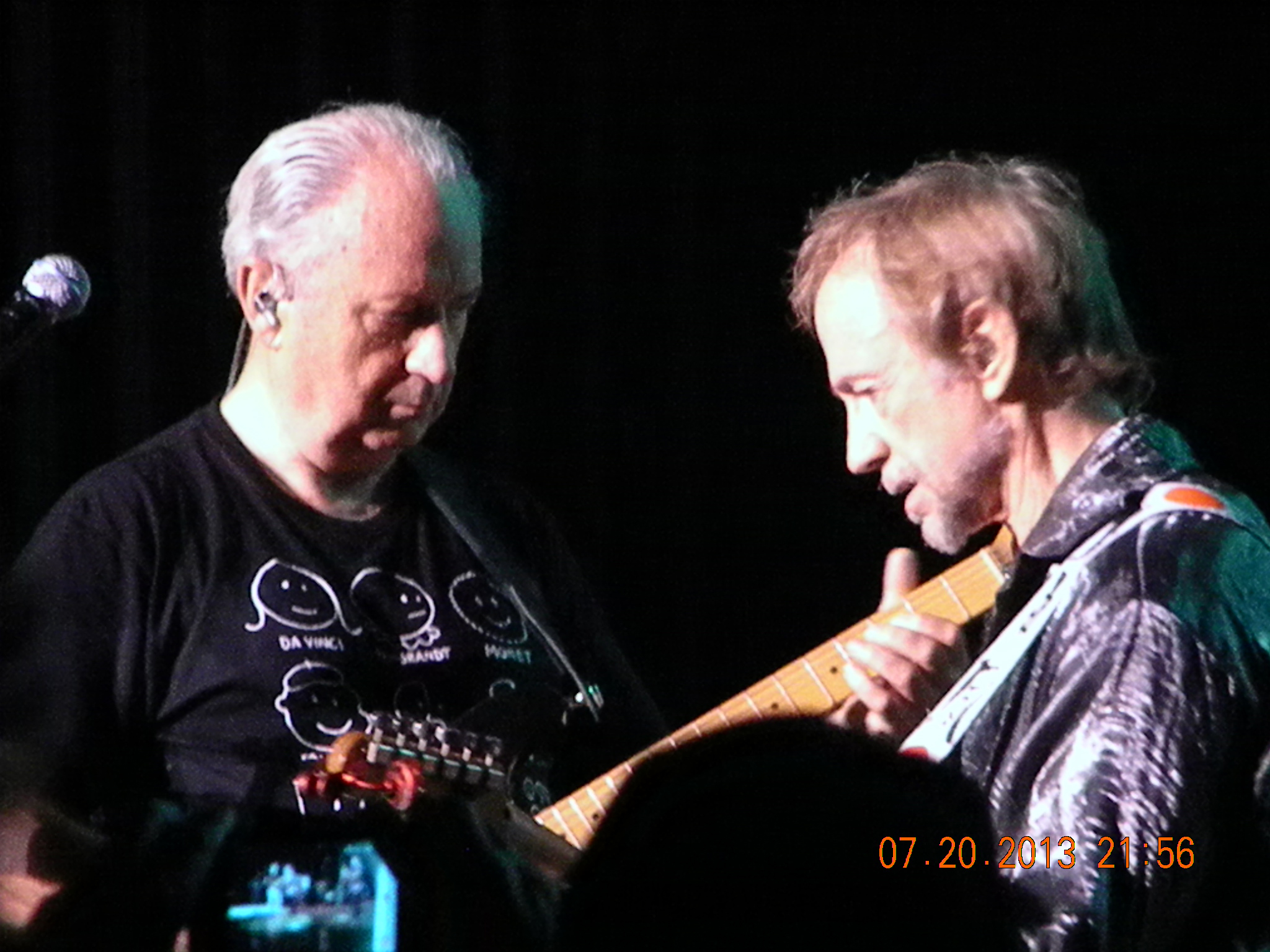
During the show, I struggled with my camera early on. Got a lot of swirly, out of focus, off-color shots. I could not believe that I was in fifth row and couldn’t get a decent picture! But I finally stumbled upon a setting (in the Sports menu) I hadn’t tried before, which took care of the focus/swirly issue. And then I noticed that Mike was wearing white pants! Hallelujah! I quickly used the manual white balance on my camera to set “white” to the color of his pants, and that took care of the off-color issue. I ended up getting some great shots!

Mike & Peter Jamming

Mike & Peter Jamming


The performance, with video clips running continually in the background, captured the verve and fun that has made the Monkees a crowd-pleasing favorite for so many years. The songs are “oldies,” but the guys play them fresh every time, the joy they have in the process of creating and playing the music making the songs ever new.

Micky Shaking Hands

Micky Shaking Hands

After jamming with the Monkees for several hours, I was happy-exhausted. I often wait around after shows trying to get autographs, but I know from experience that the Mann backstage is pretty much inaccessible. I might have hung out anyway, but when the show ended, a light rain was falling…and our umbrella was in the car 1.5 miles away. The storms had been forecast to be through the area by 8:15, so we hadn’t bothered with the umbrella.

Thankfully, the rain stopped almost as soon as we set out for the car, but a raging lightning storm lit up a fourth of the night sky. Awesomely beautiful streaks of lightning jagged through the sky, some jumping from cloud to cloud, some spearing down to earth. Very scary, as we hurried along paths lined with trees that looked suspiciously like lightning rods. I had thought we’d be able to take our time walking back to the car, but the storm made us hurry as fast as getting to the show, and we were once again sweat-drenched as we threw ourselves into our car.

Severe weather conditions, traffic troubles, technical difficulties both human and machine, rocking music, spot-on vocals, exuberant performances, and an addictive, potent mix of new and old memories—everything I expected from a Monkees concert and at the same time, so much more.

Mann - Three Shot

Mike, Micky & Peter at the Mann

The Relationship Between “Time” and “Why”

I’ve been thinking about time a lot recently. It’s been popping up on web posts I’ve read, and a book I’m reading, and in my own life—after all, none of us ever have enough time.

We all try to cram so much into our day, doing things we think we should be doing, how we should be doing them, and yet most of us never ask the important question: “Why?”

Why are we doing the things we are doing? Why are we choosing to spend our time doing A and not B, even though we would like to do B as much as A or even more?

Sometimes, of course, we do A because it must be done. Things like going to work or taking care of your child. But, see, that is a Why answer—and a valid one. I work so I can have food on the table. I take care of my child because I love her. I spend time with my spouse because I love him.

There are some things that have an obvious Why answer.

But then there are other things that I make myself crazy with (and I’m sure you do, too) that maybe we should ask ourselves Why? Social media is the big thing I’m thinking about here, because it can be a huge time suck. As writers, we are encouraged to be on every social media platform known to mankind, and so we plunge in. I am on so many I can’t even list them all, and I do manage to keep a current presence on all of them. But then an article I read by Kimanzi Constable said most writers who do marketing and social media never ask themselves Why? And that got me thinking.

The easy answer is, “I do social media to build a base so when I do have something to sell I have a base.” But that’s too vague a Why. Why am I on THESE social media platforms? Why do I frequent THIS one instead of THAT one? In other words, do I have a PLAN?

And I don’t. I hop from one to the other and sort of poke around and then hop off. Now, I really am on most social networks just to be…social. To build a network of friends and colleagues to help get through this writing life. But I have often felt of late that I may be focusing on the wrong places or the wrong things in my online presence—or that I might be so scattered across the platforms that I’m almost better off not being on them. So sitting back and thinking Why might be a big help. Who am I trying to be social with? Why on this platform and not another? I might be able to make my social network rounds more efficiently yet more effectively if I had a plan, perhaps built around the platform I am most comfortable with and then branching out to others. Making a social media plan is on my To Do list, for sure.

The other major reason I was thinking about how I spend my time is because writing colleague Tiffany Schmidt asked me if the time I spent blogging was worth it. In other words, with writing time so scarce, could the time I spend on the two blogs I write for be better spent on my fiction writing?

I had never asked myself that question: WHY am I spending a couple hours a week writing blog posts? Without knowing that, I couldn’t answer the question of if that time was well-spent.

I finally decided that, yes, my blogging time is worth it. First, honestly, most of my blogging is done in my “fractured time”—those stolen 5-10-15 minutes between chores and child. Anything less than half an hour is pretty useless (for me) for dealing with my fiction—I can’t switch mental gears fast enough. So this fractured time might otherwise go to no use at all in forwarding my writing if I didn’t squeeze in the blogging there.

Second, not only can I write better, faster than before, I feel myself a part of the larger writing community. The blogs I write for are part of the online conversation of writers, and I like contributing to that. Not to mention how much I have learned—and continue to learn—from reading so many other blogger’s posts. I will admit that the name-recognition I have gotten from blogging (particularly at the Author Chronicles) is a plus. To have complete strangers come up to me at a conference and recognize me from the blog is a bit of a thrill (and a little disconcerting). To know that I am helping people and making an impact in the community is a great feeling. For now, my blogging time is totally worth it. When I get a book deal, I may have to reassess if it still makes sense, but for now it’s where I want to be.

So I think I will take some time in the near future and look at a whole list of things and ask: WHY? The answers may make my life simpler—and they may surprise me. But from now on, instead of running around blindly trying to do everything, I think I will stop to ask Why.

How about you? Do you find yourself racing about like a headless chicken without really knowing why you’re doing what you’re doing?

GoosesQuill FB

My Dream Book Launch

I went to Jon McGoran‘s book launch for DRIFT Tuesday night, and that got me thinking about what I would like to do when I have a book of my own to launch.

Book launches come in all shapes and sizes, from small gatherings in a local bookstore to posh soirees in grand venues. Money is, of course, an object in planning a book launch, but there are many ways to cut costs and still have an unforgettable evening.

The main thing, I think, is to make a book launch special. It should be memorable in some way, and most times authors try to have a theme to their launch that reflects the book. You can reflect the book in the venue, utilizing a store or museum or school or other setting that features prominently in your book. You could choose a place that brings to mind themes of your book, such as a natural history museum for a book connected to nature or a historical society for a historical book.

The other way to reflect the book is in the giveaways you have and the decorations at the venue. A novel with the Greek gods in it might feature Greek decorations, for instance. A science fiction novel might have space-themed decorations. The swag will have the book’s title and probably the cover. Even the food can contribute to the theme, especially if food plays a role in the book or if you have an ethnic storyline in your book. Even if your book is about zombies, you can make zombie cupcakes. Let your creativity flow!

So what do I envision for my first book launch? Details will have to wait until I know what my first book will be, however, there are some basics I can share. First, it will be casual, informal. I am not a flashy person, nor a person who loves wearing dressy gowns and high heels, so I want a venue and atmosphere I can be comfortable in. There will be food and drink, of course, but the exact nature will depend on the book, the venue, and the time of day. I am also hoping to do some good with it, perhaps raising awareness of some issue or organization I feel strongly about.

Most important to me, though, it will be close to my home base. I want people to show up to my launch, so I want to have it somewhere that my friends and family can get to easily. I’ll need that support and camaraderie as I push my first book out into the world. Besides, all those people helped me get to the point of having a book published, and I want to share the day with them. My book launch will be as much to thank them as to herald the book.

So how about you? How do you envision your first book launch? If you have already launched a book or books, what would you want to do for your next book?

GoosesQuill FB

The Runaway Brain

Happy Fourth of July, everyone!

I don’t know about most people, but my brain has a tendency to run away with me—and not in a good way. My anxiety disorder is fueled by my brain’s insistence on making mountains out of molehills and borrowing trouble. No matter what the circumstance, my brain screams past the most logical and likely outcomes and jumps up and down screaming, “This is gonna end in DISASTER.”

For example, say I send out some queries. I hope some agent will like my book. So far, so good. Then let’s pretend an agent asks for a partial or full (hey, it will happen someday!). I am overjoyed an agent liked the idea enough to want to read the manuscript. Happy dance!

But then my runaway brain lets loose. What if they actually want to rep me? What if another agent would be better? How will I know? Will I make the right choice? And if they rep me, they might actually SELL the book (hey, it will happen someday)! Then I’ll be in a whole new world, and new worlds are scary, and oh good grief it’s a huge CHANGE!!!

Change is hard for those of us with anxiety disorders. And since change is inevitable, life with an anxiety order can be pretty crappy sometimes.

So there I am with my runaway brain telling me that my entire life is crashing over a cliff—all because an agent requested a manuscript. So even good news can lead to a bad ending—in my misfiring brain, anyway. So what do I do about it?

Sometimes I can derail the runaway brain. If I can feel it happening, I can stop the downward spiral by literally talking myself out of it (sometimes out loud, if needed). I can divert it into a more positive outcome.

If I missed the warning signs and my brain has accelerated all the way to the Big Crunch that is OBVIOUSLY going to occur if I go down this path, I can contemplate the fears one by one and again talk myself down from the ledge.

But most times, I say to my brain, “Very nice. Save it for the next book. The reality of what happens will never be what you think.”

Because usually it isn’t. Life is unpredictable (much to my brain’s chagrin), but it is rarely as bad as I fear. And it rarely takes the path I envisioned in the first place.

The biggest weapon I wield against my anxiety, though, is experience. I know the worst I can imagine is unlikely to come true.

I also know that if the worst happens, I am strong enough to face it.

What about you? Do you get hijacked by fears you know are unrealistic but paralyzing just the same? How do you overcome your fears?

GoosesQuill FB

Newbery Picking

I decided as part of my continuing education in YA & children’s literature to read all the Newbery Award winners. The award has been given since 1922, so you can image the breadth of genre and writing styles encompassed by this list.

I’m nowhere near done the list, but I have been enjoying the adventure. I’m reading books I might not otherwise have picked up, and I can say that I have not been disappointed in any of them so far.

While I am enjoying them as a reader, I am also noting craft as a writer. I am always trying to improve my writing, so looking at how the best of the best wrote is a good education.

So far, three things have jumped out at me:

1)     In the Chronicle of Prydain series, Lloyd Alexander wowed me with his ability to have each character sound so unique that I didn’t need to read the dialogue tags to know who was speaking. This is something I struggle with—making them sound different and making the difference sound natural. I have not been captivated by a series so completely in a long time, and Alexander’s characterizations were a large part of my enthrallment.

2)     In Out of the Dust, Karen Hesse’s description of Dust Bowl Oklahoma blew me away. I could feel the dust smothering me, gritty in my eyes, mixed in my food. When I looked up from the book and out the window, the green grass and trees shocked me—I had almost expected dunes of dust. She wrote the novel in verse, so it is hardly surprising her descriptions are poetic, but I don’t think I have ever felt a novel so physically as this one. I have improved a lot in my description, but Hesse has set the new goalposts very high.

3)     Finally, all of the books could tell a story well. Obviously. But to read book after book where the structure is so solid and complete is a great way to “feel” structure. Some books had many action scenes and a breath-taking pace. Others not much “happened,” and the pace was leisurely (but never plodding). But with every book I feel confident and sure as a reader, safe in a skilled author’s hands, trusting them to lead me to a satisfying ending. And they all have. I believe my story-telling ability is strong, and although in my early drafts the beginning and end don’t always connect cleanly in the middle, I get there by the time I’m through.

This is homework I enjoy doing, and I look forward to learning much more from the remainder of the list.

What books have you read that stand out for you as stellar examples of some part of our craft? (I’ll add them to my reading list!)

GoosesQuill FB

The First Step in My Writing Career: My “Ah-Ha!” Moment

Like most writers, I never needed any encouragement to write. As long as I can remember, I wrote—from elementary school on up. But, also like most writers, there came a moment when I started to believe that I could write well. That maybe writing was a talent I had. Something special.

I think for many of us, this moment arrived when someone outside of our family told us we could write well. As important as familial validation is for a writer, they’re your family and therefore biased in your favor (hopefully). Even as a child I recognized this.

My “ah-ha!” moment came in eighth grade. I went to the local Catholic grade school, and one of my teachers was a nun, Sister Christopher. She herself was a creative and innovative teacher, skilled at bringing out the best in everyone in our class (a tall order, believe me!). So I suppose it was not unusual for her to recognize creativity in others.

We had to write a short story for class. Mine had the obnoxious title of “Drums Rolling In Triumph.” The story was about, of all things, a young woman who wanted to be a session drummer in the music industry—and succeeded. Why I wanted to write about this, I have no clue. But I did. And Sister Christopher told me it was very good and that I should continue writing.

I am sure that if I could re-read that work, I would find that it was pretty bad. Poorly written—enough to make me cringe. I know I did not wow her with my flawless prose or my poetic description. So what made her tell me to keep going?

My guess is passion. As badly written as I’m sure that story was, Sister Christopher sensed the passion I had for the craft. She may have also seen a natural storytelling ability—I’m sure the story arc was complete and solid, even if the writing was not.

I’m certain Sister Christopher would be surprised to hear that her simple words of encouragement meant so much to me. They gave me confidence in my writing, a sense that here was something I could do well. I think everyone needs something to call their own, something they feel they can do well. Something that they can make uniquely theirs, and that no one can take from them.

I have never forgotten how words so simple had such a profound impact on my life. Those words helped set me on the path that has led here. When speaking to a child (or even an adult), I try to remember that anything I say may change the way they see themselves or the world. That words, even casual words, have power.

Respect the power of your words. You may be changing the world without even knowing it.

How about you? Have you had a “moment” that set you on your career path? Or a seemingly trivial moment that changed your life?

GoosesQuill FB

My Biggest Takeaway: 2013 Philadelphia Writers’ Conference

This year was my third year going to the Philadelphia Writers’ Conference. I have always enjoyed it, and always been psyched up by the energy of the writing community there. This year, though, there was a vibrancy above the energy levels of the past years.

Perhaps this reflects a change in me, but I don’t think so—others noticed it, too. I can’t say why it felt different—perhaps it was the near-capacity crowd, perhaps the mix of teachers. All I know is that I was even more jazzed than usual.

A common theme seemed to emerge in the workshops I took this year: the theme of how to present yourself to the world as an author. Cecily Kellogg talked about bloggers and their voices. Suzanne Kuhn spoke about presenting yourself professionally and consistently online. Jonathan Maberry and Keith Strunk’s Act Like A Writer was all about the “writer-persona” you need to build to present to the world. Even in Solomon Jones’ Novel: Character workshop, we worked on our writer bio. Why? Because that bio is the first character we create as writers.

How to be a professional writer. How to be engaging online without giving too much information. How to be accessible without becoming vulnerable. How to be a public figure without losing our most private selves.

A common theme—but not my biggest takeaway.

My biggest takeaway goes back to the vibrant energy of this conference. Ever since my daughter was born, I have been in something of a creative funk. I have been writing consistently, blogging, have turned out a handful of short stories, but all my novel-length work has been on projects begun and first-drafted prior to my daughter’s birth. That never-ending rush of ideas that most writers have dried up after she was born, and I have been feeling totally uncreative for more than three years now.

But at the conference something stirred. Something sparked. A fleeting glimpse into a new character, a new plot. A siren song—still far off, but audible. My creativity raised its head and blinked sleepy eyes at the world.

I am by no means back to where I was creatively. But my creativity is not dead, as I had feared. It’s still there.

And it’s waking up.

What was your biggest takeaway from the conference?

GoosesQuill FB

Mommy Self vs. Me Self: The War Within

I became a mom at age 38—just about 6 weeks before turning 39. Most of the time, I think that having my child later in life has been a blessing. I have had time to travel, to try out different careers, have some fun, and find out who I am as a person.

I have always felt that being secure in who I am and content with what I do has made me a better mom. Since I feel fulfilled as a person, I am happier; therefore I can be a better mom to my child. I think it worked out best for me.

I find my individual identity under siege from the Mommy identity. Sometimes I feel like I am clinging to an unraveling rope to prevent myself from being submerged completely. I strive desperately to carve out time in the day to pursue things important to me, career goals I have for myself, and get my head above the surging Mommy waters rising around me.

I have thought lately that this striving to keep my own identity apart from Mommy might be a large part of the stress and friction I am currently experiencing in motherhood.

Would it have been easier if I had become a Mommy earlier in life, when I was still forming my identity? Would I have been able to intertwine the two parts of myself so they grew simultaneously? Would the two parts of me have grown together to form a more integrated whole, without the struggle to maintain myself I face today?

My husband pointed out that I work from home, while our daughter is home. That is undoubtedly part of the friction issue. As he said, if I went to an office each day and she went to daycare, there wouldn’t be the constant bumping heads of her needs and mine—at work I would be able to just…work (although I know there’s a whole different kind of stress in being a mother who works away from home).

Another factor is undoubtedly my age. If I were in my 20s or early 30s, I would not feel so much pressure from myself to pursue my writing career with the vigor I am today. I would not mind the idea of taking a few years off until my daughter is in school full time, because I would have felt like I had time to catch up, as it were. While 40-something is certainly not old, there is a ticking-clock pressure from within me because I know I do not have “all the time in the world.” So I feel an urgency connected to keeping my career moving forward that I might not have felt if I were 10 years younger.

How about you, other parents out there—do you have a constant battle within to define yourself apart from your offspring?

GoosesQuill FB

WP-Backgrounds Lite by InoPlugs Web Design and Juwelier Schönmann 1010 Wien