

Learning From Teaching: 5 Lessons My Students Taught Me

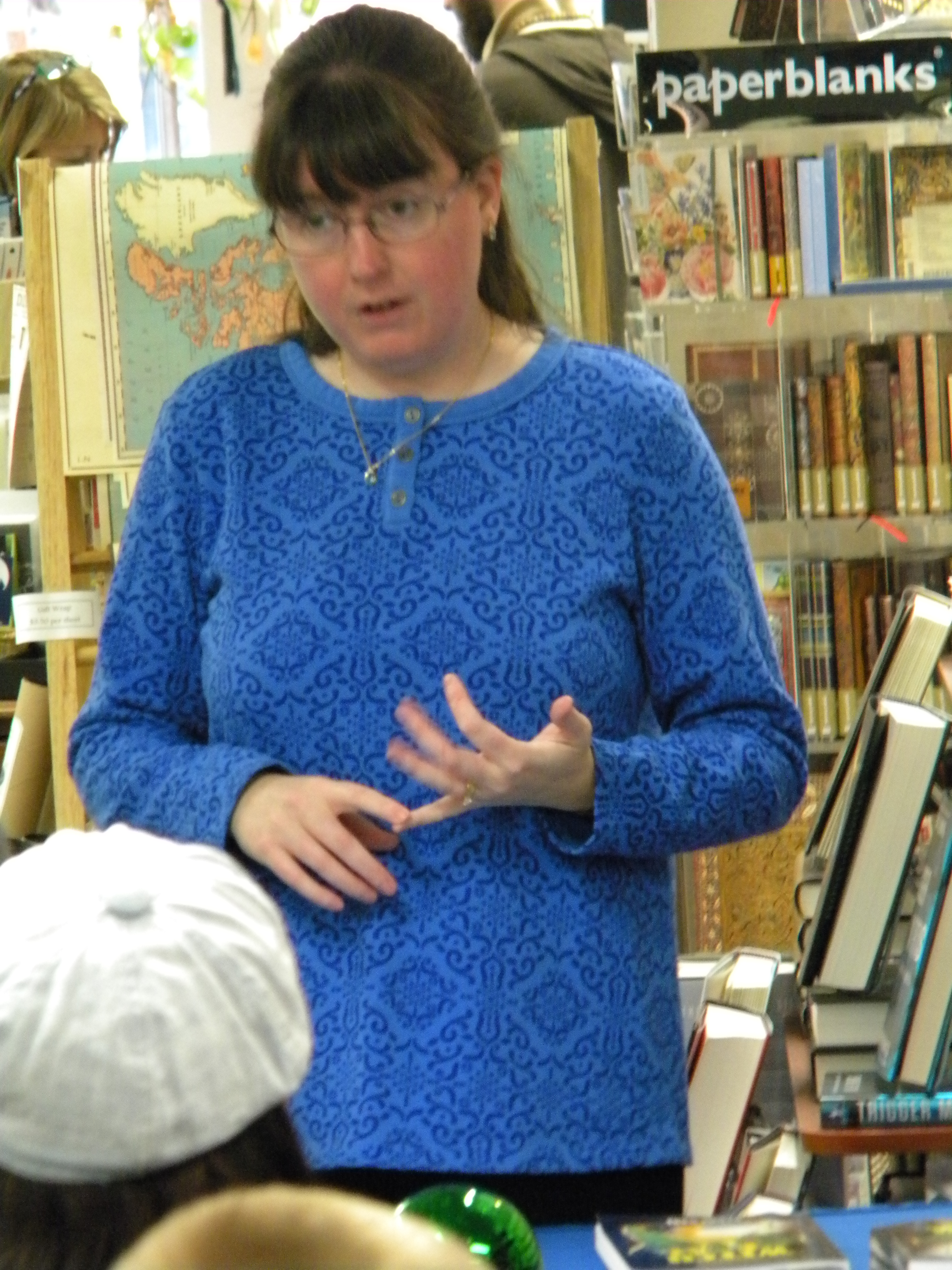
Author Kerry Gans teaches a workshopI completed my first teaching job this week—I did my Build Your Own Story workshop for the kids at my daughter’s day camp. I don’t mind admitting that I was pretty nervous. I knew the material, but could I handle the kids? I fully expected to be learning from teaching as much as sharing what I knew.

I met the kids for an hour each time—some I only met once a week, some more than once. They came in 5 groups: 1st/2nd grade, 3rd, 4th, and 5th/6th/7th. Quite an age spread! I came prepared (but not as prepared as I thought I was), and tried to adapt my teaching on later days to compensate for the mistakes I made in the early classes.

I learned 5 things from teaching:

1. Always have more material than you think you’ll need.

Originally, I expected to see each group once per week, and had planned accordingly. I found out when I arrived that I was seeing some groups twice the first week AND then at least once the second week.

Author Kerry Gans' Build Your Own Story workshopI thought I had figured out how much material I needed for the first hour workshop—but I was wrong. Mostly because the kids had almost no questions, so my Q&A time was unnecessary!

And even though I planned to have extra material the 2nd week, I STILL ran under time with the 3rd and 4th grades! The 4th grade I ran short because I underestimated how long it would take each group to share the stories they had written, and the 3rd because of a mistake I made that I will address later in this post.

2. Active kids are happy kids.

Although this was a workshop, it was also summer camp. I didn’t want it to be a school lecture. The first day I screwed that up with the 4th grade—many of them seemed disinterested, so I panicked and started lecturing rather than trying to engage them.

The second day that I met the 1st/2nd graders, I had them right before lunch. We reviewed what we had learned the first time we met, and then I let them go to writing their own stories. They had a blast, writing and drawing. But when the time came to share their stories, I couldn’t get them back. Their attention had gone. I had the kids who wanted to share come and tell me their stories, so that was all good, but I wondered what I could have done to engage the others. Their councilor said that they had been sitting all morning and really needed to move at that point.

Author Kerry Gans reading to the kidsI remembered this for my last day of teaching, when I created a get-up-and-move game for the younger kids called Wiggle Words. It worked well for getting them up and moving and keeping them engaged.

3. There’s a fine line between being flexible and being overrun.

Since I was learning from teaching, I wanted to be flexible. I tried to engage the kids on their terms, to find out what their interests were. And I discovered that being flexible should come with limits.

The second week, when I had the 3rd grade for the 3rd time, I used all three of the activities I had planned, but still somehow ran short. Any one of those three activities could have been expanded, but I made the mistake of asking, “Do you want to do X? Y? Z?” To which they all replied “No.”

So we played Red Light, Green Light for the last 15 minutes of class.

I realize now that I should have phrased it as “Which do you want to do—X, Y, or Z?”, thereby eliminating the possibility of them saying “No.”  Or I should have chosen myself.

When the next group came in, I didn’t make that mistake again. I also did one extra round of each activity to start with because I knew I would need to.

4. Kids will surprise you.

I admit, I had the most trouble with the 4th grade. The first day I had them I freaked out when they weren’t all enthralled. I may have had similar troubles with the 5th/6th/7th grade if I hadn’t been learning from teaching. Because of the disinterest of some of the 4th graders, I planned a different activity using the same material for the middle grade kids—and it worked much better.

Learning from teaching in summer campSo when I saw that I had the 4th graders again on my last day, I worried that they would not be willing participants in the planned activity—which was to take what we had learned and write their own story. They proved me wrong. I allowed them to work in groups, and the kids I thought least engaged came up with the best-thought-out story!

Another moment that surprised me was when I did Wiggle Words with the 1st/2nd graders. Wiggle Words involves me reading a book, and the kids doing different movements when we encountered an element of story we talked about (character, goal, obstacle, setting). The 3rd graders had participated as expected but the little ones…well, they all wanted to see the pictures in the book, so I ended up surrounded by them and running doing all the movements with them to keep them moving!

5. Be humble, learn from your mistakes.

Author Kerry Gans teaching a workshopI learned as I went. I knew going in that I didn’t know much about teaching, so I tried to keep an open mind. I made sure I had more material for the 2nd and 3rd days of the workshop than I thought I would use. I planned an active game for the younger kids. I changed my interaction with the 4th graders. I improved over the course of these 3 workshops, and I have gained some valuable insights for when I do school visits in the fall.

Overall, I had a great experience with the kids. They taught me probably as much as I taught them. I learned to come over-prepared, to be flexible within reason, to keep the kids active and social, and to stay open to what the kids will show me. And, after being chided by three separate children (including tears from one) upon hearing that I only had pencils to draw with, I learned perhaps the most important lesson of all…

Always bring crayons.

How about you? Any tips for teaching and engaging kids you can share?

Save

Save

Save

Save

Save

Save

My First Teaching Experience

20160705_115143_1467854642723_resizedAt the time of this post, I am teaching my second day of Build Your Own Story workshops at a local day camp. I will freely admit that I never wanted to be a teacher. I haven’t the temperament for it, nor the calling. While I have been told I am a good teacher, I find that true mostly in one-on-one situations. Put me in front of a group, and I get the jitters.

This is a reflection of my own weaknesses—I am an introvert, and I hate being the center of attention. Of course, as most teachers know, there are always some kids who are not paying attention to you, and that makes it worse. When I feel like I am not connecting with my audience, I wonder what I am doing wrong, how am I failing them?
20160705_105856_1467854645496_resizedPerhaps I am not doing anything wrong, but simply have to find ways to engage the kids better. In my first teaching experience, I taught (separately), 1st/2nd graders, 3rd graders, and 4th graders (I have the 5th/6th graders today). The 1st-3rd grade classes were fun—the kids were eager, they had ideas, they wanted to be heard. And since I have a 6-year-old, I could relate easily to them.

The 4th grade class was harder. About half the class actively participated, the rest sat and watched silently. At least they were polite and didn’t talk through the class. And a few of them sparked up a bit by the end. Truthfully, I think I panicked when they didn’t all seem eager and turned the class into more of a lecture than a participatory event, which may have caused them to further withdraw.
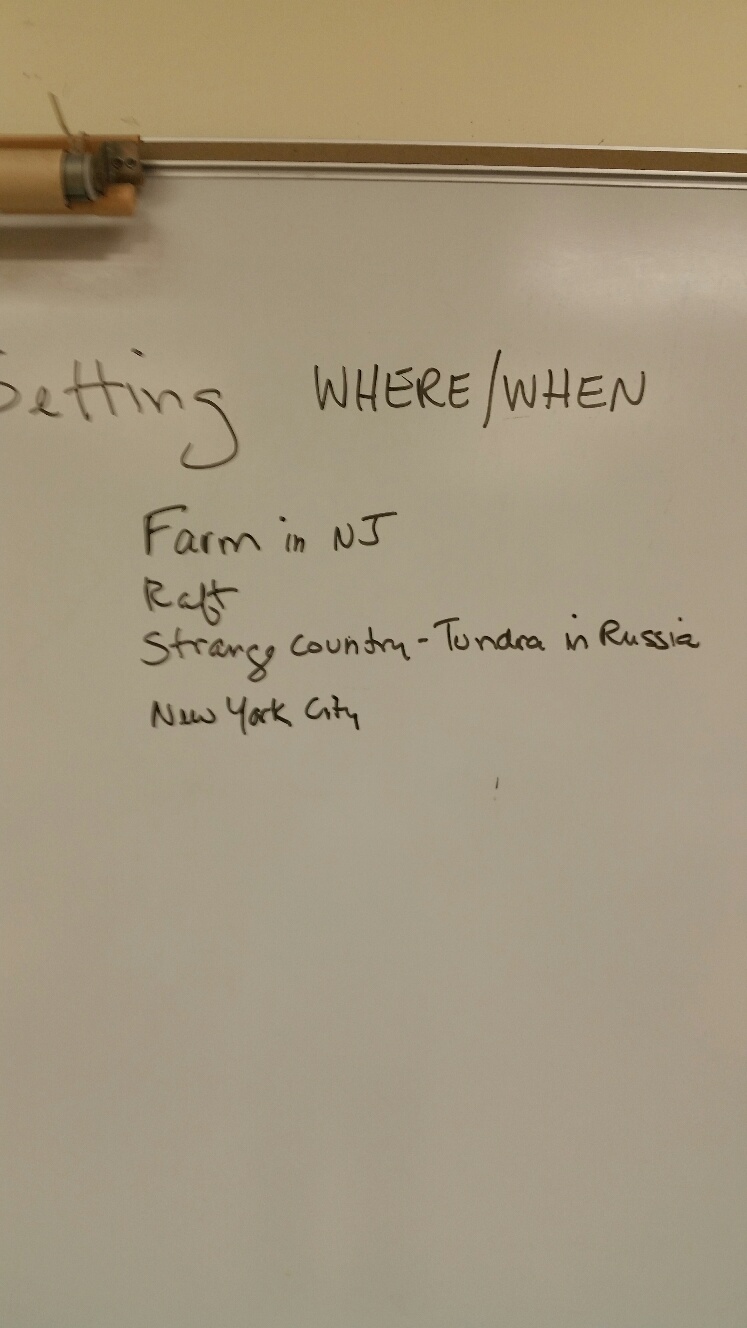
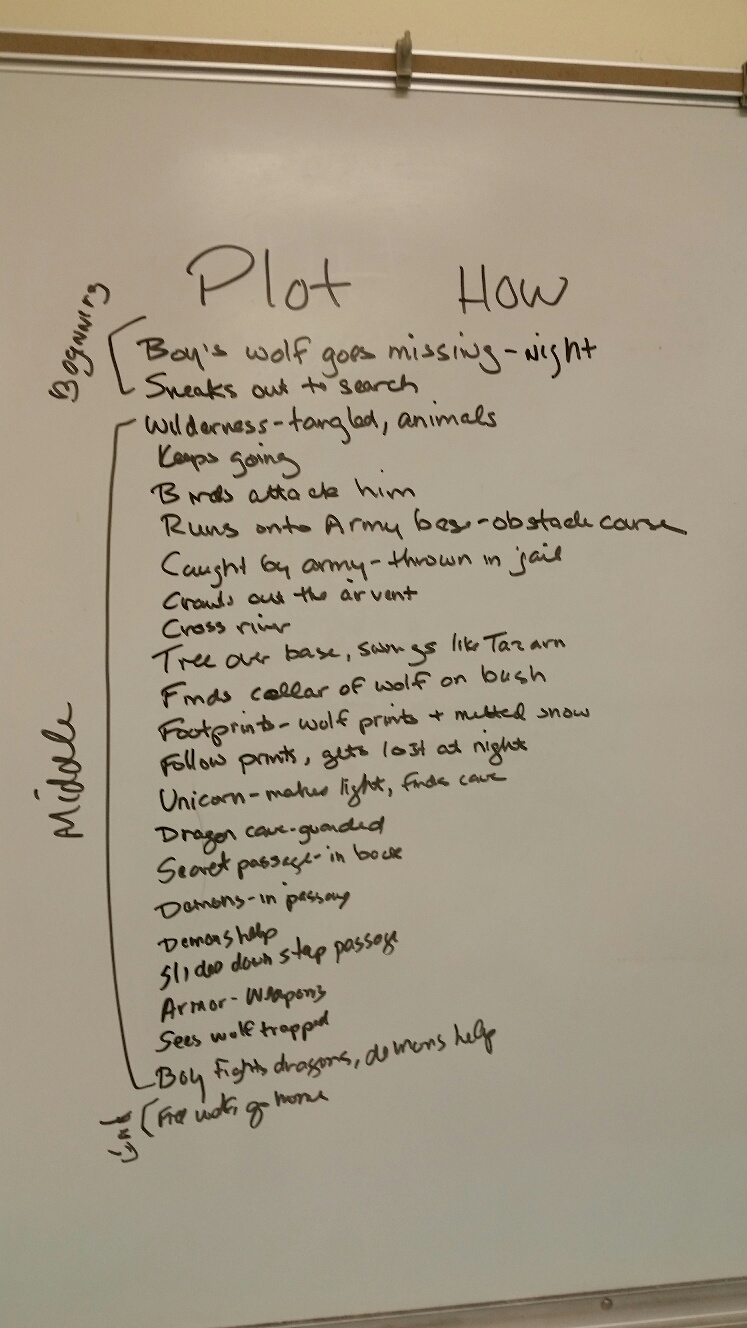
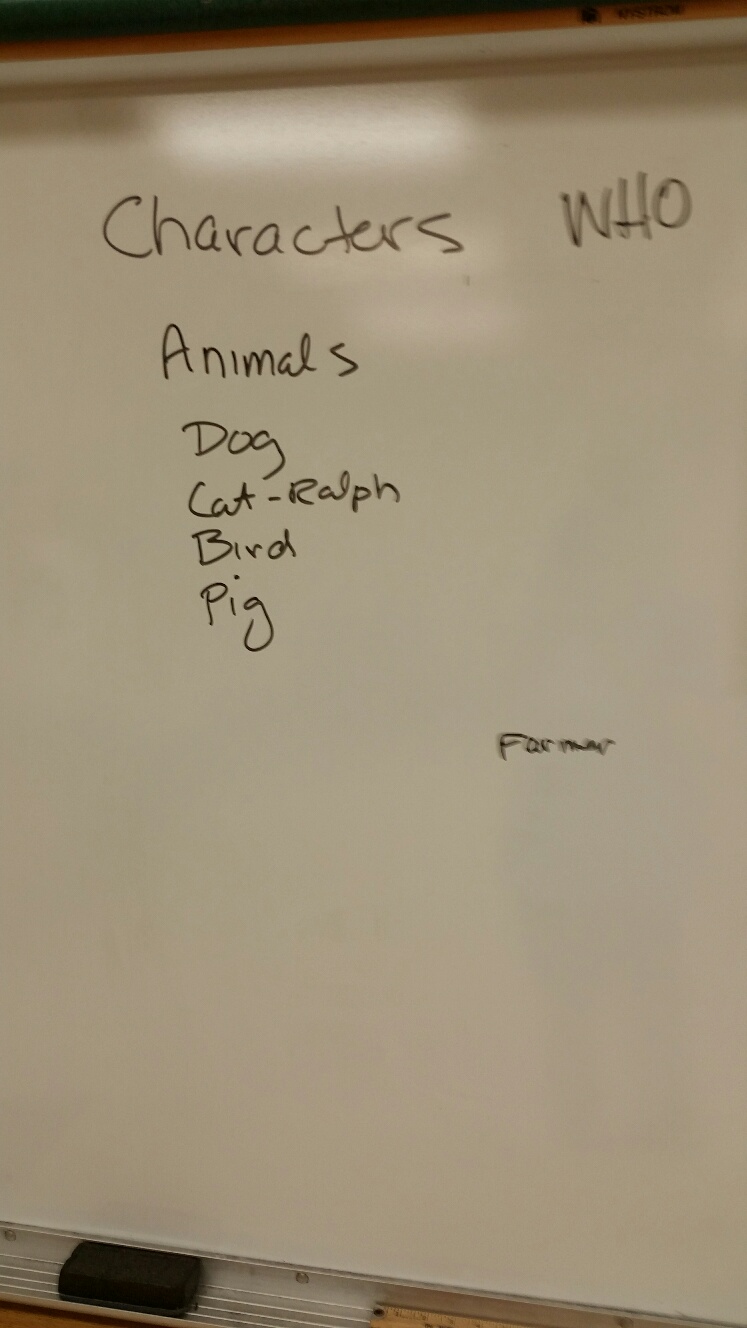
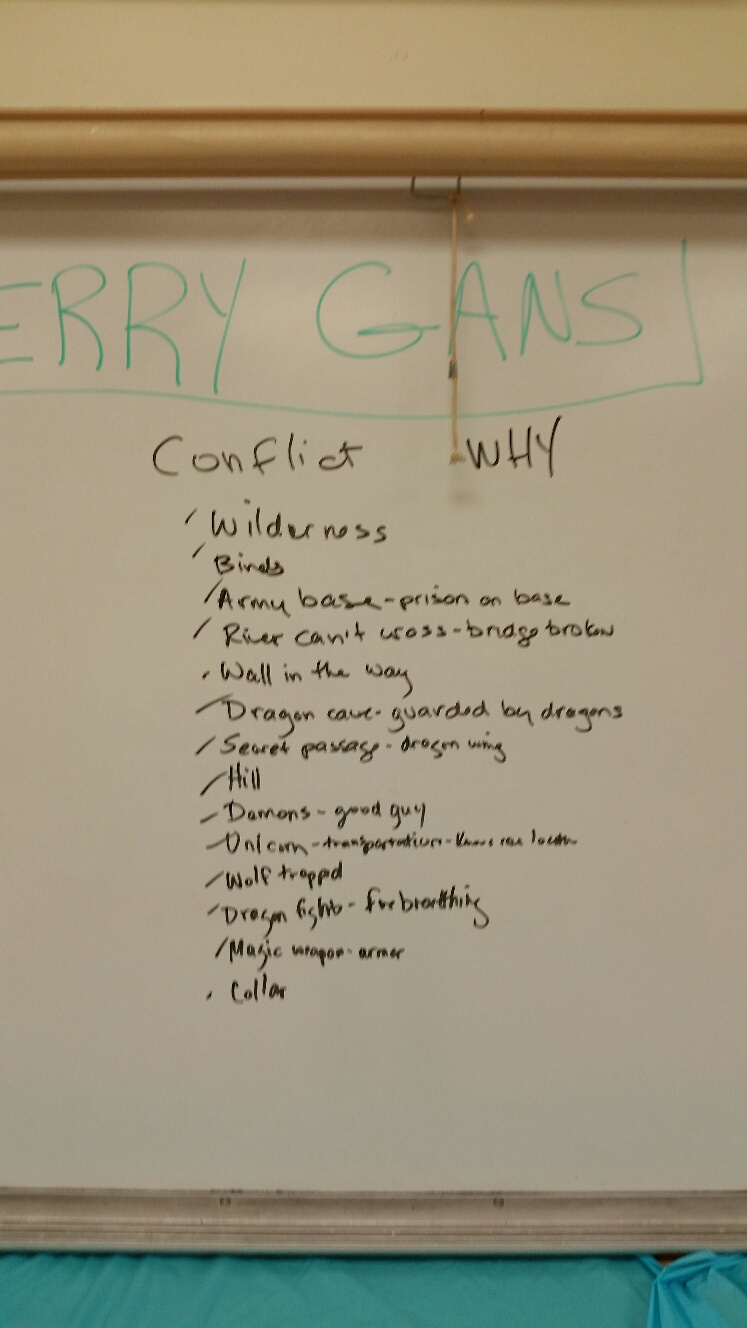
20160705_105844_1467854647348_resizedI am going to try something different with the 5th/6th grade today. A Jigsaw Story. Once we discuss the 5 basic story elements, I will break them up into 4 groups, and give each group a few minutes to come up with one of the first 4 elements—without knowing what the other groups are thinking. Then we will put what I hope will be 4 wildly incompatible and therefore funny elements on the board and strive to make a coherent Plot out of them. At least it will get them talking and being social and hopefully help loosen them up. We’ll see.

The experience so far has been a rewarding one. My most memorable moment came when I had finished with the 1st graders and one little boy started to cry. I asked why he was crying and his friend told me that he was sad because he had not gotten to write his own story about lions and tigers (today they get to write their own stories). So I got down on his level and asked him to tell me his story.

I had to ask a few leading questions, but in just minutes his hands were no longer covering his face and the tears had dried. His story spilled out of him (and it was a good story, too!), and his passion and eagerness wiped away the disappointment. To me, this was a pure lesson in the power of story. All this little boy wanted was to share his story. For his voice to be heard.

On the whole, my first experience teaching kids has been a good one. The kids have been creative and eager and I hope I can learn from them how to be a better teacher.
20160705_115151_1467854641066_resized

Save

Save

Save

Save

Summer Slog: A Writing Parent’s Dilemma

Handwritten page showing second-guessing with crossoutsMy child and husband just arrived home from a 10-day vacation. I cleaned the house, but I also wrote a lot. Now that they are home, I am preparing for the summer slog.

Any writing parent dreads summer—that time of year when your carefully guarded writing time vanishes into the hazy air. Our school-time schedules no longer apply, as we alternate between running our children to activities and spending time with them at home.

Some writing parents handle the summer by simply giving up on writing. They put it on hold until September and take any writing time they get in summer as a gift. Perhaps this is a smart way to handle it—low expectations mean no disappointment. Also, it puts no pressure on you to find time to write. This may be the healthiest approach, overall.

However, some of us have deadlines. We cannot afford to take 3 months off. Others of us simply cannot go that long without writing. I know personally that taking 3 months off would make me crazy. The lack of creativity would affect my mood, my outlook, my interaction with my family. I would, in short, resent this absolute curtailment of my writing, and the last thing in the world I want is to resent my child.

So what’s a torn writing parent to do? How do we find time to write while spending quality time with our child? I have come across several suggestions for dealing with the summer slog:

  1. Get up before everyone else.
  2. Go to bed after everyone else.
  3. Day camp your kids.
  4. Babysitters.
  5. Kids entertain themselves.

I imagine most writer-parents do some combination of above, based on age and needs of the child and financial means. For me, number 1 is laughable—my brain is not creatively functional (or at all functional) before about nine AM. Number 2 is more viable, since I am a night owl, but since I already do this I cannot use it to increase my summer writing time.

I’ve got number 3 in hand—a few weeks of day camp are paid for. Some writer-parents hire babysitters to come and take care of the kids in the house while the writer locks herself in the office or bedroom to work, but my number 4 will most likely be in the form of grandparents coming over to take my daughter out to places and the occasional play date.

Fridge

When my child entertains herself

Number 5 can be tricky depending on your child’s age and needs. At six years old, my daughter is now capable of entertaining herself for several hours if needed. Number 5 is often a judicious mix of TV/computer time, reading to herself, and simply being told to fend for herself until a certain time while mommy works. Number 5 has not worked very well in the past, but I think this year will see a more successful attempt.

So writer-parents, how do you handle the summer slog and make time to write while your kids are home?

Save

Save

Save

My Biggest Takeaway: 2016 Philadelphia Writers’ Conference

DSCN9802Usually my biggest takeaway from the Philadelphia Writers’ Conference is something I learned about craft or a network connection I made or a revelation about myself. To that end, I was mulling a post about structure, causality, and emotion, but I decided not to write that for today (you may see it in the future, though). Why didn’t I write that post? Because that topic is not the one that my mind is still replaying almost a week later.

What is on my mind this year is not an answer—it is a question. Or rather, 3 questions.

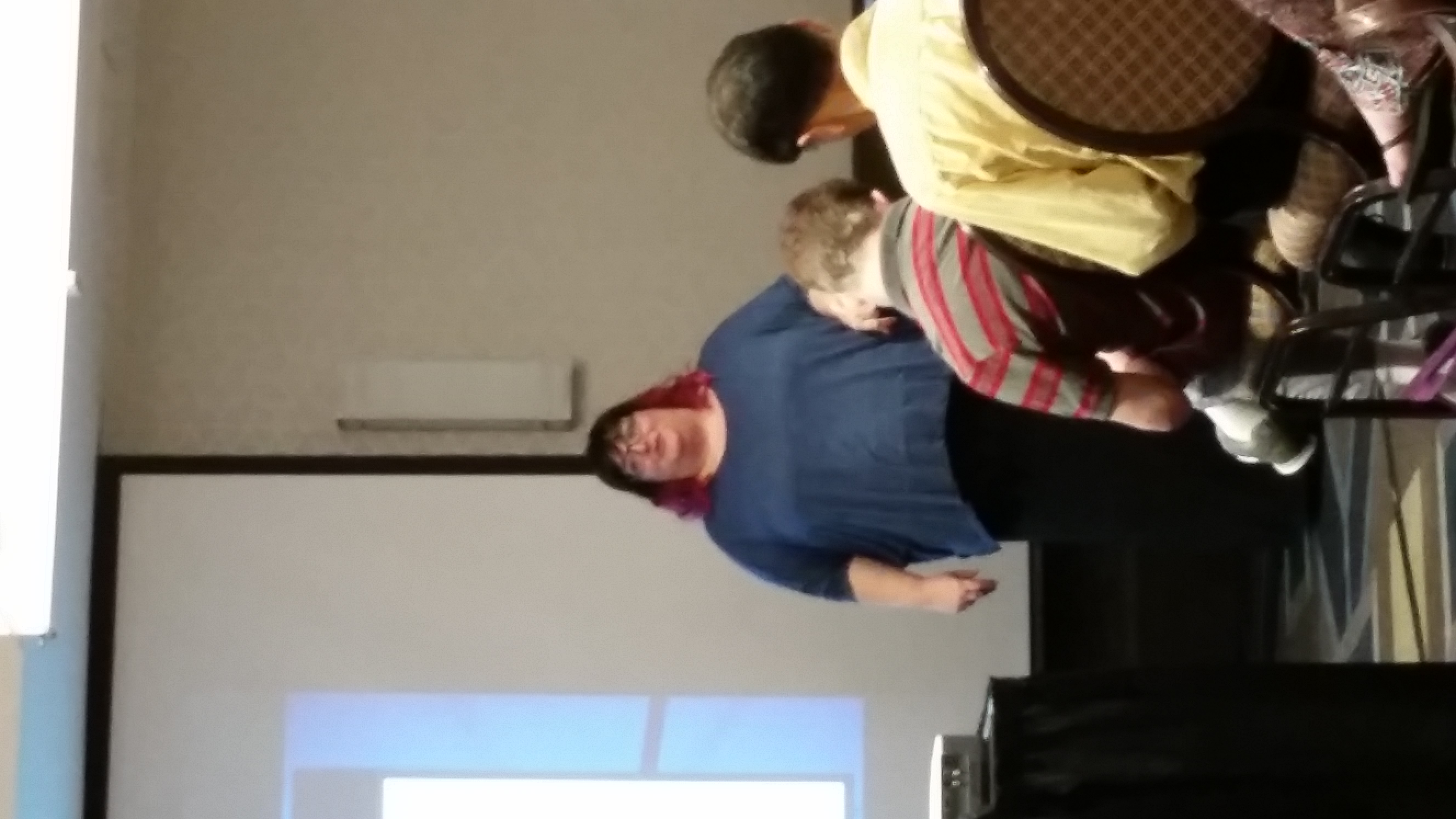
Cecily Kellogg gave Kerry Gans her biggest takeaway this year

Cecily Kellogg

In the very first class on Day Two, Cecily Kellogg gave a wonderful workshop on building a digital author brand. She gave us a whole lot of fantastic information, and in amongst the multiple slides of her presentation was one with 3 questions: “What makes you special? Why would people want to connect with you? What unique thing can you offer?”

Now, it was first thing in the morning. Most people’s coffee hadn’t kicked in. I don’t drink coffee, so I was at an even further disadvantage. But those questions stopped the room cold. The concepts embodied in those questions were the topics I heard most people talking about after the workshop was over.

1) What makes you special?

Now, writers are often stereotyped as having low self-esteem—and there’s a reason for that. Most of us, while perhaps not having LOW self-esteem, also do not think we’re anything special. I know I feel eminently average. I think we all consider our lives uninteresting, because to us it’s everyday life. The daily grind. We don’t consider that others may find parts of our lives fascinating. What makes me special? I have no clue.

2) Why would people want to connect with you?

I am certain Cecily meant this in the “what can you do for me if I follow you” sense. In other words, what can I do for the customer. What value do I bring. Well, I don’t really have an answer to that, either, from a tangible perspective. As a person, I know I’m a trouble-shooter , and I’m good at connecting people to information they want.  I am a listener and good at reading people. Are those saleable points in an author? How do I turn that into a tangible, marketable trait? I don’t know.

3) What unique thing can you offer?

I chose to interpret this as “what is unique about your writing”—in other words, from a product point of view rather than a personal point of view. Without shifting the focus to the product (and, yes, your writing is a product), this question would be the same as #1, and I don’t think Cecily meant it to be redundant.

In spite of changing the focus, I think my answer is a lot like #1. My writing is good, but not Nobel worthy (yet!). I hope to empower kids to be proud of who they are, and to accept others for who they are, even when that is different from themselves. I hope to encourage them to think for themselves and stand up for what they believe. I hope a lot of things, but I don’t think that my hopes differ very much from the multitude of children’s writers out there.

So, you can see I have no immediate answers to these questions. However, these are extremely important questions to answer, in order to build the most effective digital brand and the most comfortable author persona. What’s a clueless author to do?

One person in class suggested that we ask people who know us well (and will answer honestly) these questions about us and our work. We all know that the way we perceive ourselves is vastly different from the way others see us—even others who know us intimately. So I suppose, while I keep mulling over these questions myself, this is the way I will start my research.

So I guess my biggest takeaway this year was learning what I don’t know–and now setting out to find it.

What about you? Can you answer those questions about yourself and your work?

Save

Save

Save

Anticipating the 2016 Philadelphia Writers’ Conference

Author Kerry Gans excited about the Philadelphia Writers' ConferenceAt this time tomorrow, I will be at the Philadelphia Writers’ Conference (PWC), immersing myself in craft, business, and writerly inspiration.

The three-day event always gets my creativity moving, and I always come away with something valuable. Whether it’s conquering pitching fears, discerning weaknesses in my writing, reviving my creativity, making business connections, or learning how to organically raise the stakes in my novels, I always walk away with something that more than pays for the price of admission.

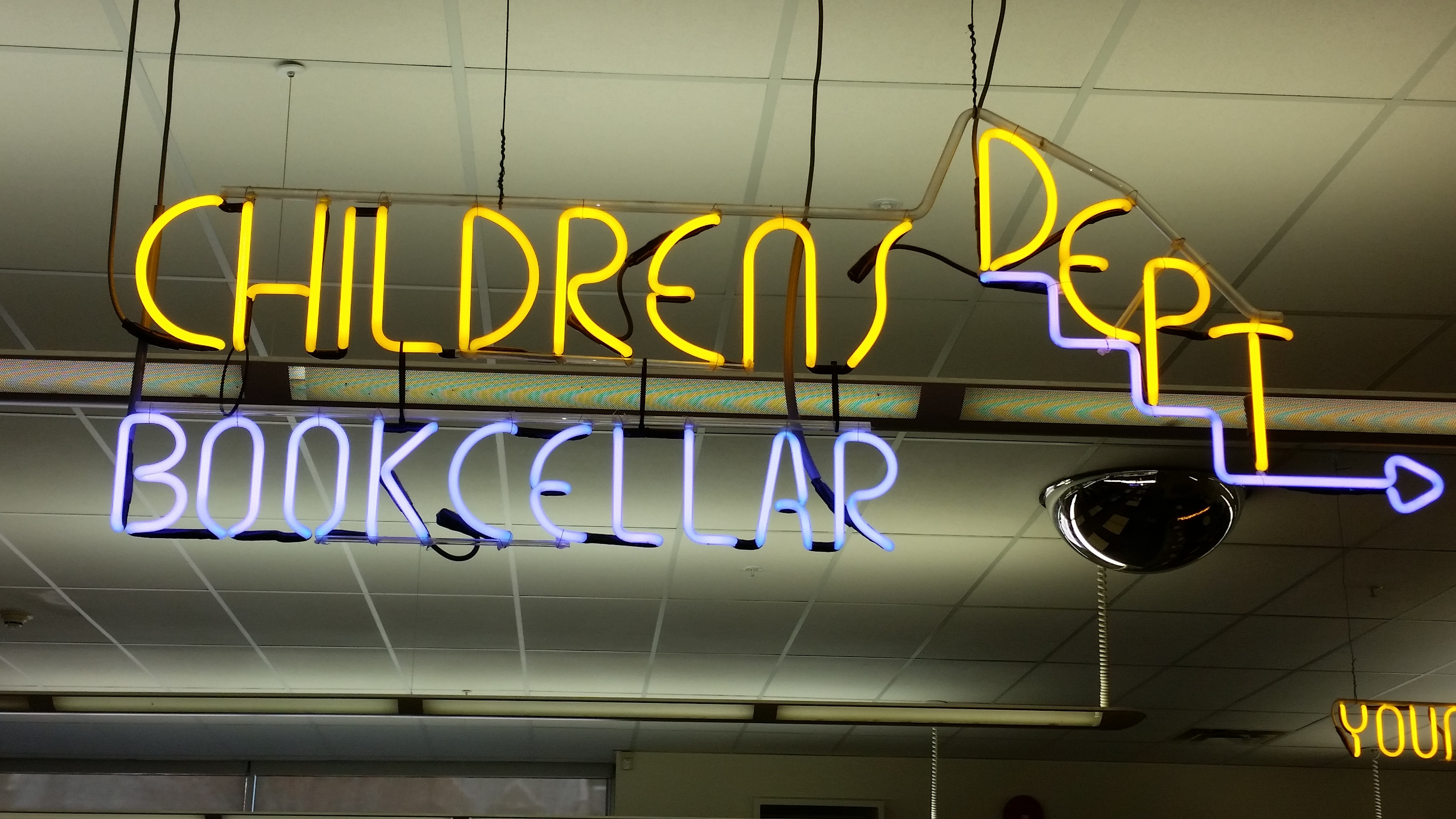
This weekend looms large in my mind. The calendar in my head has a neon “PWC” sign flashing over these three days, as if nothing outside the conference happens. As if I will not need to eat or sleep or battle traffic. Like my duties as wife and mother will vanish (which they pretty much will, since awesome husband will be dealing with wonderful child while I’m away from home).

There’s something about preparing for the conference that seems herculean to me. The packing looms large, even though in reality it will take 20 minutes. How much does one need for 3 days, right? The travel to and from the conference each day stretches like eternity before me, but it will be all right (Friday is usually the worst day). But I think the reason this weekend always feels like heavy lifting to me is because it’s three straight days of near-constant interaction with people. For an introvert like me, that is a daunting and draining proposition. So I think mentally I am shoring myself up for the task.

Herculean task or not, I am looking forward to this year’s PWC—my 6th in a row. And why wouldn’t I be eager for it? Good things happen to me every year at the Philadelphia Writers’ Conference.

I can’t wait to see what I will take away this year.

Book Fair Magic: Casting a reading spell

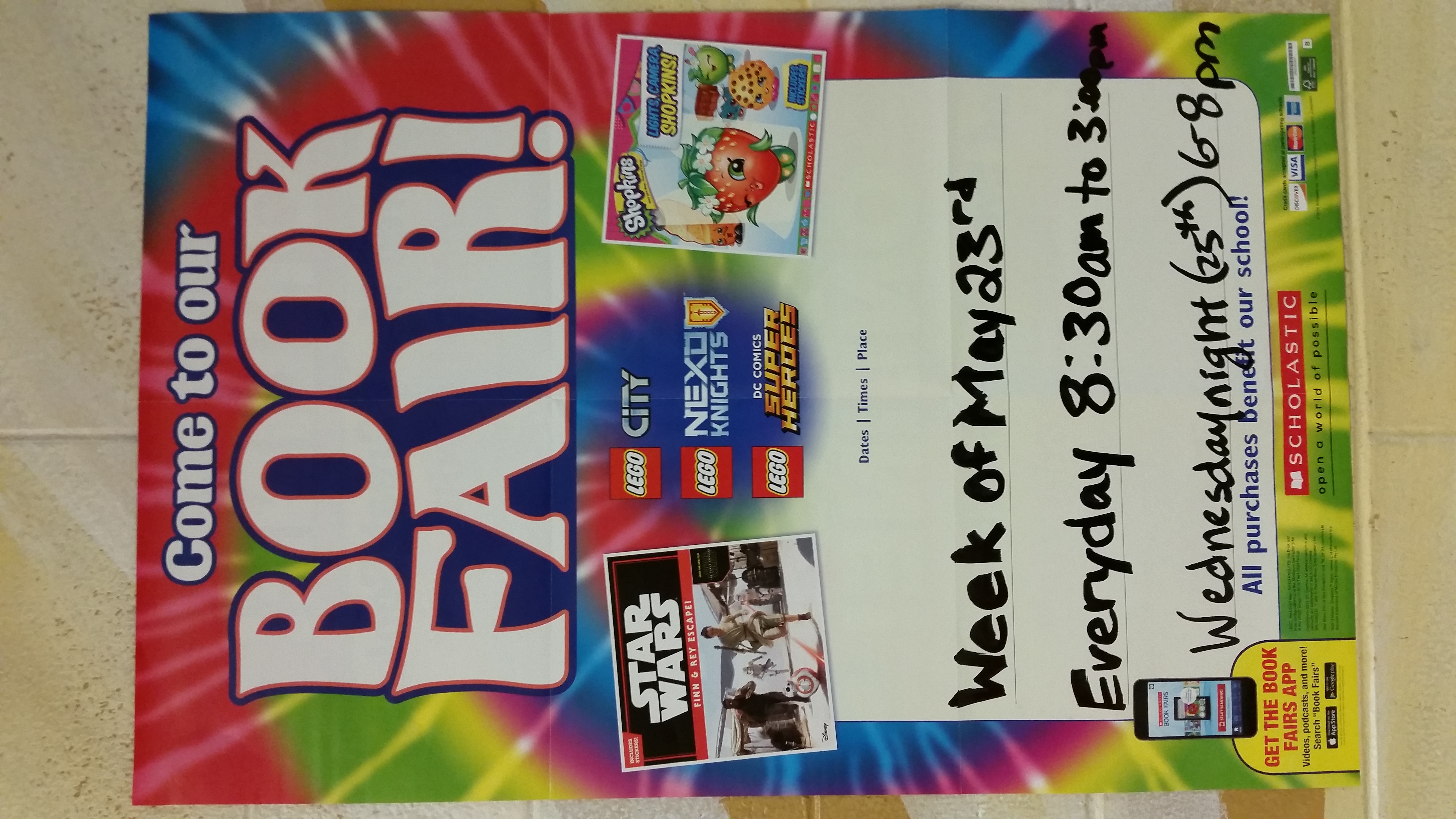
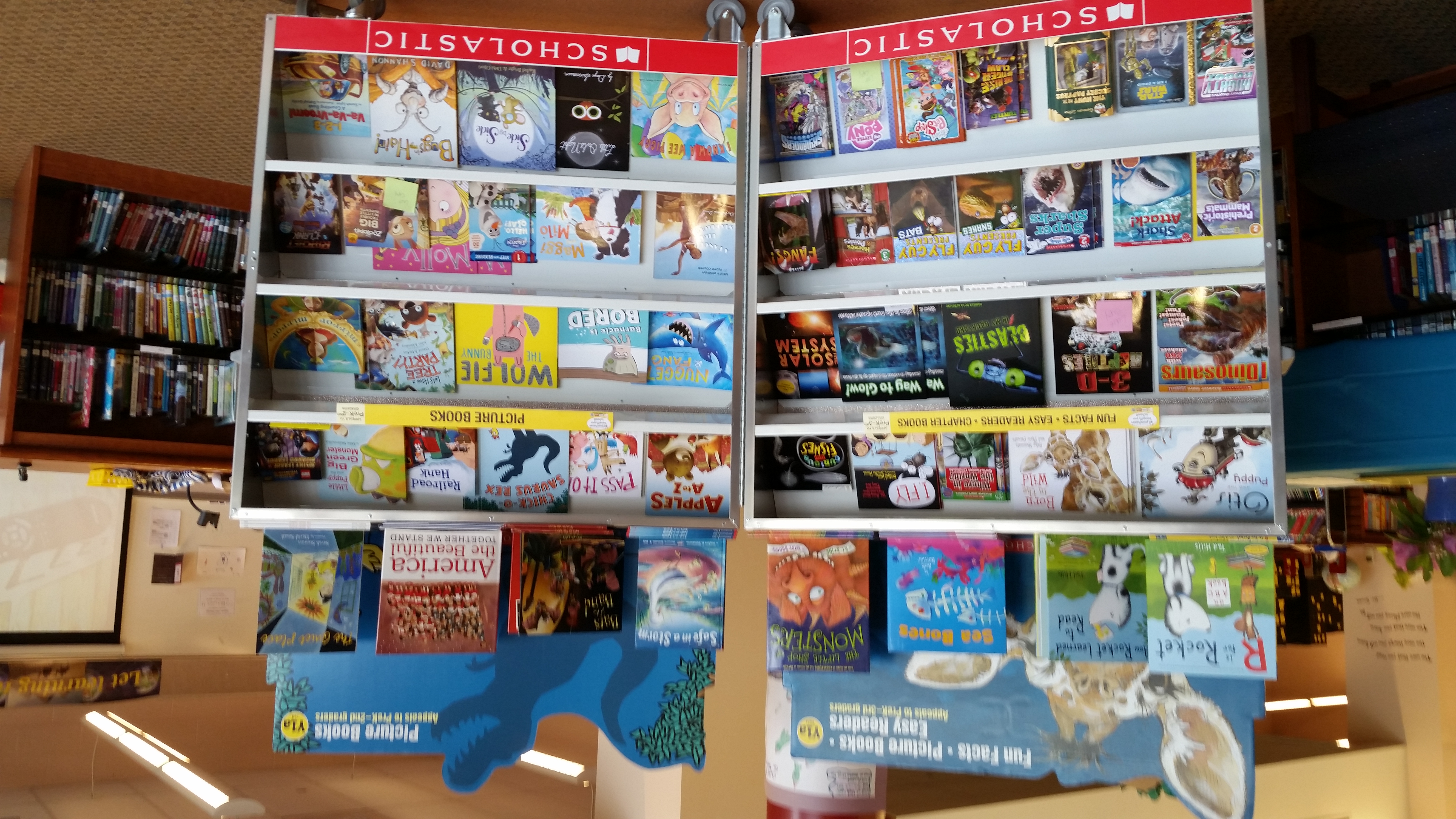
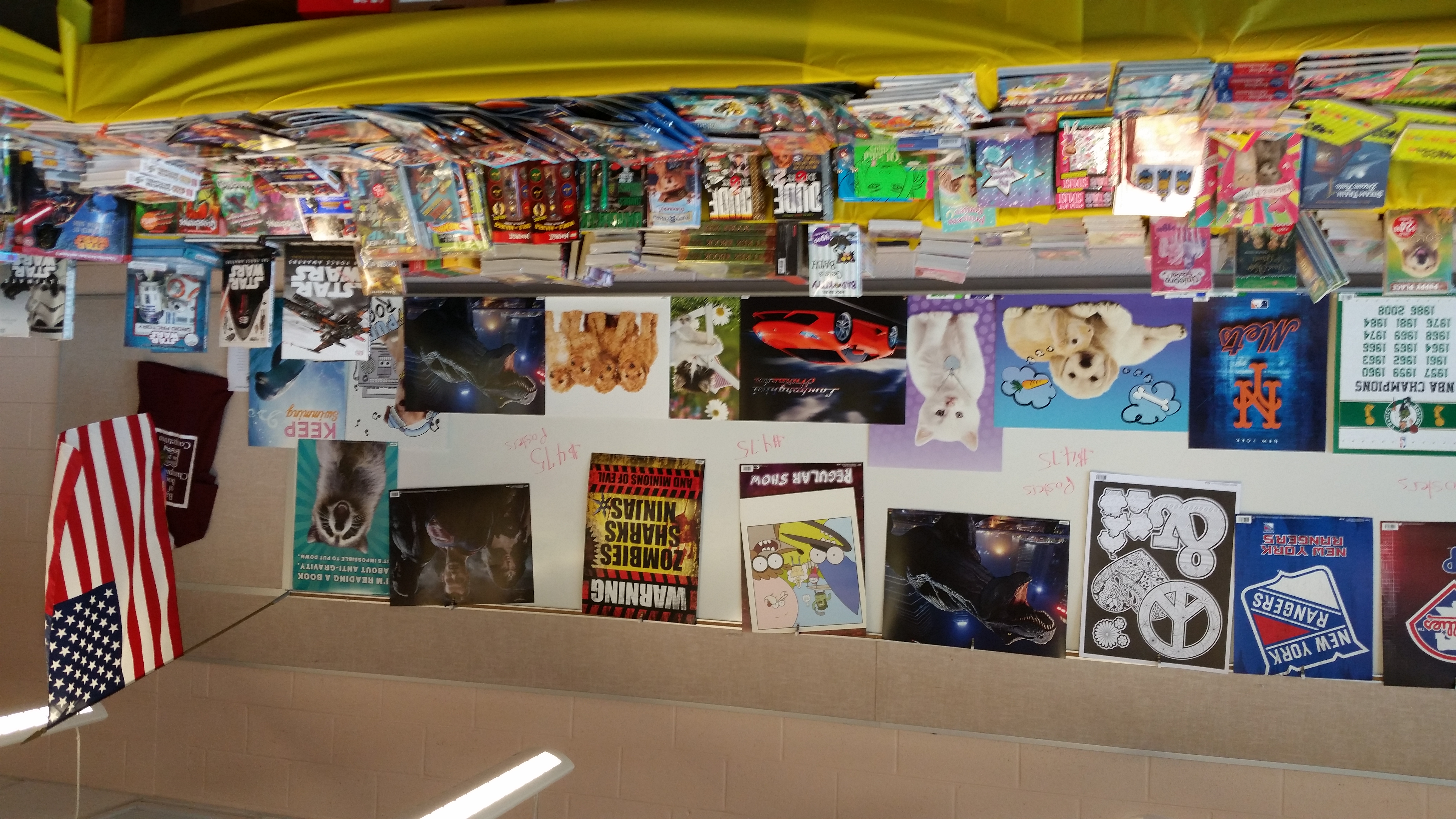
Scholastic Book Fair posterAs a child, I loved the Scholastic Book Fair. My elementary school’s library was too small to house the Fair books, so we would walk into a classroom full of tables with books stacked as far as my young eyes could see.

Magic awaited me there.

Filling out my list of books, coming back with the money, leaving with an armful of new adventures…one of the most exciting times of the year.

Now I am helping with my daughter’s Scholastic Book Fair, and the magic still lives. Most of the kids take choosing their books very seriously. My daughter did just as I expected and chose about 25 books for her Wish List. Her list, by far, was the longest I have seen. Just like me, she would choose ALL the books if she could. Her face shone with joy as she perused the shelves.

Scholastic Book Fair shelvesSome kids, though, are the polar opposites. Like the young boy who wandered aimlessly around and wrote down only one book in a lackluster manner. He asked me, “Do you have any sports books?” I didn’t think we did, but I went to look.

I found Basketball Superstars 2016. I found the boy and said, “I don’t know if you like basketball, but this is all we have.” He took it from me and very slowly said, “Basketball is my sport.” As he leafed through the book, he got more and more excited. He exclaimed and yelled out names I presume are basketball stars. His buddies came over and got so into passing the book around and turning the pages that I had to warn them to be careful with it because they hadn’t bought it yet!

The Book Fair has changed since I was a kid—the book prices are definitely higher. But the way the Book Fair makes me feel hasn’t changed. Seeing that boy go from zero to sixty once I found just the right book for him?

Magic.

Scholastic Book Fair table

Evolution of a Speaker: From Wreck to Relaxed

I am not a natural public speaker. As an introvert with an anxiety disorder, being the center of attention is something of a nightmare for me. Yet, I chose the life of an author, and that means public appearances, whether speaking, doing workshops, or hosting book events.

Two weeks ago I spoke to a group of writers in Philadelphia. I am still a new enough author to be a bit bewildered that anyone wants to hear “my journey.” Classic Imposter Syndrome.

However, this group DID want to hear my story. And since I chaperoned a bunch of 6-year-olds at the Please Touch Museum the day before, I didn’t have too much time to over-think things and make myself a nervous wreck (I was much more nervous that I would lose a child at the museum than about the speech). Besides, the topic was my journey as a writer—I’m the expert on that, right?

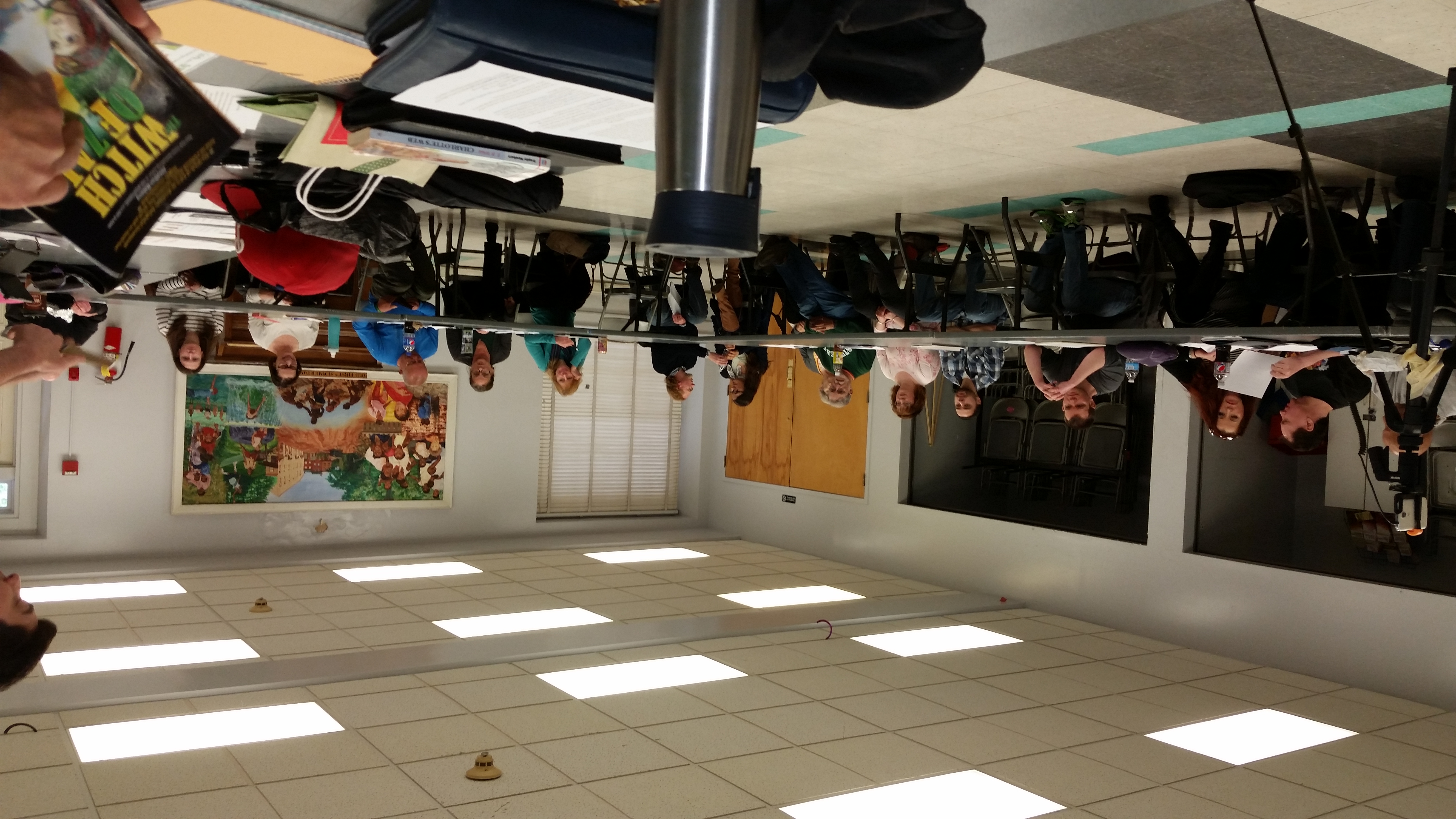
Author Kerry Gans visitng a Philly Writers Group as a guest speakerSo I gave my speech and it went well. I didn’t turn bright red or faint or forget my name or any of the things I worry about. The audience was attentive and knowledgeable. After my prepared speech, I took questions. And a strange thing happened. I relaxed.

Me, the person who needs to feel in control all the time, relaxed at the very part of the event where I had the least control.

I had mentioned in my speech how nervous I was about public speaking, and afterwards one of the writers said to me, “Don’t worry about being nervous. You did very well, and you were excellent during the question and answer.”

Excellent during the Q&A. Huh. How odd.

I came to realize that at some point in my life, a paradigm shift as a speaker had occurred. Gone were the days where I typed out every word of my speech and memorized it, then scurried offstage as fast as possible after giving it. I now excelled at the very part that used to give me nightmares. An evolution in progress.

I think I have come to enjoy the extemporaneous parts of event work because to me it feels more like one-on-one chatting. Never mind that I am still up in front of a group, I am talking to a single person. That makes a difference in my attitude. And it’s not “a speech.” It’s just talking. My friends and family will tell you that I can talk the ear off corn, so I guess I’m playing to my strength. 🙂

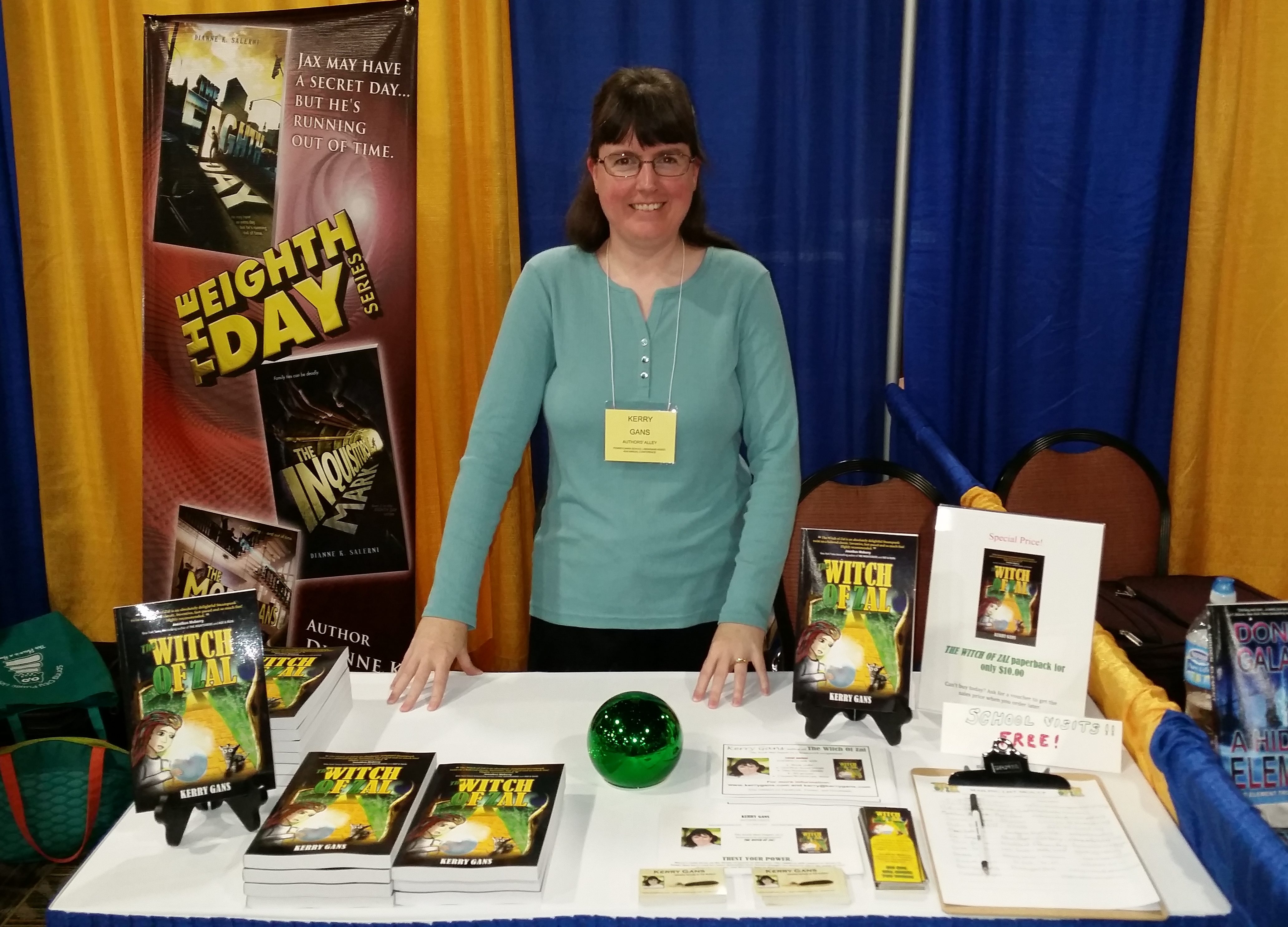
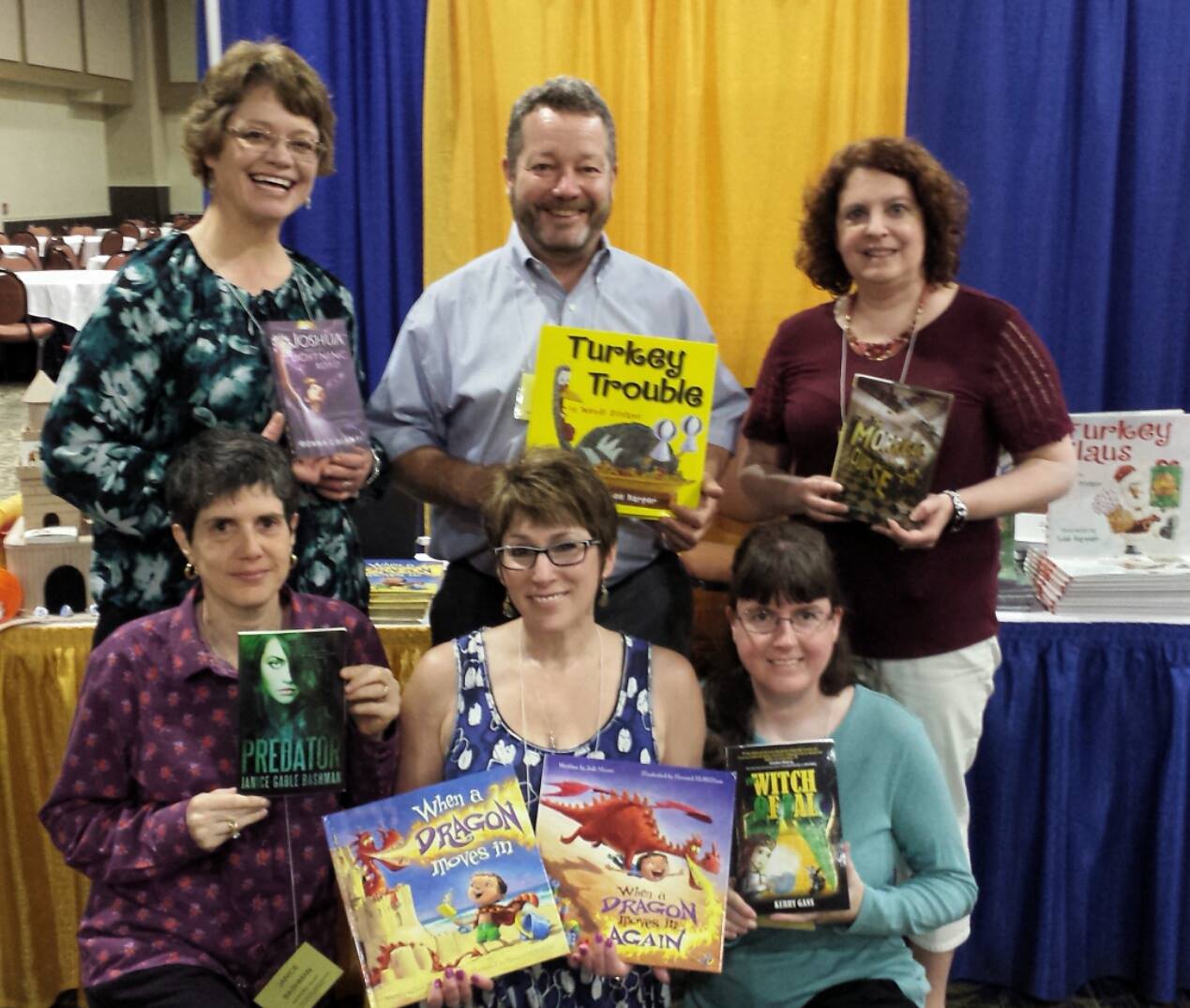
This newfound relaxation with extemporaneous speaking made my next engagement, the Pennsylvania School Librarians Association, a much easier affair. I didn’t dread the chit-chat and the unscripted nature of Author’s Alley. In fact, I had a wonderful time, partly because I enjoyed interacting with the conferees, and partly because I got to hang out with writer friends Donna Galanti and Janice Gable Bashman. We, along with Dianne Salerni, made a formidable team, urging conferees we talked with to see what the others had on offer.


So what does this evolutionary shift as a speaker mean for me? Don’t get me wrong: I will not be running out to do speeches without any notes anytime soon; I will never be truly comfortable in front of an audience; and I will always be anxiety-ridden prior to a presentation. The biggest gift this evolution as a speaker has given me, however, is a sense of freedom. The truth is, I have been dreading–and avoiding–school visits because of their interactive, unscripted, unpredictable nature.

Now I am not.

Oh, I’m sure I will have my share of embarrassing moments, or questions I can’t answer, or answers that get me in hot water. But I feel much more confident that I can meet the challenges of extemporaneous moments with enthusiasm and maybe even grace.

I’m so confident, in fact, that I’ve pitched a workshop for my daughter’s summer camp. Building a story with kids K-8th during a summer camp? Doesn’t get much more free-for-all than that!

How about you? Do you prefer a controlled speech, or an extemporaneous event? Have you experienced evolution as a speaker?

PSLA - Donna Galanti - Lee Harper - Dianne Salerni - Janice Gable Bashman - Jodi Moore - Kerry Gans authors

Top L to R: Donna Galanti, Lee Harper, Dianne Salerni Bottom L to R: Janice Gable Bashman, Jodi Moore, Kerry Gans


A Modern Author’s Marketing Load: More or Simply Heavier?

Kerry Gans speaks to writers as part of the author's marketing loadAt a speech to a writer’s group on Saturday, I got asked the million-dollar question: since today’s authors are expected to shoulder most of the marketing load, wouldn’t self-publishing make the most sense? I answered that it was a matter of personal preference, but the question got me thinking: Are modern authors really expected to shoulder MORE of the marketing load than in the past, or is the burden simply HEAVIER today?

I know we all like to wax nostalgic about the good old days when the publisher would do ALL the marketing and the author would just churn out more books. It’s a wonderful dream, but I’m not sure that was ever the reality, unless you were a top-flight author. Most mid-list and lower authors had to do a lot of the hustling themselves.

So I’m not sure that we’re being asked to do MORE (percentage-wise) of the marketing for our books. I think the real problem is that the percentage of marketing we do is HEAVIER than it was back in the halcyon years.

Visiting libraries is part of the author's marketing loadBack before the internet, marketing took a very specific shape—in-person events, usually at bookstores or libraries or conferences. Sometimes schools if you wrote children’s books. The occasional interview, if you were lucky. These events could be intense, and while they occurred they consumed the entirety of your time. But they were finite. Even a multi-day conference had a defined beginning and end. A writer could look at their calendar and carve out precisely when she would be marketing, and when she could forget about marketing and just write. In other words, there was plenty of “down time” in the marketing schedule.

Now, there is no down time. Not only do we have in-person events, but we are expected to be online—Facebook, Twitter, Pinterest, LinkedIn, Goodreads, Google+, YouTube, Instagram, SnapChat, Tumblr… The list seems endless. And we’re asked to blog and maintain a website, too. In other words, we can never put down the marketing load. We are available 24/7 to our readers.

Social Media is part of the modern author's marketing load

So that’s why I think perhaps authors today don’t actually bear MORE of the marketing load—the majority of marketing was always squarely on the author’s shoulders. Today, we have so many more channels to use for marketing that the load has become exponentially HEAVIER than it was. There is no stepping away from it. We are “on” all the time. We weave marketing into our daily lives. There are no long stretches of concentrated writing time where we can put marketing from our minds.

Admittedly, I got published well after social media and the internet became fixtures of our ever-connected society. For those of you who got published back in “the good old days,” what do you think? Are we being asked to lift more of the marketing load—or is there simply more load to lift?

The Art of Second-Guessing

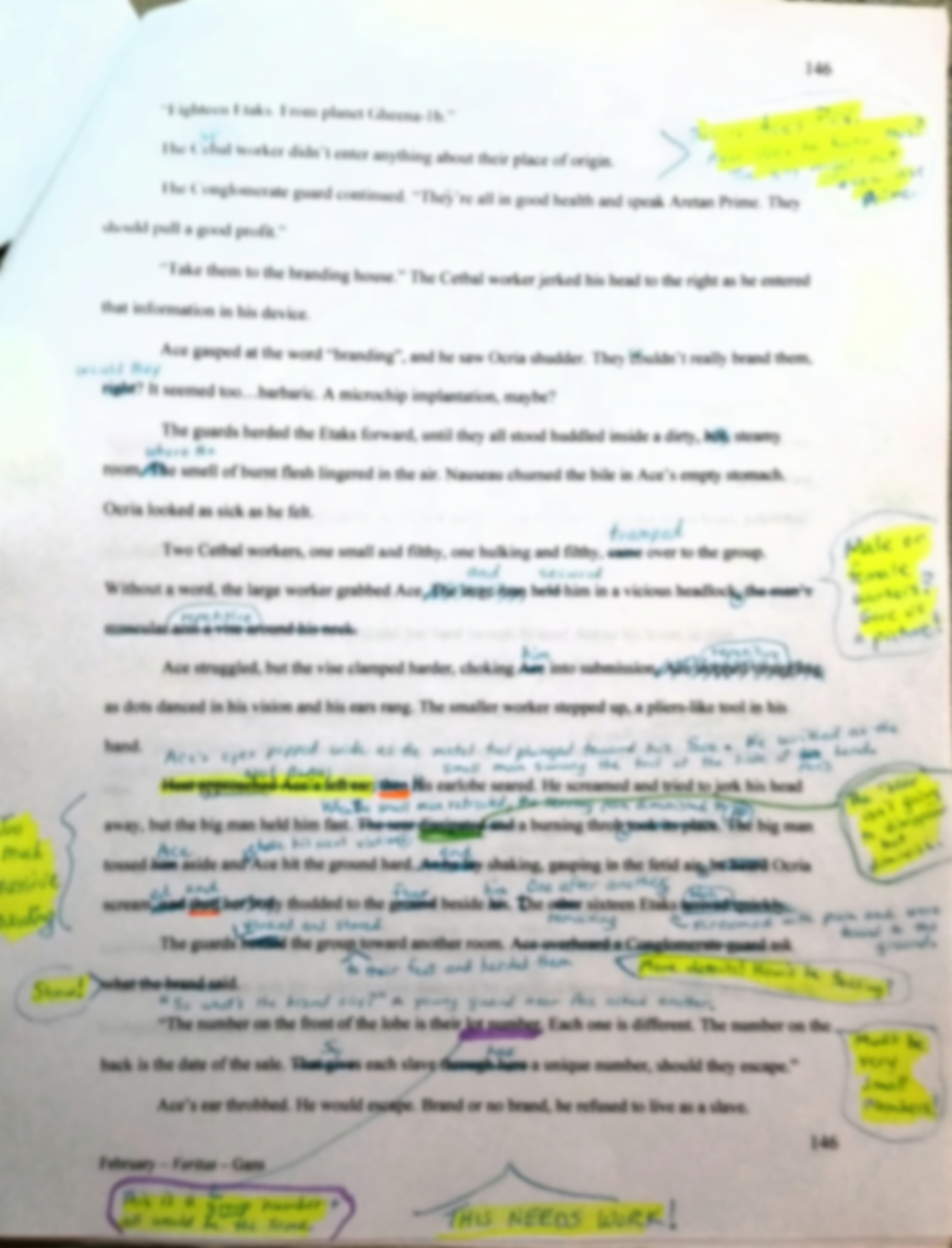
Handwritten page showing second-guessing with crossoutsMy massive revision of Veritas (a YA sci-fi) is moving apace. Some chapters fight me hard—I have so much to revise and add that I virtually (and sometimes literally) rewrite them. But some chapters I tweak. Perhaps add a sentence or a few phrase. Those chapters provide a break for me, but when I get several “tweak” chapters in a row, I start second-guessing myself.

After struggling with a chapter that knocks me down, talks back to me, and generally kicks me around, when I get a tweak chapter I feel like I must be missing something. I mean, it can’t be that easy. Not when the last chapter was so hard. There must be some glaring mistake I am not seeing.

So I scrutinize and I poke and I prod, but I end up back where I started. I think this chapter is all right. But am I right? Second-guessing.

Marked-up manuscript--no more second-guessing!Luckily, this is where critique partners come in. They will look at my chapters, the fighters and the tweaks, and tell me if I’ve missed something. If weaknesses hide beneath the polished surface. They will tell me what doesn’t ring true, what doesn’t feel real, and what knocks them out of the story. Hopefully, this revision will have fixed most of those things.

Once I get their feedback, I will no longer second guess myself. Until then, I will continue to plod through the revision. I’ve just finished chapter 36…of 83. So there is plenty of second-guessing ahead for me!

What about you? Do you find yourself wondering what you’ve missed when revisions seem “too easy”?

Research and Citations: Save Time, Get It Right From the Start

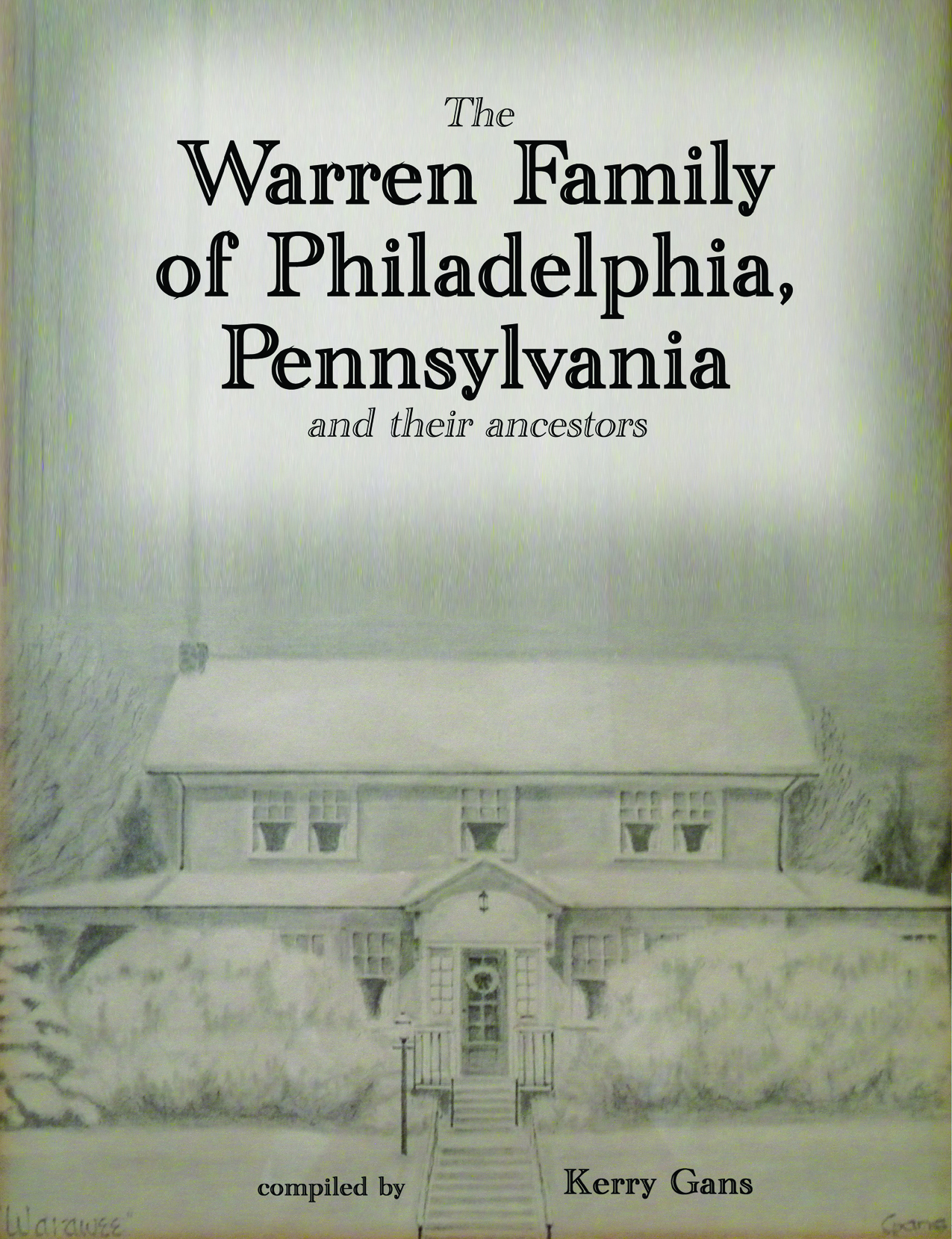
Cover of Kerry Gans' The Warren Family of Philadelphia, Pennsylvania, and their Ancestors, a genealogy research bookI’ve written a family history book for my father’s side of the family, and I am now at work on one for my mother’s side. The book for my father’s side took forever, but not because of the writing—because of the research.

Obviously, genealogy takes a lot of research. Over 20 years I have documented evidence from everything from tombstones to letters to photographs to legal documents for birth, death, and marriage. I have a genealogy program where I enter all the data, and cite my sources for each data point.

The problem? My citation entry proved insufficient.

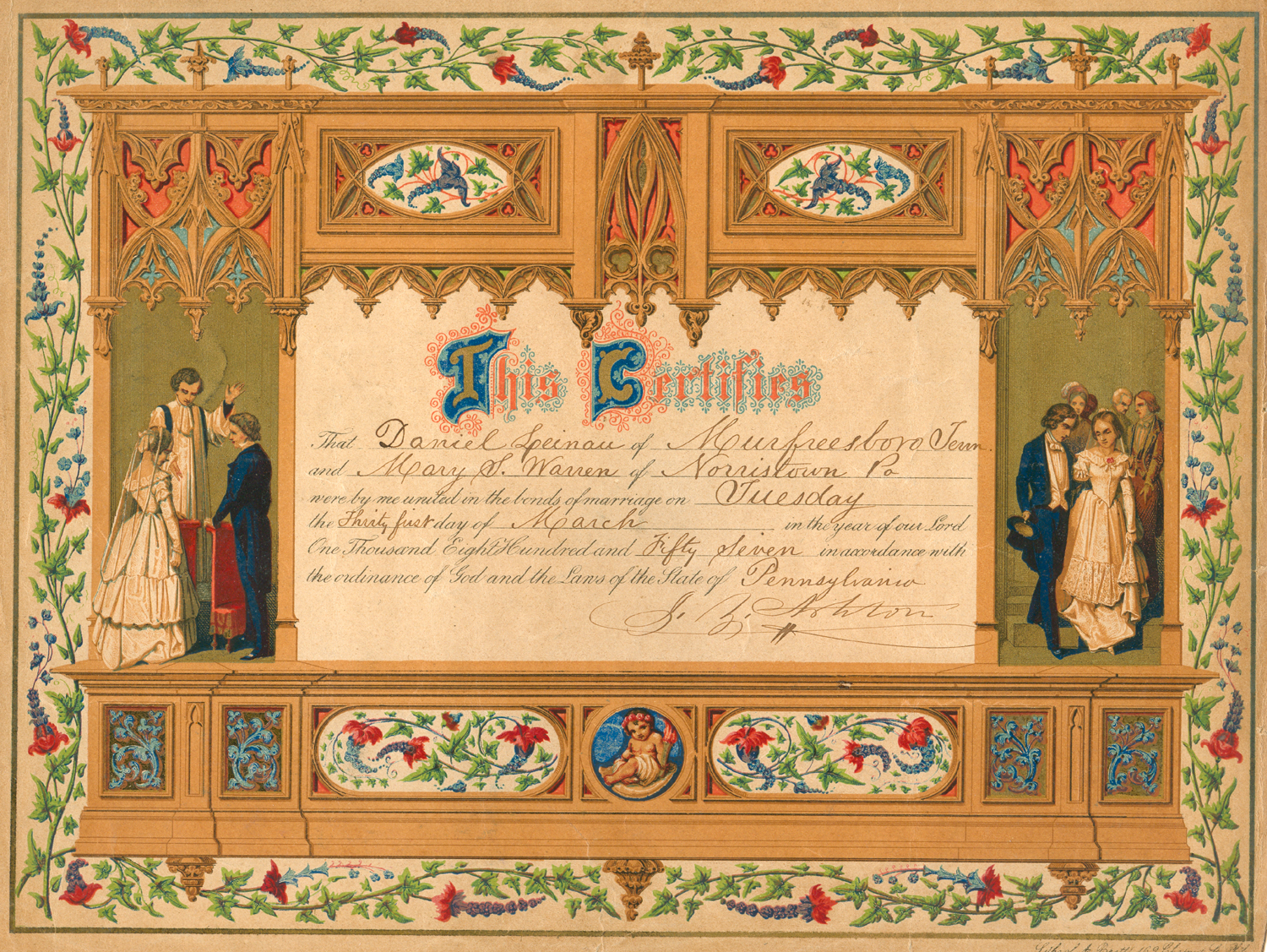
Marriage Certificate of Mary Hobson Warren and Daniel LeinauAs I wrote my father’s book, putting the data into readable prose fell smack into my wheelhouse. But I wanted other researchers of those lines to have a fully sourced genealogy at their disposal. When a genealogist finds a source (such as this book) where you don’t have to reinvent the wheel, that provides a paper trail, and has sources so you can judge for yourself the reliability of the data, it’s like striking gold. I wanted to give this information to people gift-wrapped, as a way of paying forward all the help I had gotten from those who researched before me.

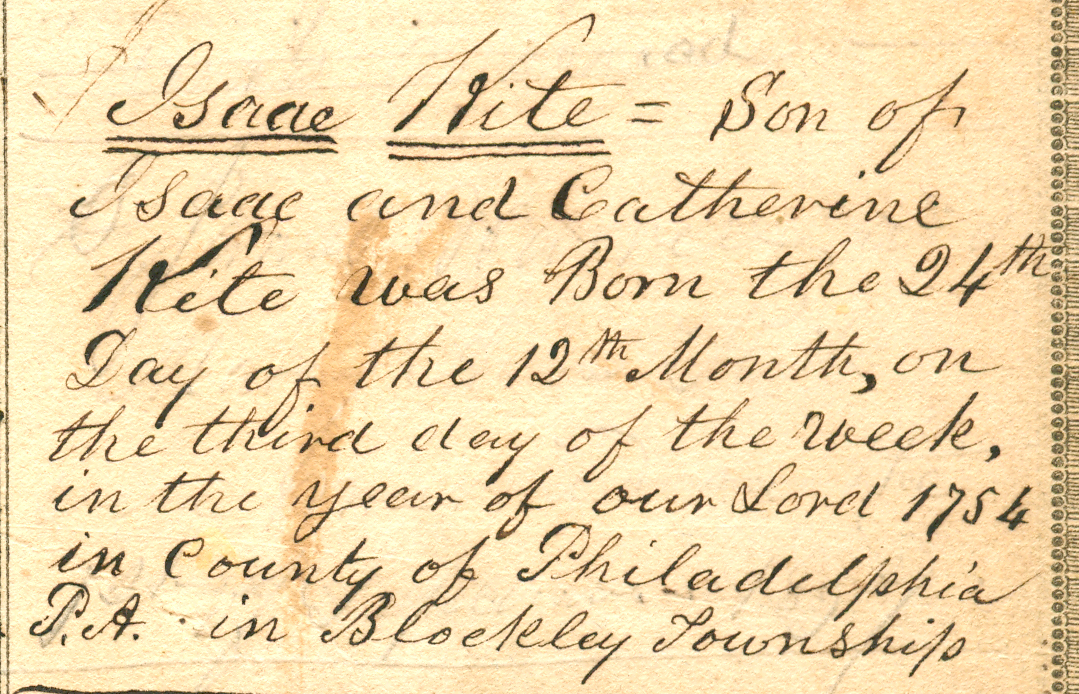
Family Bible birth entry for Isaac Kite, 1754Since citation-supported research was a main goal of the book, I needed to have clear citations for every piece of data. I found in going back into the data that I had often been lax in my citations. While more prevalent in the early days when I often didn’t know better, I also found other places where I had taken shortcuts.

  • I had vague citations: “Tombstone.” Well great, except I didn’t say what cemetery. “Marriage License.” Whose? Issued where?
  • I found incorrect citations: “Scotland Birth Registry.” No such entity exists. I either meant the Scotland Old Parish Records, or the Scotland Statutory Records Index (depending on the date).
  • I had no citation at all. This baffled me the most because I clearly did not make up the information. I got it from somewhere. Often it required me to dig through the information I had to finally find the source.

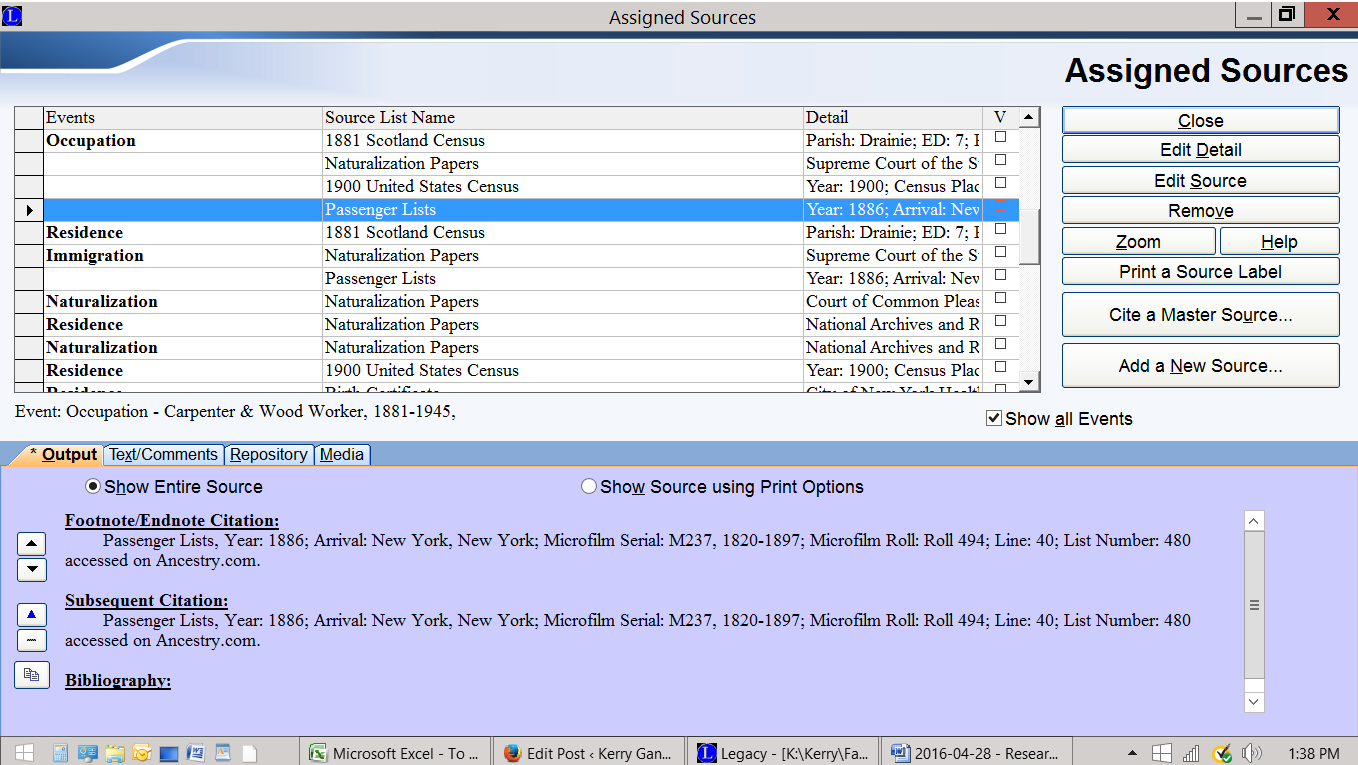
Screenshot of genealogy database program for organizing researchSo the biggest time-suck writing my genealogy books is the source citations. I often have to stop and track down the original source so I can properly source it. Then I have to fix it in the genealogy program before I add it to the book. The upside, of course, is that when I am finished the books my genealogy database will also be in tip-top shape.

What does this mean for your writing research?

I know most of you are not writing genealogy books. But that doesn’t mean you can’t learn from my mistakes.

  • If you write historical novels, have a database where you list every historical detail you use and where you found it. That way you can defend that detail if needed, and it gives you a go-to list for more in-depth research if needed.
  • If you write contemporary novels and people helped you out with details of setting, character, or culture, write it down. In the many years it can take from first draft to publishing, you may forget who told you what, and when it comes time for the acknowledgements, you don’t want to forget someone.
  • If you write fantasy or science fiction, track every bit of real science or history you used to inform your world. Not only will you be able to discuss and defend your points, you can then go back to those sources later to see if there are updates to the science or cultural history that you can use in future books set in the same world.
  • If you write thrillers, mysteries, or police procedurals, you’ll need insider knowledge of the justice system and perhaps technical knowledge for things such as planes, submarines, and weapons.
  • Another advantage to all these research notes is that you can use that information to support blog posts and presentations, non-fiction works about the same subjects, and as resources to refer readers to if they want more information.

We writers pull information from everywhere, and we collect data on a wide variety of subjects. We need to know where all that research comes from. Don’t waste time later having to go back and retrace your steps to double-check a detail. Get it right from the start.

Do you keep track of your research? How do you organize the data and sources?

WP-Backgrounds Lite by InoPlugs Web Design and Juwelier Schönmann 1010 Wien