

A Change of Place: Creativity and Location

So many things can impact our creativity—how we feel, what we eat, time of day, how much we’ve slept, outside worries. But one major component of creativity is place. Where we write. How does where we write influence what we write?

I’ve often read advice that we should have a specific place where we write. Perhaps an office, a local coffee shop, the library, or even a spot in our home. I’ve even heard that if you write on your sofa (as I do) you should write at one end and watch TV, etc., from the other. The idea behind all this advice is that having a dedicated writing space triggers your creativity because it trains your brain to write when you are in that spot.

This week I had a much larger change of place than the opposite end of my sofa. I spent some of the week in North Carolina, in a small rural town in the Blue Ridge Mountains. Over the years, I have noticed that this change of place triggers a change in mindset for me almost every time. For some reason, genealogy obsesses me when in North Carolina.

genealogy obsession heightening in one place

Now, it doesn’t take much to get me chasing down rabbit holes for genealogy. But for some reason, the past feels much closer to me while I am there. Perhaps it is because the town often feels like it is from a bygone era, and the surrounding mountains have a timeless quality. The many farms could be from a hundred years ago, and the pace of life is slower. Not everyone knows everyone, but the community is close knit. In the way of rural communities, many earlier generations had more than the 2.5 kids families have now, so kin networks sprawl across the land. The past is still very present here.

Maybe part of the mindset shift is because we come here specifically to visit family, so family is very much top-of-mind. Whatever the reason, it ramps up my genealogy obsession and I want to chase ghosts for hours.

This got me wondering what kind of stories I would write if I lived there. Would I still write fantasy and science fiction? Or would I be drawn to family dramas and small-town conflicts? What stories I would write if I lived on Chincoteague Island, as I did for 8 months one year? Would I be writing stories of wind and sea and sky?

Assateague Island--a favorite place

Your location undoubtedly influences your writing, from topics to characters to theme. While a temporary relocation may not fundamentally alter what or how you write, a change of place can shake up your creativity and dig you out of a funk, break a writer’s block, or give you a new perspective on some element of your story.

Do you have a specific place you write? Have you found your creativity influenced when you have a change of place?

What place will you sail away to?

by William T. Gans, Sr.

Save

Save

Save

Save

Save

Taking a Break before Revision

We’ve all heard this advice: put your manuscript in a drawer for at least a month before you revise/edit it. Generally, I do this as a matter of course (and because life often gets in the way). But lately I have been lamenting an unscheduled break in my revision plans.

My sci-fi YA Vertias is inching toward being finished. I wanted one more major sweep for voice and plot tightening, and then I think it will be ready for professional editing eyes to look at it. So, I printed it out—all 100,000 words of it—punched some holes and stuck it in a three-ring binder (2 three-ring binders, actually). Ready to go!
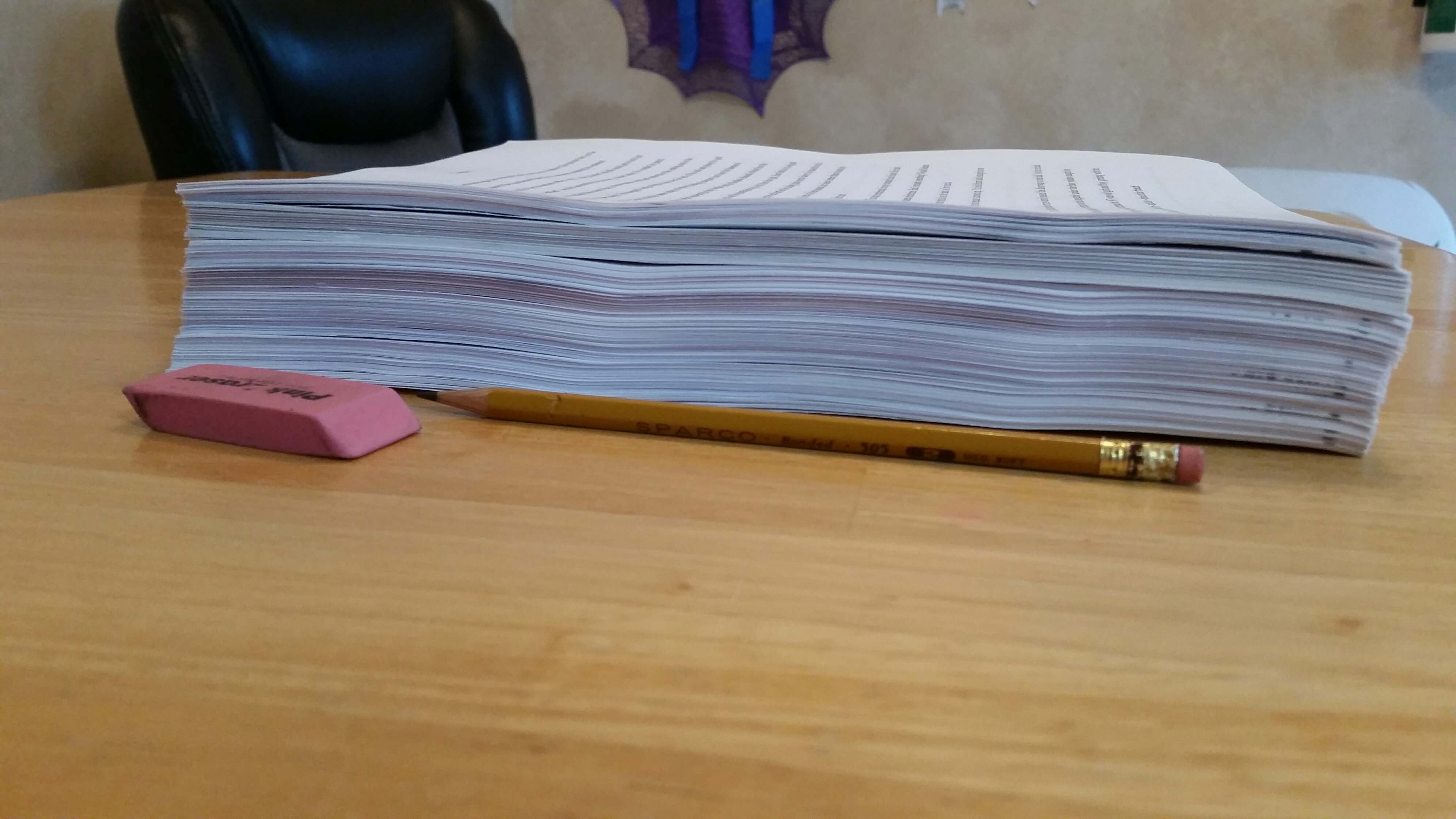
My manuscript before my editing breakNot so fast! I did a few chapters of it, and then for some reason (or many reasons), it languished. From September 30, 2016 to March 8, 2017, it sat on my table waiting for me to return. That’s 160 days. 5.3 months.

Way too long.

My frustration built and built as the binders gathered dust on my end table, and they accused me of slacking every time I glanced in their direction. Finally, I got back to it.

Since March 8, I have made good progress. I finished polishing the shortest of the 3 POV lines in my novel and started the second.

For all that the length of the break frustrated me, there have been some good things out of it. Not only do I see mistakes more readily and clearly (the rationale for taking a break in the first place), but I can see what I did WELL with greater clarity. In a pleasant surprise, my writing is better than I remembered it.

Also, I hear the three POV characters voices more clearly in my head. I see where a sentence doesn’t fit the voice and needs to be tweaked. I have a better handle on their worldviews and can use the voice to crystallize that. In another surprise, the three voices are more differentiated than expected, allaying my fears of them all sounding like me.

So while I hadn’t planned on such a long break, it had some up sides to it. How long do you usually wait before coming back to revise a manuscript?
Save

Save

Character Voice: Easy to hear, hard to write

Every writer is familiar with the idea of voice. Every writer has their own author voice. Some are terse; some lyrical. Some are plot oriented; some character. It takes time to develop, but eventually every writer finds a voice that is uniquely theirs.

When writing fiction, however, authorial voice is not enough. Our characters have to have their own strong voice, particularly if the story is in first person.

Character voice is a concept I understand but don’t “get”. My brain understands character voice, and I know it when I read it:

“Tom and me found the money that the robbers hid in the cave, and it made us rich.  We got six thousand dollars apiece—all gold.  It was an awful sight of money when it was piled up.  Well, Judge Thatcher he took it and put it out at interest, and it fetched us a dollar a day apiece all the year round—more than a body could tell what to do with.  The Widow Douglas she took me for her son, and allowed she would sivilize me; but it was rough living in the house all the time, considering how dismal regular and decent the widow was in all her ways; and so when I couldn’t stand it no longer I lit out.  I got into my old rags and my sugar-hogshead again, and was free and satisfied.  But Tom Sawyer he hunted me up and said he was going to start a band of robbers, and I might join if I would go back to the widow and be respectable.  So I went back.”

The Adventures of Huckleberry Finn by Mark Twain

or

“I knew there was going to be trouble the minute I saw him, which was the minute that tall man carried me over to the kennel and said, ‘I bet you two will get along.’ Immediately I said at the top of my lungs, ‘WHAT? WHAT? DO YOU SEE THE SIZE OF THAT DOG? DO YOU SEE THE SIZE OF ME? How can you expect me to share space with a HIPPOPOTAMUS DISGUISED AS A CANINE? All the fur isn’t fooling ME. I am going to get SQUASHED BY GIANT PAWS and THEN where would the world be? ME-LESS, I tell you! I DEMAND A PRIVATE KENNEL! DON’T YOU KNOW WHO I AM?’” – The Incredibly Important True Story of Me! by Tui T. Sutherland (in the anthology Lucky Dog: Twelve Tales of Rescued Dogs)

But I find it very hard to get right on the page.

My first few novels only had a single point of view character, so if there was a significant overlap between author voice and character voice, it wasn’t terribly noticeable.

My current work in progress, however, has 3 POV characters—a significant departure for me. The problem is that they all need to sound distinctly different from one another, which I am finding difficult.

Some writers have suggested maybe I do not know these characters well enough to hear their voices. Perhaps they are correct, although I feel I know these characters intimately. I have never been a writer who “hears” their characters talking to them in their head. It’s apparently not how my creative brain works.

However, in chipping away at the revisions, the three voices have become more distinct. The last to fall into place was my 16-year-old boy’s voice, but I did finally hear him loud and clear.  Now I can only hope I can get all that onto the page.

We worked on character voice in one of Kathryn Craft’s Craftwriting workshops, and I feel that I am edging closer to “getting” it. I hope someday that character voice will be an element I master so I do it more unconsciously. Then I can move on to improving another aspect of my craft.

Does character voice come easily to you? Or do you find them all sounding like mini-mes?

When Life Disrupts Your Revision Routine

Manuscript awaiting revisionI printed out my 100,000 word sci-fi manuscript last week, fully intending to start the final big revision this week. Sometimes things don’t turn out the way you plan.

My daughter has been home from school for 2 days. She was sick enough to not go to school, but not sick enough to stop her wanting to play and run around. It’s been hard to get anything done, and forget about the concentration needed to edit! So the manuscript still sits on the table, untouched.

My daughter went back to school this morning, but did I jump into revision? No. Two nights of shattered sleep wiped me out. So I took a nap for 3 hours instead of the 1 hour I had intended! But it was just as well, because between the headache and the fuzzy brain, none of my edits would have been as sharp as I needed.

Tomorrow, assuming no relapse and a daughter in school, I will separate out the 3 points-of-view of my manuscript and begin the process of revising each one. I will sharpen conflict and tension in each scene, make sure I use enough sensory detail, and ensure that the character voice is consistent.

I am not a person who likes change. Routines help keep my anxiety in check, and keep me feeling productive. When life disrupts my plans, it makes me irritated and anxious. But life often has other plans for us. So instead of diving into the revision of my sci-fi novel, I spent the days reading to my daughter, playing games like Monopoly, Sleeping Queens, and Candyland, and helping her build a fort in the upstairs foyer.

And that’s not so bad.

How do you deal with detours in your writing process?


Save

Save

A Safe Place to Recharge

Anyone creative knows that stress can bring your creativity grinding to a halt. My January was an avalanche of physical and emotional stress: family illnesses pretty much every week, an arm injury that is not healing, Donald Trump’s inauguration and the chaos that followed, and the anniversary of my best friend’s death, which always knocks me sideways. My creativity bombed big time. I needed a safe place to recharge.

My tailspin seemed unshakeable. I could still churn out the non-fiction blog posts and query letters, but my fiction vanished. Something outside myself had to bring my focus back. I found that something at Kathryn Craft’s Craftwriting sessions.

My anxiety disorder niggles at me in the best of times, and this January exacerbated it to the limit. I cannot write in that frame of mind, and it is exceedingly hard to “snap out of it” when you are in the depths of the spiral. When I told Kathryn how my anxiety was acting up, she said, “You know you have a safe place here.”

Yes, the term “safe place” has been politicized of late (what hasn’t been?), but we all need some places in life where we feel physically and emotionally safe. Ideally, home is one of those places. If we are lucky, we find other places outside the home where we feel safe. Without that safety net, being creative can be too frightening.

This is especially true at Craftwriting, where we end each session practicing a craft element by writing a scene, and then share it with the group. It can be terrifying to share your first-draft word vomit with a group of people, some of whom you may never have met before that day. Yet we do it, because Kathryn has created a safe place for us to share even the rockiest of writing.

Don’t get me wrong, we do not indulge in the pats-on-the-back, participation trophy type of false praise. We are professional writers, we are there to learn, and we cannot learn without honest feedback. However, we don’t couch the feedback negatively. We talk about what is good about the writing. We offer suggestions of what might be done in future revisions to improve the technique we were studying. But because we are all equally vulnerable (we all had the same 25 minutes to write something—anything—after all), we choose to uplift rather than tear down. I have been taking Kathryn’s Craftwriting workshops for years, and I have never had a negative experience. This is a testament to the atmosphere and expectations Kathryn sets, and the character of the people who come to the workshops.

This round of Craftwriting has done more than (hopefully) improve my craft. It has shaken me out of my daze, and forced the creative flow back to the surface. I’m writing again, and the writing itself is helping me find the stability I had lost in my tumultuous January. I feel more like me again.

And it’s all because I had a safe place to recharge my battery and refocus my mind. Many thanks to Kathryn and the wonderful participants of the workshops for providing me with exactly what I needed reconnect to my writing.

Do you have a special place to recharge or to reground yourself when you lose your writing mojo?

Research, Balance, and Fish

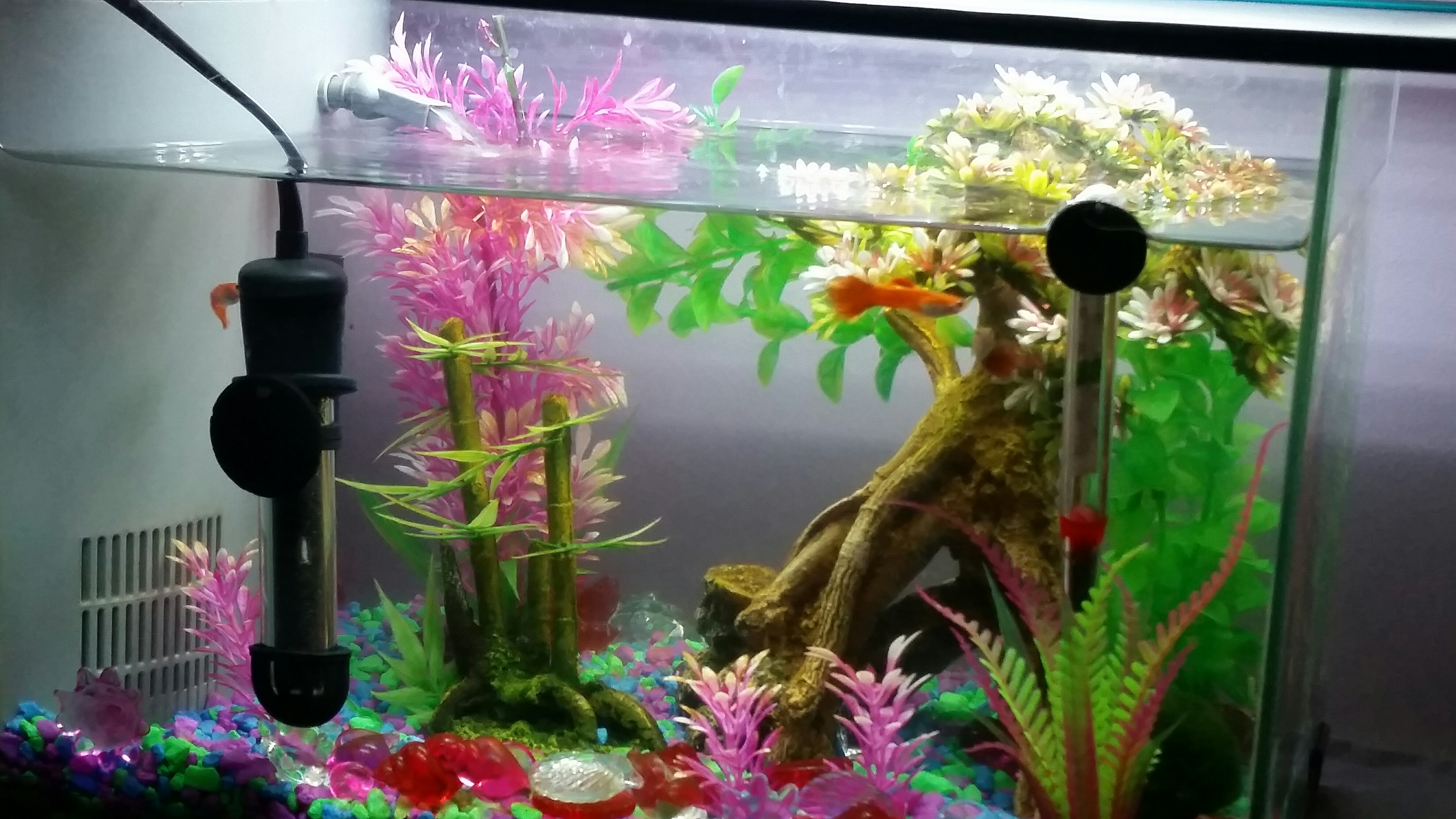
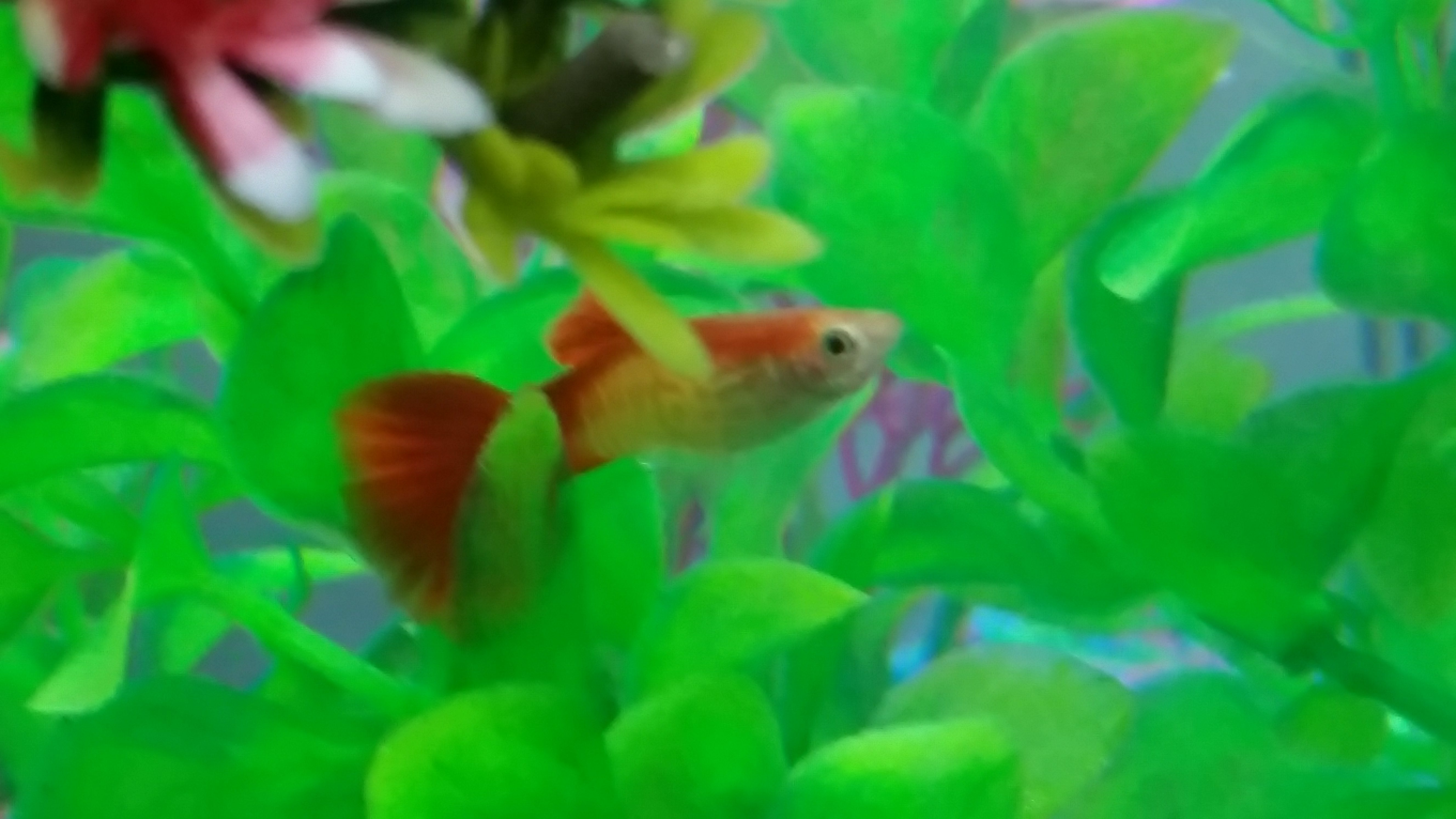
Research could have made this easierAs regular readers of the blog know, we got a small fish tank over Christmas. Fish were supposed to be easy pets. How hard could they be? Throw some water in a tank, plop in some fish, feed them, they’re good. Very few things in life are as easy as they appear. If we had done a little more research, we would have been more prepared for what happened next.

We’ve had a total of 5 fish, but are down to 3. We lost one (quite literally lost him) the first night, while the second leaped from the tank about a week later and never recovered. How they got out of the tank through a skinny opening in the dead of night we don’t know. But we have fixed this issue with a new cover. A little research may have saved their lives, but who knows?

Research might have saved Seashell 1

RIP Seashell 1

Research might have saved Sparkleshine

RIP Sparkleshine


What more research WOULD have prepared us for is the difficulty of maintaining the proper chemical balance in our tank. We let the water sit and percolate for a week before adding the first 2 fish. Turns out we should have let it “cycle” for at least a month, maybe more, before adding the fish. Now we are trying to control the ammonia and nitrite cycle while fish are in the tank, which is very stressful, because a spike in either ammonia or nitrite can kill the fish in a mass extinction event (we very nearly had one a week ago).

So here we are with fish and struggling to keep them alive through this natural aquarium cycling process, when a little more research would have saved us the headache. And the same can happen when writing. A little research in the beginning can keep your manuscript from going off the rails.

Research may keep Seashell 2 alive

Seashell 2

Some people do extensive research before writing. Some research as they go along. I am in the middle. I do broad-stroke research before I write, and fill in the details as I need them. But by doing basic research first, I know the broad restrictions I need to work within. This saves me from writing the whole book, then finding out I had a fundamental flaw which now requires me to rewrite an entire plotline. So a little research can save a lot of angst later on.

The other thing about the aquarium is that the ammonia and nitrite need to be kept at 0 ppm, or you end up with stressed and perhaps dead fish. Bacteria are supposed to eat the ammonia and the nitrite, keeping the whole thing in balance. But little things can throw the cycle off and suddenly your water is testing in the danger zone.

Research may keep Gem alive

Gem

The writing life is like that, too—a delicate balance. Writers juggle writing and daily life, often including family and a day job. It’s not easy to keep the water balanced right. One little thing can send one part of your life spiraling into the danger zone. All we can do is keep testing the water and try to head off any problems we see. One way to do that in an aquarium is partial water changes. We can do that in life, too. If one issue is causing undue stress, can we change it up, change it out? Sometimes a small change can make a huge difference.

Research will save you headaches. Balance will save you heartaches. And fish…well, fish are cool when they’re not jumping out of the tank in the dead of night.

When do you research your manuscript? How do you maintain a healthy balance in your life?

Research may keep Flower alive

Flower

Save

Save

Save

Save

Productivity: Checking in with 2016

Some of you may remember that at this time last year, I created a new work schedule to boost my productivity. So, how did it go? Let’s look at the numbers and find out.

I had some hope of hitting 500,000 words this year, but I fell short. My grand total was 417,914. Not bad at all. Now, I didn’t write all those words from scratch—those are how many words passed through my brain in some form or another this year.

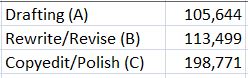
I break my word count into 3 categories: Drafting (words from scratch), Revise/Rewrite (major reworking of already existing words), and Copyedit/Polish (nitty-gritty editing in the final stage of writing). The breakdown looked like this:

Productivity word count breakdown

Not surprisingly, the Drafting was the lowest number (25.3%) since it takes the most time and effort. Revision/Rewrite (also a lot of thinking involved) came in at 27.1%. Copyediting/Proofreading (when the manuscript should be fairly clean) topped out at 47.5%.

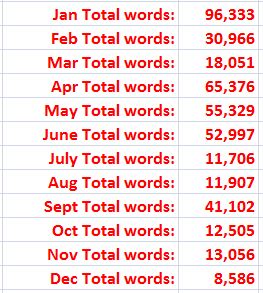
Here’s what my monthly word totals came to:

Productivity word count monthly break down

You may recall that in August I bemoaned the low total for July. So you are probably wondering if I also lost my mind when I saw the abysmal 8,586 for December. No, I did not.

Part of my reason for not getting down on myself for December’s low productivity is that I had adjusted my expectations. The Thanksgiving-New Year’s timeframe is always a very hectic time, with lots of traveling, visiting, and special events to attend. Even hitting my monthly average of 35,000 words would have been unrealistic.

The other reason the number didn’t upset me was because I had a very important project that I simply could not quantify via word count. I finished a new book with my co-authors, and by December it was ready to be sent to agents. So I spent a great deal of time in December researching agents. Once I compiled a list of 50, I put together the query letters and their accompanying pages/synopses.

So, I begin 2017 content that my work schedule has increased my productivity, and hopeful that the queries I send out in January will move my career ahead by getting me an agent.

Have you re-evaluated your current work routine? Is it still working for you? Will you be making changes in 2017?

Save

The Best of The Goose’s Quill 2016

As 2016 winds to a close, I take a look back and see what Goose’s Quill posts resonated with my readers the most. I often get surprised! Here are the top 20 of the year:

  1. Productivity and Expectations
  1. A Clean-Out Vacation
  1. Summer Slump: Is it September Yet?
  1. Gans Family Reunion 2016: Blood is Thicker than Water
  1. Beta Readers: A Vital Part of the Process
  1. Trans-Siberian Orchestra
  1. The Best of the Goose’s Quill 2015
  1. Research and Citations: Save Time, Get it Right from the Start
  1. The Dread Synopsis
  1. Book Launch! But What to Read?
  1. Critique Groups: A Resource Worth Having
  1. Book Fair Magic: Casting a Reading Spell
  1. Evolution of a Speaker: From Wrecked to Relaxed
  1. A Successful, Grateful Book Launch for The Witch of Zal
  1. My First Author Panel: The Student Becomes the Teacher
  1. Learning to Excel: Spreadsheets and Writing
  1. How To Cope With Book Launch Anxiety
  1. My Biggest Takeaway: 2016 Philadelphia Writer’s Conference
  1. Musings on Grief and Comfort

And my #1 read post of 2016:

  1. The Witch of Zal Book Trailer

Thank you everyone for reading The Goose’s Quill! Have a safe and Happy New Year, and I will see you in 2017!

The Goose's Quill logo

Save

Save

Save

Thankful for One Year as a Published Author

Thankful for one year of The Witch of ZalMy debut novel, The Witch of Zal, launched November 4, 2015, so I have been doing this published-author thing for a little over a year now. On this Thanksgiving, I am thankful for the many people who have helped me make the transition, and for the many experiences that have helped me grow as an author and a person in the past year.

First, I am thankful to all the people who helped me improve my craft over the years, and who supported me through the writer’s journey, such as J. Thomas Ross, Nancy Keim Comley, Gwen Huber, Matt Q. McGovern, Bob Drumm, Lois Steinberg, Kathryn Craft, Jonathan Maberry, Don Lafferty, Jim Kempner, Jeff Pero, Keith Strunk, Donna Galanti, and all the others who have supported me in hundreds of small ways.

Second, I am thankful for those who gave me business advice and guidance, such as Jonathan Maberry, Donna Galanti, Marie Lamba, Uwe Stender, my publisher Charles Day and his editor Mary Harris, various people I have chatted with at author events, and pretty much everyone at the Writers’ Coffeehouses who bring perspective and their own experiences to the table every month.

Third (maybe this should be first, LOL) I am thankful for my family. My parents for encouraging me all my life, my brother for not killing me when we were kids, my husband for putting up with my living in a dream world, and my daughter for believing I am an artist even when I don’t feel like one. Also, for my extended family and life-long friends for supporting and encouraging me through this long, strange journey.

Thankful for summer campFinally, I am thankful for challenges. Yes, challenges. Because as an introvert with anxiety disorder, being a published author is a smorgasbord of panic-inducing moments. Book launch. Speeches. Group author events. Traveling to places unknown. Summer camp workshops—with real live actual kids. So many kids. Author panels. Talking to strangers. Lots and lots of talking to strangers. However, I have faced these challenges so far and conquered the fear. I have stepped out of my comfort zone and stretched myself as a person.

I am thankful for this first year as a published author—and to all the many people who have helped get me here. Writing is the effort of a single person, but publishing takes a community. I am so thankful that all of you are mine.

Thankful for book launch

Happy Thanksgiving!


Save

Save

Save

The Dread Synopsis

I am in the process of gathering materials together to query my middle grade historical adventure The Curse of the Pharaoh’s Stone. I have a decent query, the manuscript is properly formatted, and I am working on the final piece—the dread synopsis.

The synopsis is notoriously difficult for most writers (there are some odd ducks that actually enjoy it!), and we procrastinate over it as long as possible. It is no wonder we find it hard. It’s a monumental task to take a 56,000 word novel and explain it in about 1,000 words—especially while attempting to infuse it with voice and emotion.

I took some advice from a few blogs on how to get started on the query. First, I wrote one sentence summarizing each chapter, then I turned that list into better-written paragraphs. Next, I polished it, choosing more powerful verbs, adding more emotional language. To my immense relief, the synopsis came in just at 3 double-spaced pages—my target length!

To double-check that I had not missed anything important, I used a technique taught by Kathryn Craft at a recent Philadelphia Writers Conference. By using her advice, I found that I had missed a structural element—the dark moment—and added it in. I also made sure I had enough emotional language and words that showed why this story is relevant to today’s audience.

So now I have a synopsis I am happy with. Yay! Next, however, I have to condense that to one single-spaced synopsis, and then even further to a paragraph. Can I do it? Can I synopsize my synopsis?

We will find out.

Do you have any tips for working on the dread synopsis (of any length)?

WP-Backgrounds Lite by InoPlugs Web Design and Juwelier Schönmann 1010 Wien